Future-proof: Teachers are irreplaceable
Despite what tech experts predict about teaching jobs, AI is no substitute for empathetic and caring educators.
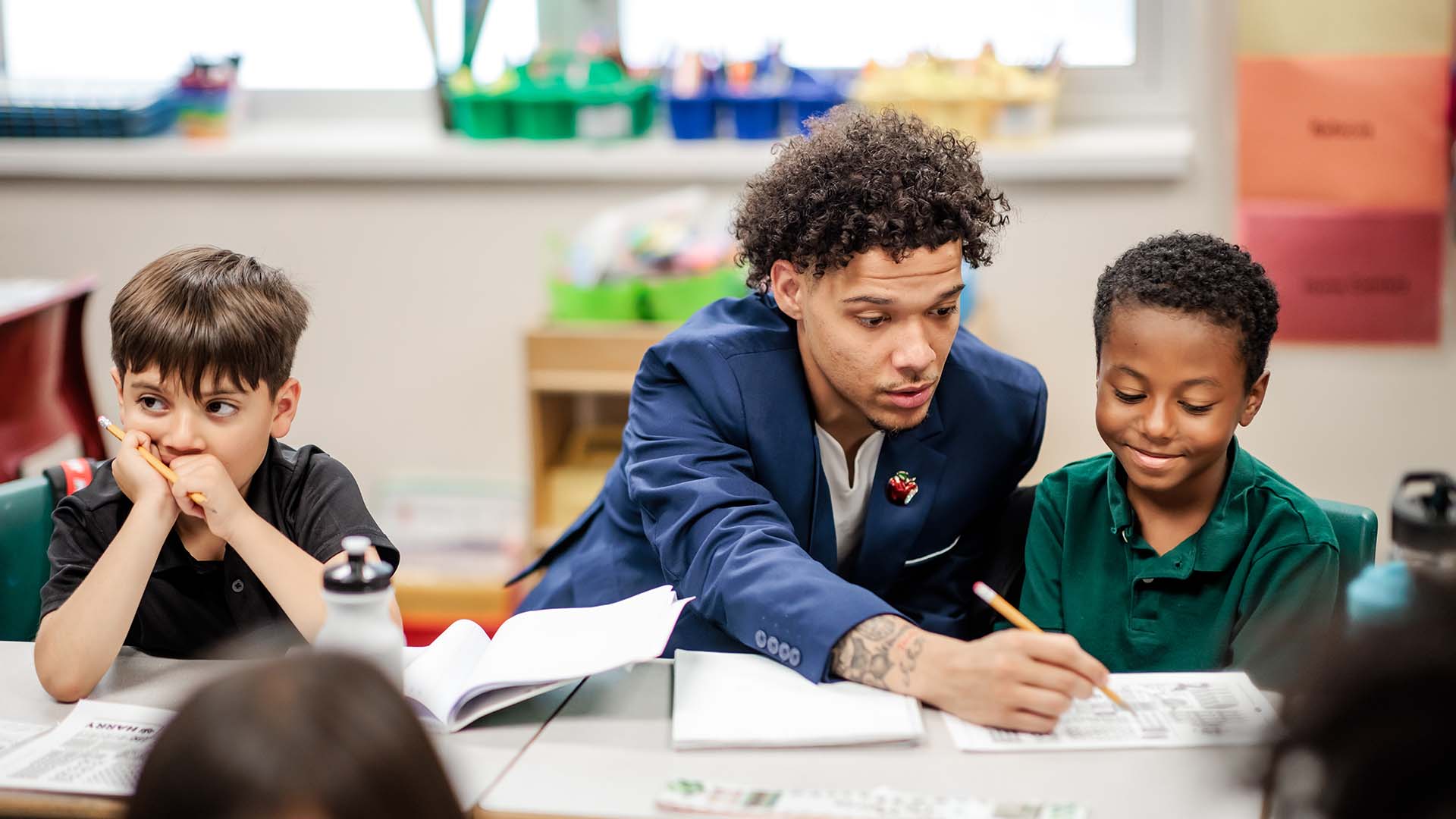
Editor’s note: Throughout the 2025–26 academic year, RED’s Future-proof series will focus on the critical role public universities play in preparing students for the jobs of tomorrow.
Ask any education expert what makes a great teacher, and — along with preparation, content knowledge and organization — you’ll probably hear words like empathy, patience and flexibility.
Ask any tech expert what artificial intelligence excels at, and you’ll hear about data analysis, critical thinking, infallible logic, but not much about empathy or patience. At least not yet.
Nevertheless, a recent Pew Research Center study found that more than 30% of AI experts, those who work with or research artificial intelligence, believe the technology will put teaching jobs at risk.
Not so fast, said Charlie Buckley, Ph.D., associate professor in Metropolitan State University of Denver’s School of Education. AI “is going to be an important tool for us,” she said. “But I feel like you can help a human being learn if you can make a meaningful connection. I don’t think AI can do that.”
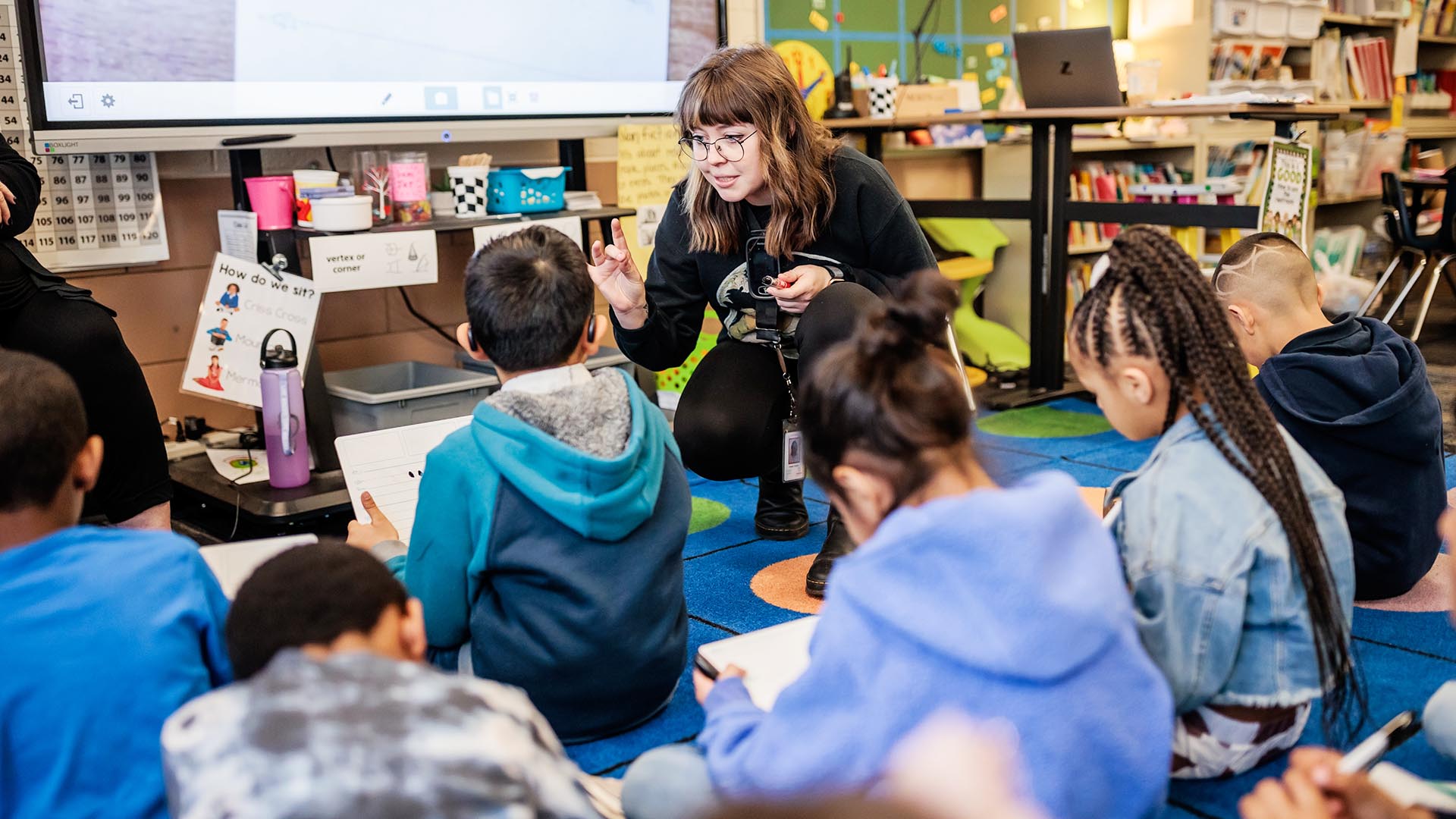
Likewise, Aaron S. Richmond, Ph.D., MSU Denver professor of Psychological Sciences, sees AI not replacing teachers so much as assisting them.
Richmond, faculty director of MSU Denver’s Learning Assistant Program, agreed that AI is a useful teaching aide. “A lot of schools are using AI now to help with lesson plans and grading,” he said.
Grading, compiling data and other nonteaching tasks are time- and energy-consuming and don’t involve student interaction or actual teaching. Still, a recent article in Education Week said teachers typically spend nearly 10 hours a week on lesson plans and grading. That same article stated that “Competent, research-driven teachers are not going to be replaced by AI.”
But AI already is moving into classrooms. Richmond said teachers have started using it to deal with behavioral situations. And while it may be effective at guiding student behavior with nonemotional, nonthreatening language, the tool doesn’t always work in that context. For instance, it’s not going to pick up on bullying or students scrolling text messages instead of paying attention. “It may someday, but we’re not there yet,” he said.
RELATED: Colorado Teacher of the Year helps students reach their potential
Buckley, who began her career as a speech and language pathologist, pointed out another area where AI falls short. “Language happens between people. When you say something, I make a connection with your nonverbal cues,” she said. Facial expression, hand gestures, tone — these are all things that AI currently can neither comprehend nor replicate. When it comes to absorbing language and its nuance, Buckley said, “nonverbal overrides verbal every time.”
She’s concerned, too, about adding more screen time to students’ lives at a time when young people already are feeling isolated, and society appears so fractured. “We’ve lost a lot of that ability to connect and to understand other people’s perspectives,” she said. “We need to spend more time with other humans, not less.”
Bottom line, Richmond said, is teachers must educate themselves on AI and its potential uses, because most of their students already are using it. He compared AI to a rising tide. “You have to learn to roll with the tide, not fight the tide.”