Demand for Aviation program soars
Against the backdrop of a national shortage, MSU Denver is training the next generation for careers in the cockpit and the control tower.
Every year, students come to Metropolitan State University of Denver to build a career in flight — and more of them than ever are seeing their dreams take off.
This fall, nearly 800 students are enrolled in MSU Denver’s Aviation and Aerospace Science (AVS) program, and they helped make the Bachelor of Science in Aviation and Aerospace Science the University’s second-most popular major, behind Psychology. In the past decade, the number of classes offered within the department has increased 52% just to keep up with student demand.
Those students aren’t just earning a degree, they’re helping to address an unprecedented nationwide demand for commercial pilots and air traffic controllers.
Kiha Sutta, associate director of community engagement and administration for the AVS program, said it’s no mystery why the program has thrived in the past decade.
“Take your pick of reasons,” she said.
There are plenty to choose from. Students have access to one of the most sophisticated flight programs in the country, hone their skills on innovative flight simulators, plug in to the same technology NASA uses, and have access throughout their studies to industry professionals and internship opportunities.
All that, plus, “Colorado is home to the second-most aviation and aerospace jobs in the country,” Sutta said.
Pilots in demand
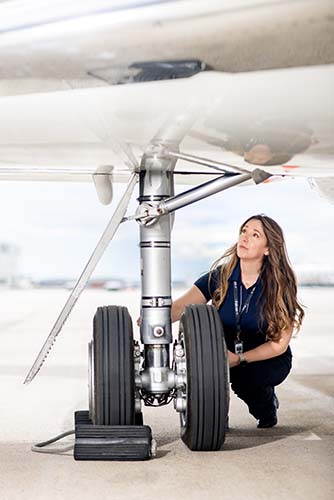
The growth in demand for the AVS program has come at the perfect time. The commercial aviation industry is in the midst of a profound pilot shortage crisis, with U.S. airlines facing a deficit of 24,000 pilots.
That’s because the industry is caught between the requirement for commercial pilots to retire at age 65 (which annually removes about 4,300 pilots) and the 1,500-hour training requirements for new pilots.
But, Sutta points out, the AVS program’s impact goes well beyond simply addressing the need for commercial pilots.
“We’re preparing students for careers in multiple areas across sky and space — including professional flight, air traffic control, airport management, aerospace systems and mission design,” she said. “Our graduates will ultimately help keep all these vital industries moving forward.”
All of which instils a strong sense of purpose in students, she said. “But they also appreciate it’s a big responsibility to contribute to industries so critical to our economy and communities, and they take pride in that.”
RELATED: Future-proof: Pilots will still soar in an AI-assisted world
Flight dreams
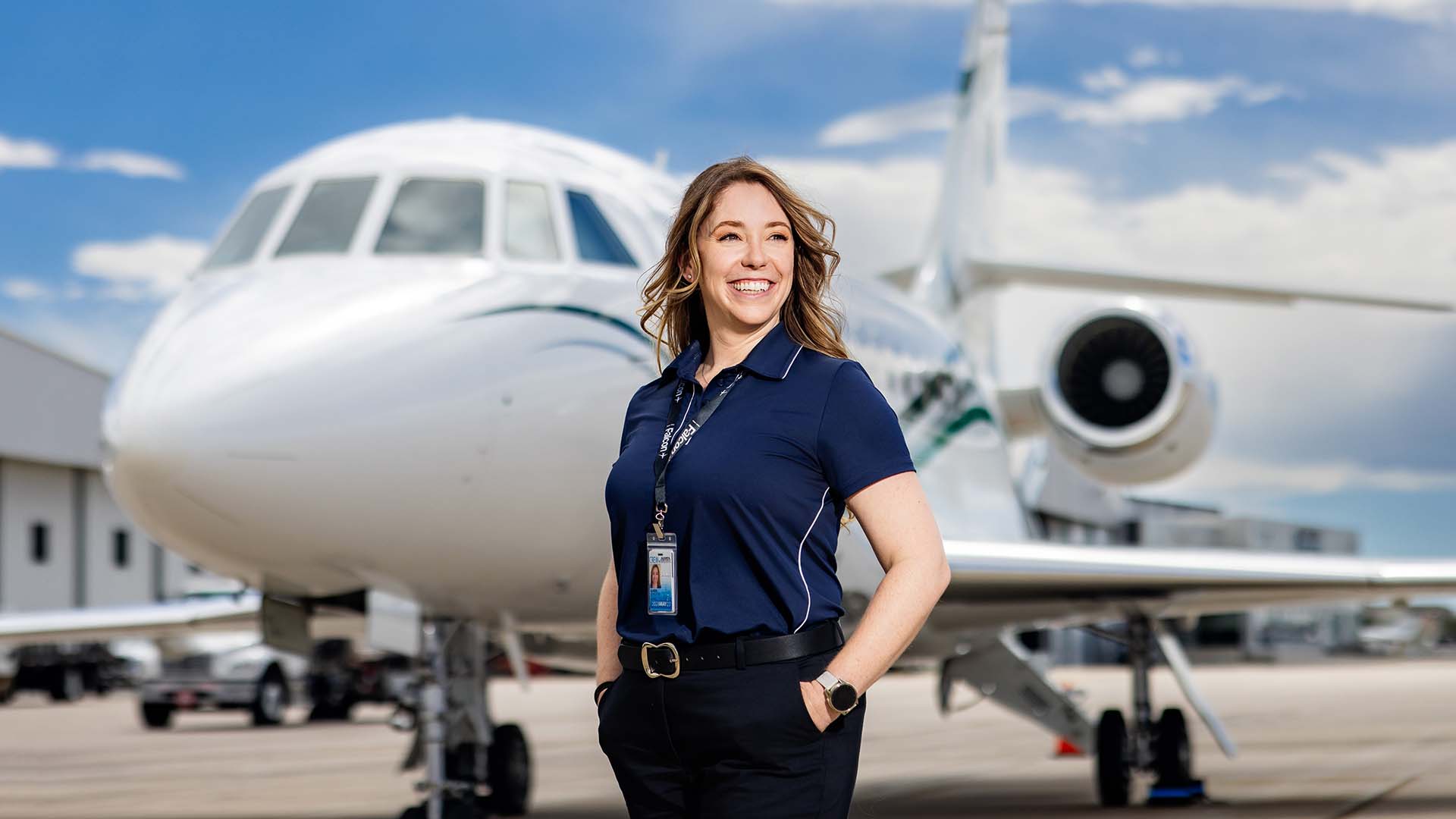
For many Aviation students, flying is a long-held ambition. Ashley Baker, for example, can’t remember ever wanting to do anything else.
Baker grew up in Chicago, home to two major airports, “and one of my earliest memories was watching planes fly overhead from my backyard swing,” she recalled. “But we didn’t come from money, and I was told, ‘Girls don’t fly,’ so my dream seemed unattainable.”
It took multiple jobs and scholarships to pay for flight training, but Baker now has been a flight captain for 12 years. “It took me a little bit longer to make it as a professional pilot, but it was definitely worth the fight!”
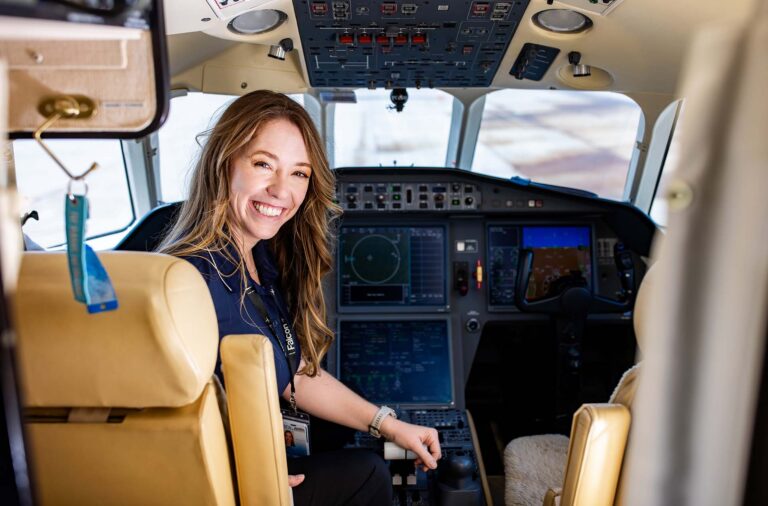
Baker originally enrolled in MSU Denver’s AVS program five years ago but postponed her studies after being offered a flying job too good to pass up. Now, she has an even better job — flying for a corporate aviation company out of nearby Centennial Airport. Despite that success, she’s back in class, ready to earn a bachelor’s degree. “I’m keenly aware that having my bachelor’s degree could still determine which doors are opened to me in the future,” she said.
MSU Denver was the obvious choice for continuing her studies. “I did a lot of research before selecting a school, and MSU Denver consistently ranked highest among the online programs — online aviation programs in particular,” she said.
“As a working professional, it was paramount that I found a school that was both highly regarded and could work with my busy schedule — and I’ve lucked out.”
Reasons behind success
Sutta said several factors contribute to those high rankings, including the opportunity for students to explore multiple aviation career options.
“Someone may start off pursuing professional flight but then find that they’re more interested — or there are more opportunities — in air traffic control, aviation management, airport operations or aerospace,” she said. “We give our students the ability to follow those instincts and veer into new avenues.”
Another priority for faculty — given the high demand for aviation and aerospace graduates — is to keep their students, well, grounded.
“We make sure our students understand not only the opportunities out there, but what it takes to earn them,” Sutta said. “A strong job market does not replace preparation, professionalism, technical competency or a strong work ethic.”
Career springboard
One of the program’s greatest strengths, Sutta said, is the access it provides to professionals in the aviation and aerospace fields.
“We don’t want a job interview to be the first time our students meet someone from industry,” she said. “Those connections should be happening all through their education, so they can graduate with relevant experience, useful relationships and a much clearer pathway into their profession.”
While Baker has forged her own pathway to this point, she recognizes that a bachelor’s degree, and later a master’s, will take her even further.
“This will be the key credential that complements all the professional experience I’ve spent years building,” she said. “And it’ll also make sure a missing degree is never the reason I’m unable to pursue the next opportunity.”