Janet Yellen says college still matters in an AI-driven economy
During a visit to MSU Denver, the former Treasury secretary discussed the value of higher education, an uncertain job market and lessons from her historic career.
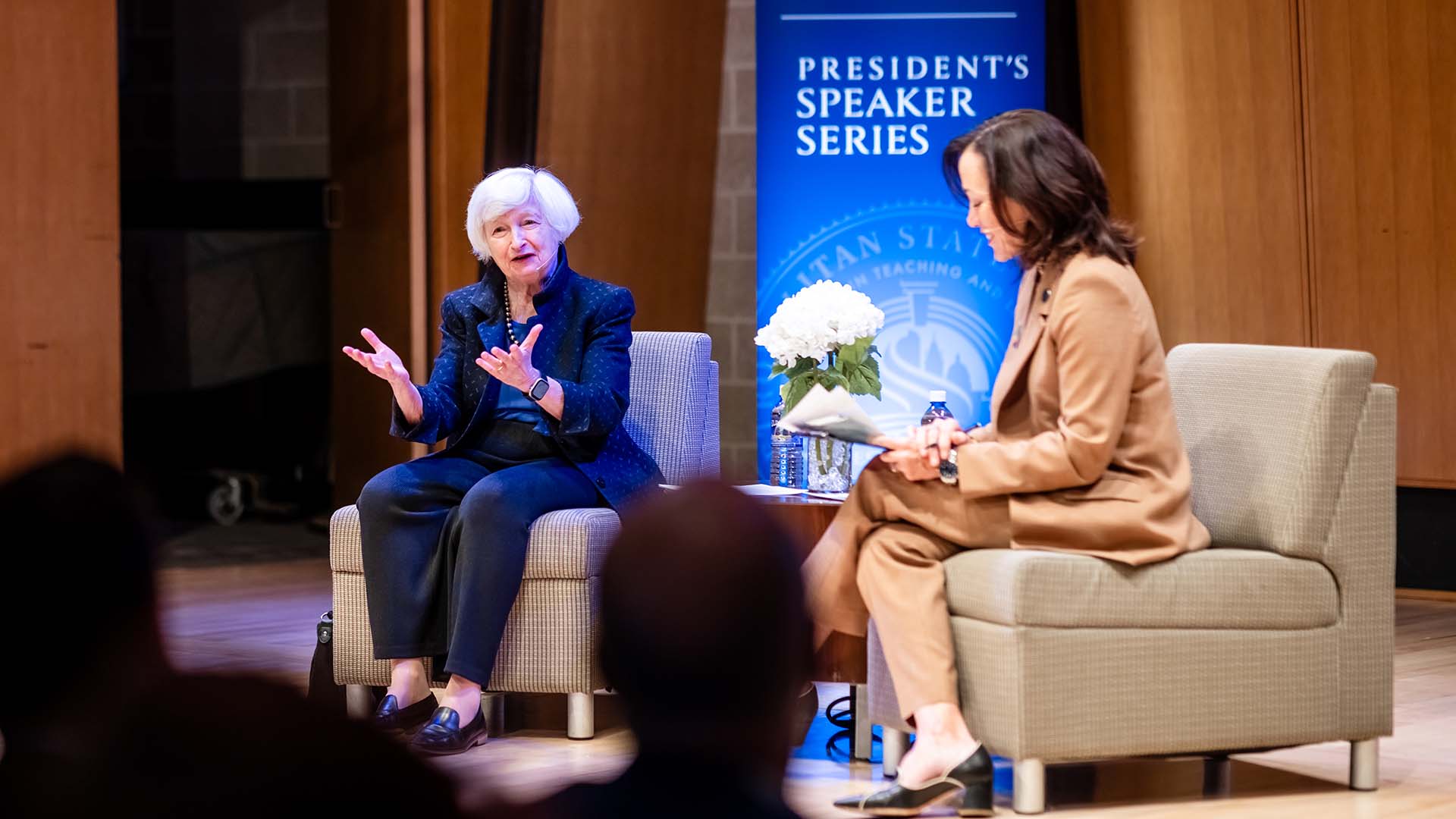
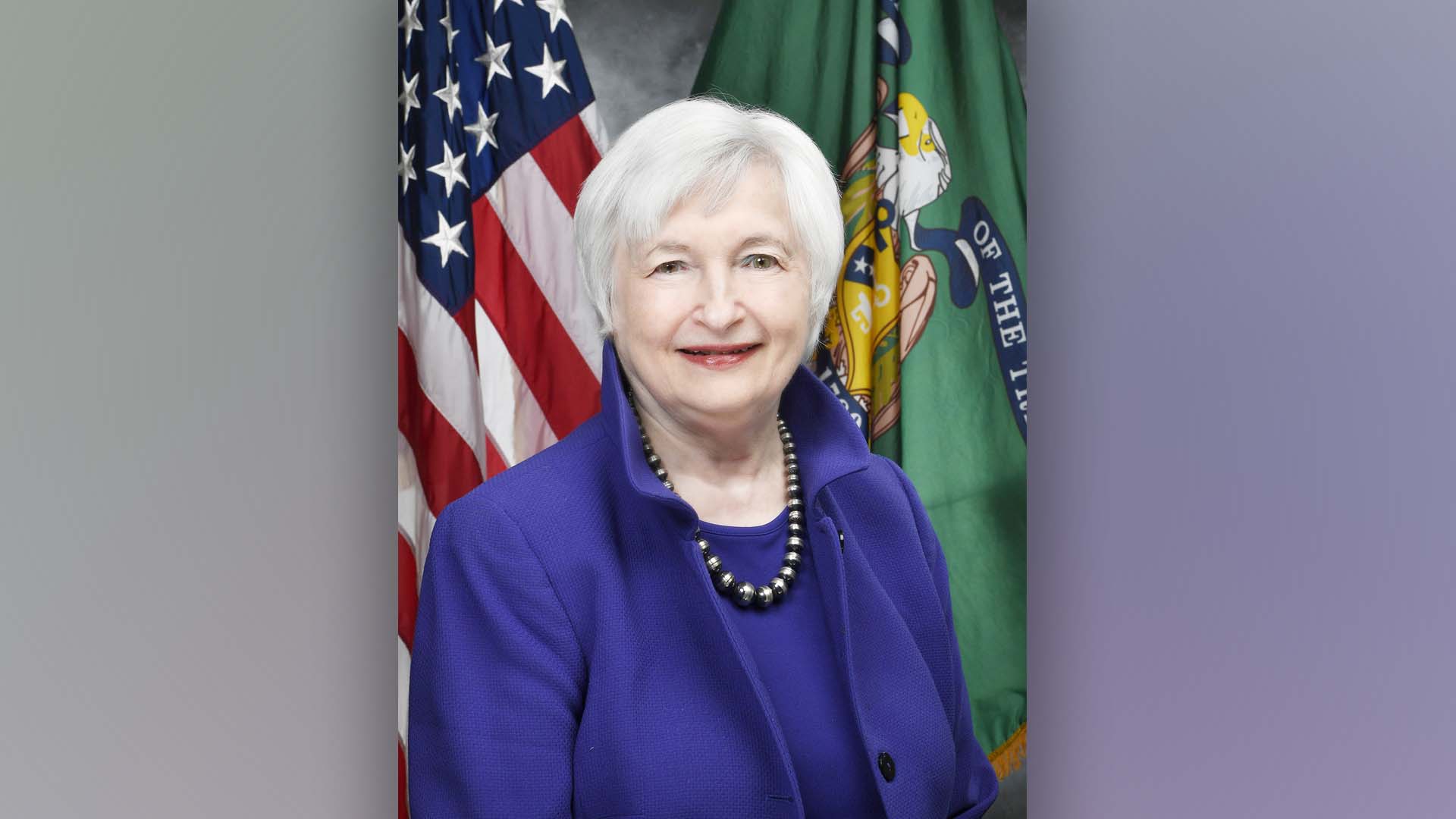
Janet Yellen didn’t set out to become one of the most powerful economists in the world.
In fact, when she arrived at college, she wasn’t even sure what she wanted to study.
“I thought maybe math, maybe chemistry,” Yellen recalled during an Oct. 29 visit to Metropolitan State University of Denver. “I didn’t have any real career plan.”
Then she took an introductory economics course.
“That was love at first sight,” she said.
That first economics course set Yellen on a path to the highest levels of American economic policymaking. She became the only person in U.S. history to lead the White House Council of Economic Advisers, the Federal Reserve and the Treasury Department, breaking barriers as the first woman to hold the last two positions.
During a wide-ranging conversation with MSU Denver President Janine Davidson, Ph.D., as part of the President’s Speaker Series, Yellen reflected on her career while tackling some of the biggest questions facing college students: Is a degree still worth the investment? How will artificial intelligence reshape the workforce? And how can young people navigate an increasingly uncertain economy?
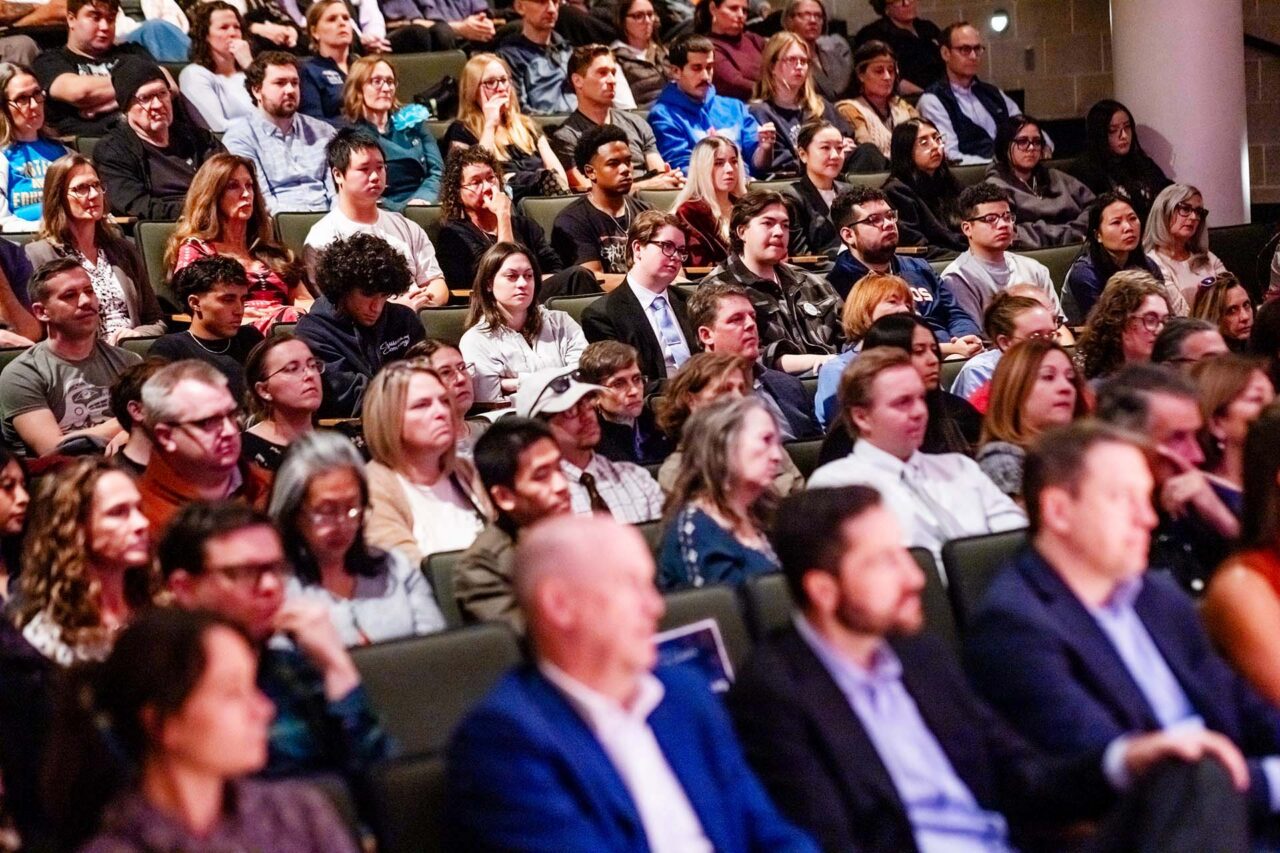
Is college still worth it?
For students weighing the cost of higher education against an unpredictable job market, Yellen offered a compelling case for the value of a college degree.
She pointed to the substantial earnings advantage enjoyed by college graduates, citing average weekly earnings of approximately $1,700 for college-educated workers compared with less than $1,000 for those without a college education.
Over a 40-year career, she said, that difference can add up significantly.
But Yellen also acknowledged that rising tuition costs and student debt have made the investment more difficult for many Americans.
Yet the benefits of college, she added, extend beyond a paycheck.
“I think it enriches your life, what you learn, and it opens you up to new experiences and new ways of looking at things, and it tends to inculcate a love of learning and an ability to adapt better to all the changes we experience in our lives, because things change all the time,” Yellen said.
RELATED: Does a college degree make you happier?
She recalled her own experience with early computers in graduate school, when using the technology meant carrying stacks of cards to enormous machines and waiting for printed results.
The tools have changed dramatically, but the value of learning how to learn has not.
What happens when AI changes the rules?
Few developments illustrate that pace of change more clearly than artificial intelligence, which is already reshaping how college graduates enter the workforce.
Yellen pointed to the growing impact of AI on entry-level positions, particularly jobs involving research and analysis that have traditionally helped young professionals gain experience and develop their skills.
While acknowledging the challenges, Yellen also sees potential for AI to improve productivity and raise living standards, much as previous technological advances have done. But those benefits won’t necessarily reach everyone.
“I think public policy needs to be very attentive to making sure that the benefits are widely shared, and people who are harmed by it get the retraining and the help and the support that they need to find meaningful things to do,” she said.
For students preparing to enter an evolving workforce, Yellen emphasized the importance of combining academic knowledge with practical experience and learning how to work alongside emerging technologies.
Yellen praised MSU Denver’s emphasis on career-connected education, including employer partnerships and hands-on experience, as an advantage for graduates entering an AI-driven workforce.
RELATED: AI is changing the rules of career readiness
Yellen also stressed the importance of developing capabilities that AI cannot easily replicate, including judgment, compassion, communication and the ability to understand other people’s needs.
Those distinctly human skills, combined with practical experience and the ability to adapt, will be essential as the workforce continues to change.

A career shaped by curiosity and public service
When Yellen became Treasury secretary in 2021, she walked the halls of a building lined with portraits of her predecessors, beginning with Alexander Hamilton. After more than two centuries of American history, not one depicted a woman.
“That made a big impression on me, that I was stepping into something no woman had done for 232 years,” she recalled.
With few women in economic leadership when she began her career, Yellen found inspiration closer to home.
Growing up in Brooklyn, Yellen listened to her father, a child of the Great Depression and a physician whose patients included dockworkers and manufacturing employees, talk about the devastating effects of unemployment.
Those conversations helped shape her understanding of economics as a discipline concerned not simply with numbers, but with the people behind them.
“It’s really about people and their lives,” she said, “and what can make their lives better.”
When she took that first economics course, Yellen discovered something else: The hardships she’d witnessed growing up weren’t inevitable.
“You didn’t have to just sit there and let this happen,” she recalled. “And that good government policy could make a huge difference.”