Undergraduate research sheds light on antibiotic resistance in E. coli
Biology students gain hands-on experience investigating a growing global health threat.
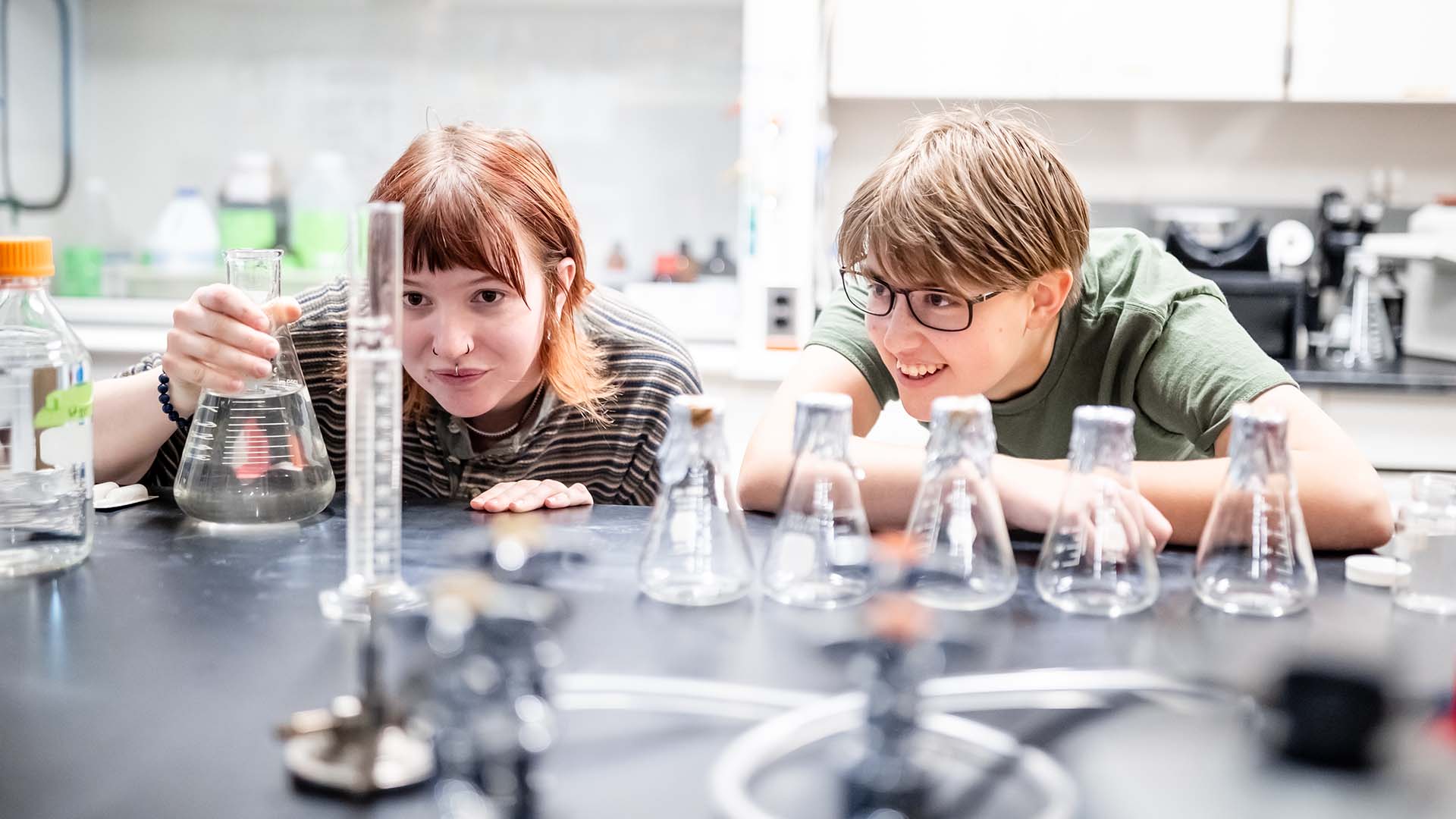
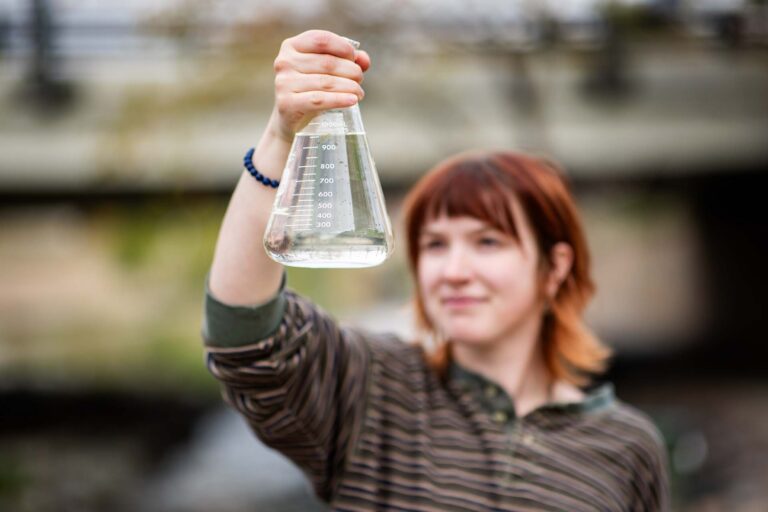
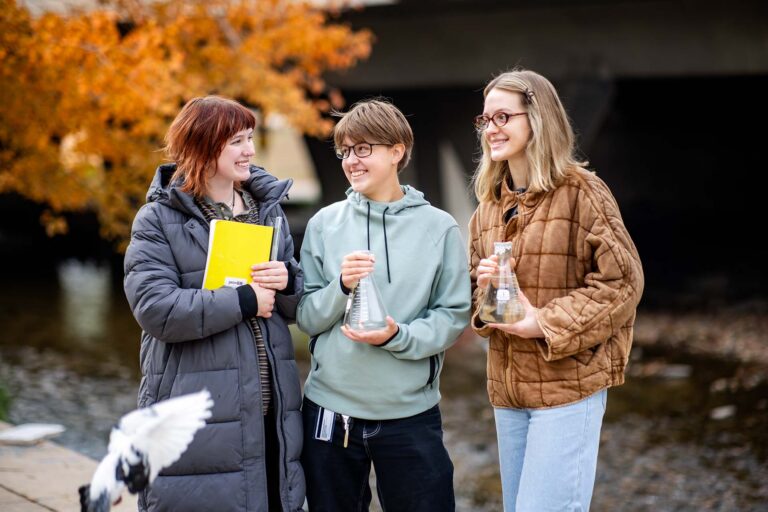
The water Briana Wagner and Rowan Sanderka pulled out of Cherry Creek and swirled around in a bottle looked clear, and as fresh as the crisp fall morning itself. Still, Wagner and Sanderka weren’t about to drink it.
Based on what they’re detecting in that water, nobody else should, either.
Every day for eight days this fall semester, Wagner and Sanderka met in the Science Building lab of Professor Rebecca Ferrell, Ph.D., early, when the Metropolitan State University of Denver campus was still mostly deserted, and walked across Speer Boulevard to gather and test water samples from the creek that winds through downtown.
The samples they took back to Ferrell’s lab contained more than water — most were teeming with E. coli bacteria. Gross as it might be, the presence of the bacteria wasn’t surprising, or even the point of this undergraduate research project.
Instead, Wagner, who is studying microbiology, and Sanderka, a Biology major, are trying to determine which of six common antibiotics can kill the notorious bacteria and which have become ineffective at knocking out germs.
The news isn’t good. “We see so much resistance,” Sanderka said.
With their research, Ferrell and her undergraduates are contributing to a growing body of knowledge around antibiotic resistance, which the Centers for Disease Control and Prevention calls “an urgent global public health threat.”
“We’re looking for (bacteria strains) that are resistant to several classes of antibiotics, and what are the actual genomics and what they tell us about the mechanisms that create resistance,” Ferrell said.
The students are getting more than data. They’re also getting invaluable experience.
“Regular classes introduce you to a topic,” Wagner said. “This gives you the reality of what it takes. If you want to get this kind of information, this is what you have to do,” said Wagner, who is Ferrell’s teaching assistant.
Penicillin, the granddaddy of antibiotics, started becoming widely available in the 1940s, during World War II. Just a few years later, “they were starting to see resistance” to the drug’s bug-killing properties, Ferrell said.
In its latest Antimicrobial Resistance Threats Report, the CDC lists resistant bacteria and estimates that those strains cause 9.7 million infections each year and cause more than 50,000 deaths in the United States alone.
Researchers say that the greatest culprit in antibiotic resistance, which occurs when antibiotics can no longer kill certain bacteria, is over-prescribing, both to humans and to the livestock humans eat.
At the same time, Ferrell said, bacteria naturally evolve, fortifying themselves against medications designed to kill them.
It doesn’t help, Ferrell said, that “it’s been 40 years since a new class of antibiotics was developed.”
E. coli enters rivers and streams like Cherry Creek through agricultural runoff, leaks in wastewater infrastructure, and when birds and other animals use waterways as restrooms. The bacteria are frequently used as an indicator of water quality, partly because they are comparatively easy to measure.
It is also fairly easy to tell when they’re resistant to antibiotics.
RELATED: Researchers study sewage for COVID-19 clues
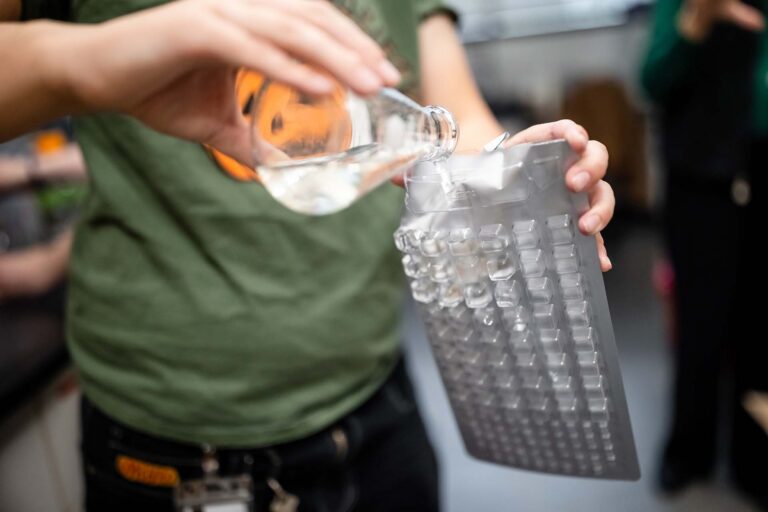
Back at the lab, Wagner and Sanderka treat the water samples and distribute them into a panel of 100 small bubbles. The students prepare a panel for each antibiotic tested and add drops of that drug to the panel. The next morning, the panels are checked — if they glow, the bacteria are still live.
“They shouldn’t glow,” Sanderka said, holding up the panel containing the previous day’s samples. Nearly every bubble on the panel was lit up.
Despite the discouraging findings, both students said working in the lab — the same lab that helped pioneer testing of wastewater to detect the presence of Covid-19 — has been a great experience.
“I’m enjoying this a lot,” Wagner said. “I’ve learned about problem-solving, working with genome sequencing. And it’s definitely taught me to be a mentor to other students.”
Ferrell said working in the lab is a great benefit to students. “There’s no substitute for this experience,” Ferrell said. “This makes biology come alive for these students.”