College textbook costs move from campus to the Capitol
House Bill 26-1016 would extend Colorado’s open educational resources program, which MSU Denver students say is reshaping college costs.

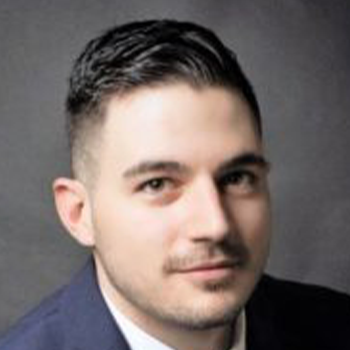
When Mallory Reiswig took a seat at the Colorado State Capitol to testify in support of House Bill 26-1016, she wasn’t thinking about politics. She was thinking about students.
“I felt incredibly empowered speaking for students across Colorado,” said Reiswig, a Communication Studies major with a minor in Legal Studies who expects to graduate from Metropolitan State University of Denver in May.
Even with courtroom experience through her internship with the Denver Bar Association, the moment felt big.
“It felt amazing getting to talk about the issue and the real impact. It was really powerful seeing the reactions from legislators, having the communicative, empathetic experience. And it reminded me how important student voices are,” she said.
For Reiswig, the issue at the center of the bill, Colorado’s Open Educational Resources program, isn’t abstract. It has shaped her college journey from the start.
Choosing affordability and finding a passion
The program, which provides freely available online teaching and learning materials to students and instructors, not only saved Reiswig money, it helped determine her educational path. “Within my first year at MSU Denver, I noticed that a couple of my Communications classes were using free or low-cost materials,” she said. “I started taking classes based on that and found a love for Communication Studies. Going to class didn’t feel like work, I enjoy it so much.”
She pays for her education herself while working full time and attending school full time. For her, textbook savings are not a bonus. They are a lifeline.
“This has been life-changing and people don’t believe that, but it saves me more than $500 per semester. That’s money I use on groceries or my emergency fund,” she said.
She’s heard similar stories from classmates.
“I know, talking to my peers, how much pressure the cost of textbooks can add, and it should not be a barrier to certain degrees, or to taking the classes they want to take,” Reiswig said. “Students are either taking classes and not buying the textbook or they are avoiding taking classes they want to take because the textbooks are going to cost them so much money.”
RELATED: This initiative is saving students millions of dollars in textbook costs
Reiswig is quick to point out that OER is about more than cutting costs.
“OER isn’t just about free textbooks, it’s about educational equity. When every student has immediate access to course materials from day one, they feel more prepared, they feel more confident, and they’re more likely to succeed,” she said. “OER removes barriers that often go unnoticed but have real consequences in peoples’ lives.”
Because many OER materials are digital and instantly available across devices, students do not have to wait for financial aid refunds or pay hundreds of dollars for temporary access. For students relying on private loans that might not arrive until weeks into the semester, that timing can make all the difference.
What House Bill 26-1016 would do
House Bill 26-1016 seeks to keep that investment going. Under current law, Colorado’s OER grant program and the Colorado Open Educational Resources Council — the body that helps guide and expand the program — are scheduled to expire in 2026. The bill, still under consideration as of mid-March, would extend the life of both through 2031, giving faculty, students and institutions more time to build on the existing momentum.
It also would expand the council from 12 to 15 members to bring in broader perspectives and require continued reporting on how many courses are offered with zero textbook cost to students. By keeping the program and council in place, more faculty can access funding and support to adopt, adapt and create low- or no-cost course materials for students.
A shared commitment
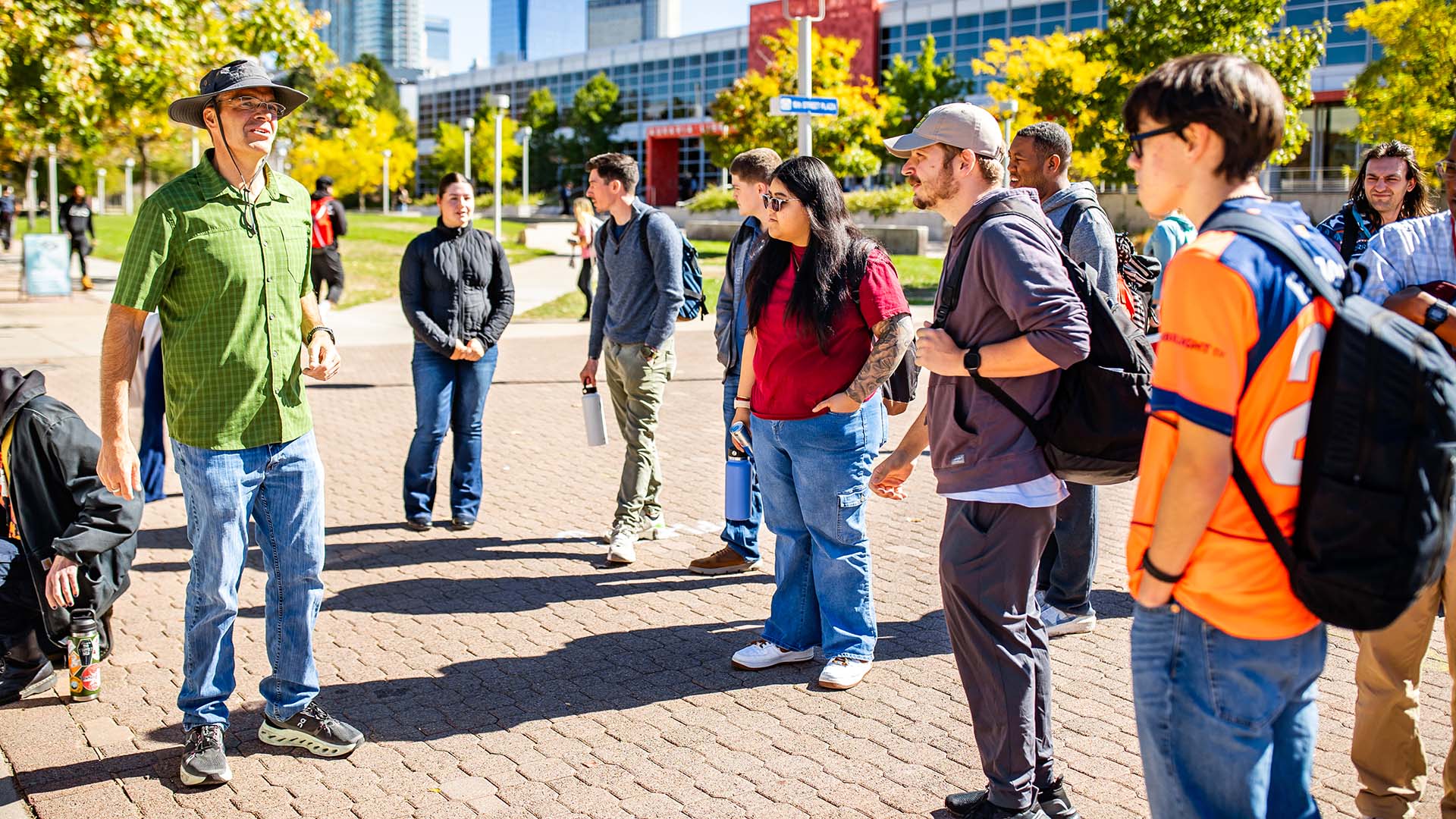
Reiswig’s advocacy is part of a broader culture at MSU Denver, where faculty have embraced OER as a teaching and equity tool.
Associate Professor of Biology Jonathan Dyhr, Ph.D., who also testified in support of the bill, has seen firsthand how textbook costs affect students.
“They (MSU Denver students) don’t have extra money to spend on textbooks that they aren’t going to use,” Dyhr said.
At a teaching-focused institution, he said, “there’s a high value placed on impactful teaching,” and flexible, relevant materials help him do that without the constraints of what publishers have available.
For Reiswig, that commitment shows up in tangible ways, from professors who build customized course materials to departments working toward zero-textbook-cost degrees.
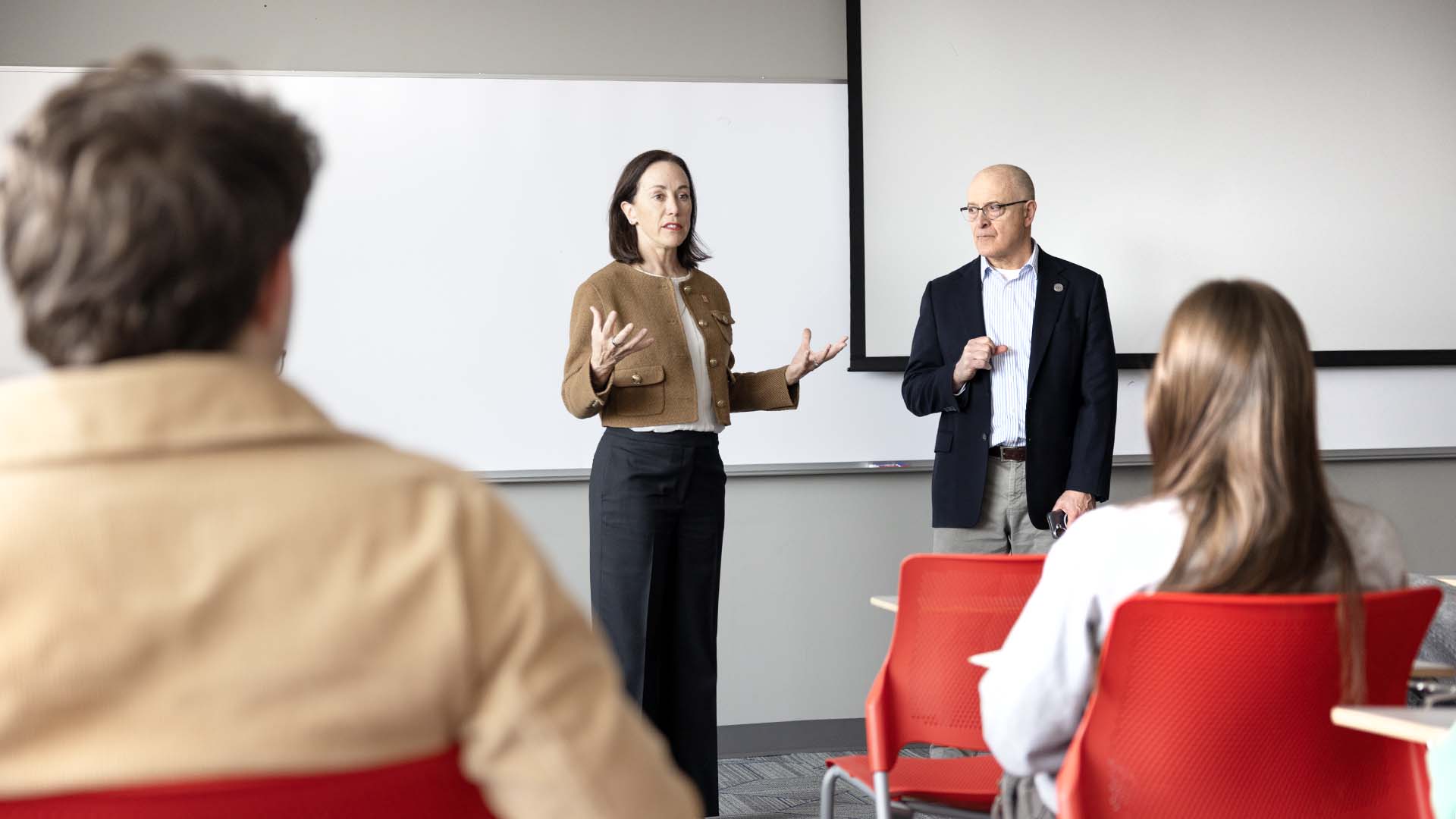
Together, faculty and students brought that message to the Capitol: OER works.
For Reiswig, the experience of testifying underscored what she already knew from her own life.
When students have access from day one, without a price tag standing in the way, they can focus on what they came to college to do: learn, grow and graduate.