Ask a Professor turns difficult topics into opportunities for dialogue
MSU Denver faculty host student discussions designed to put the ‘civil’ back in civil discourse and show that disagreement doesn’t have to mean division.
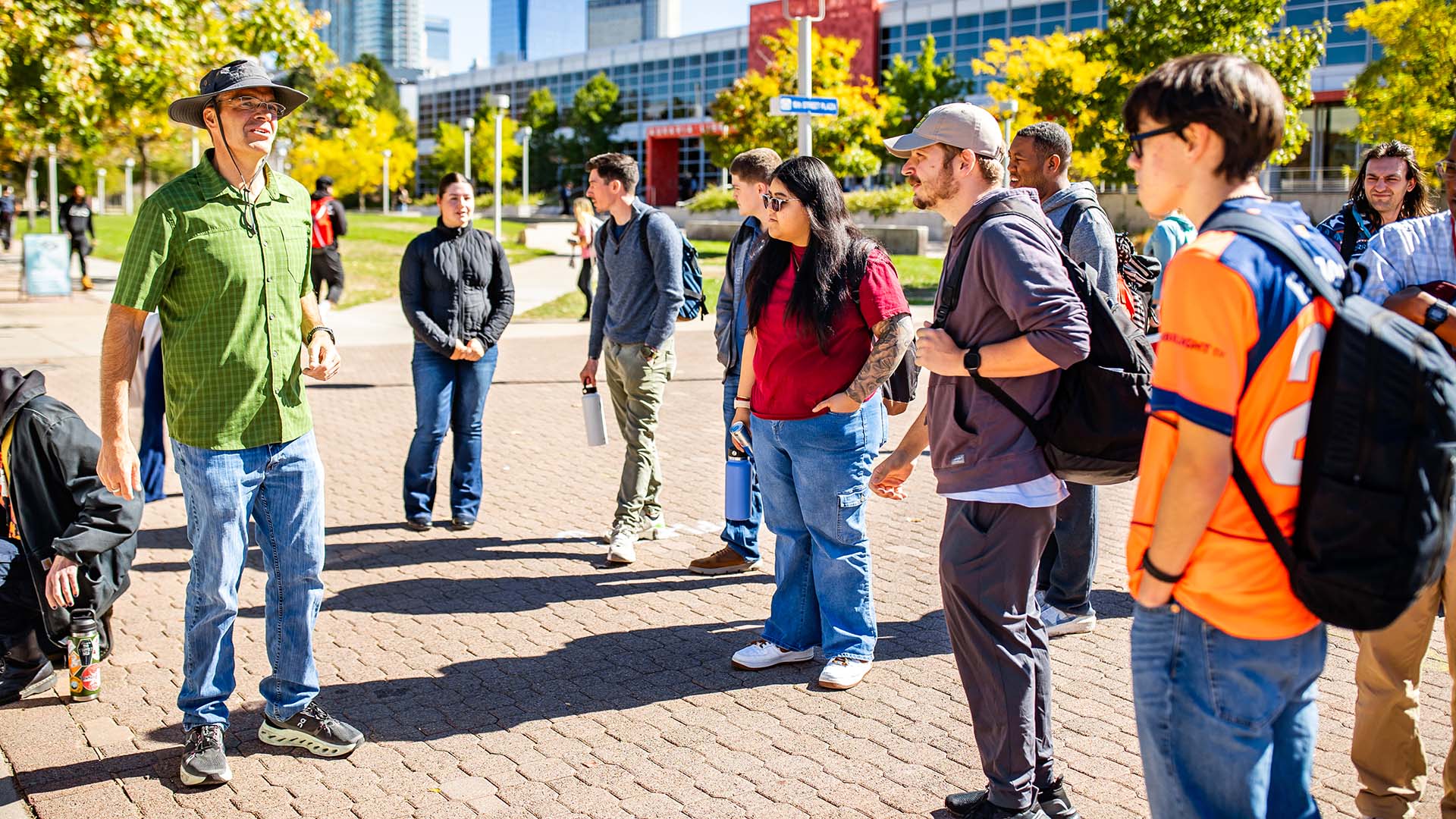
Sometimes, starting a conversation about politics is as simple as offering someone a Red Bull.
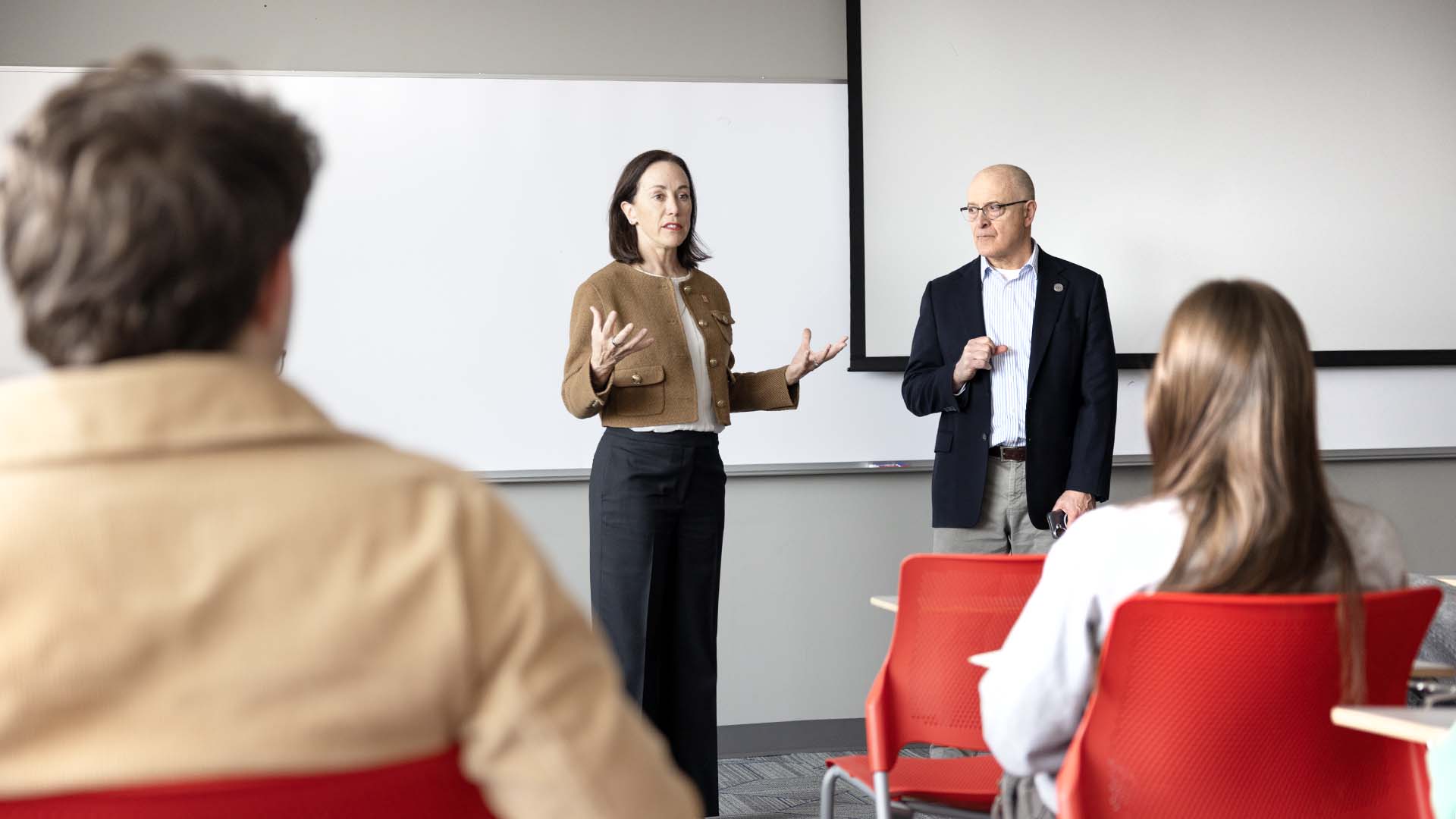
That’s one way faculty members draw students to Ask a Professor, a Metropolitan State University of Denver pop-up series centered on civil discourse. The program invites students to engage with faculty experts on timely social, political, and cultural issues in an informal setting.
The idea came in spring 2024, when Robert Preuhs, Ph.D., chair and professor of Political Science, and History professor Matt Makley, who is now University provost, set up a table, chairs and a whiteboard that read “Ask a Professor … Anything protest-ish.” The event took place during tense campus conversations and protests related to the war in Gaza.
“The goal was to provide a way for students to engage with experts about the issue in an informal and nonconfrontational way,” Preuhs said. “We wanted to create space for civil dialogue during a contentious moment.”
To draw students into the conversation, faculty members set up tables outside in campus spots where students typically converge, such as between Auraria Library and the Emmanuel Art Gallery. Then, they write on a white board topics such as whether abstract art is really art or how students feel about politics. And of course, they offer Red Bull. Once students stop to answer, conversations often turn to more complex topics.
“The questions often seem silly, but they’re designed to draw folks in and open up a discussion of very serious topics,” Preuhs said.
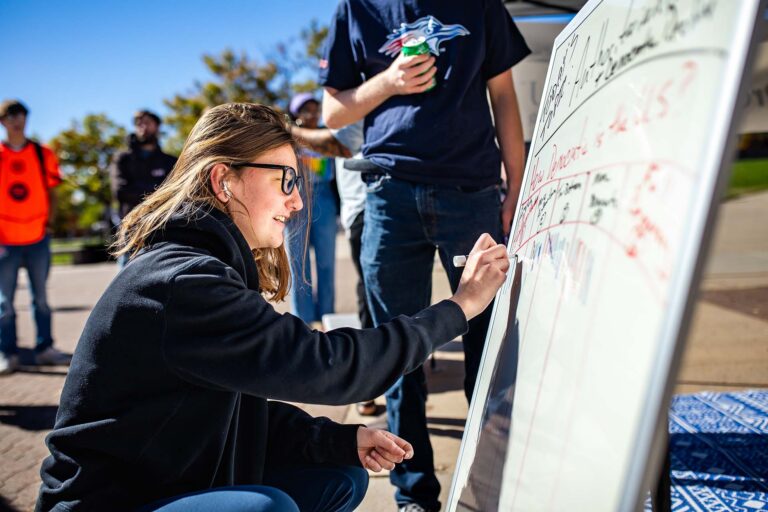
What started as an experiment quickly evolved into a recurring campus tradition.
In fall 2024, more than a dozen faculty experts participated in conversations on seven topics. Over four semesters, the series has generated more than 1,500 student interactions, with roughly 100 students participating in a typical session, according to Preuhs.
When asked what inspired the initiative, Preuhs pointed to students.
“Students were looking for opportunities to discuss difficult issues,” he said. “At the same time, the University was exploring ways to promote civil discourse as an alternative to conflict-driven politics during an election year.”
The conversations cover a range of issues, from voting and affordable housing to artificial intelligence and freedom of the press. The casual setting can be especially valuable for students who may feel hesitant to speak publicly about political issues. Rather than delivering lectures, faculty members engage students in conversation, answering questions, and examining different perspectives.
The goal is not a consensus. Instead, faculty members bring subject-matter expertise and encourage students to think critically about complex topics while considering viewpoints that may differ from their own.
RELATED: How to talk to your family about politics without losing your cool
This semester, the program’s goals remain the same as they were from the start: to spur civil discourse on campus and encourage students to engage in civic life.
“We live in a highly contested and conflictual political environment,” Preuhs said. “That leaves little room for reasoned discussion and getting to know others as human beings.”
Preuhs said universities can play an important role in creating spaces where difficult conversations can happen respectfully.
“Beyond sharing expertise, faculty model civil discourse and political engagement,” he said. “We show students that important political and policy issues can be discussed informally with the goal of opening minds, not changing them.”
The impact isn’t always easy to measure, but he sees signs of success every semester.
“We interact with about 100 students during every session,” he said. “The impact is really on getting students to think about politics and policy, recognizing that their participation matters and providing a venue where students feel comfortable engaging in discussions.”
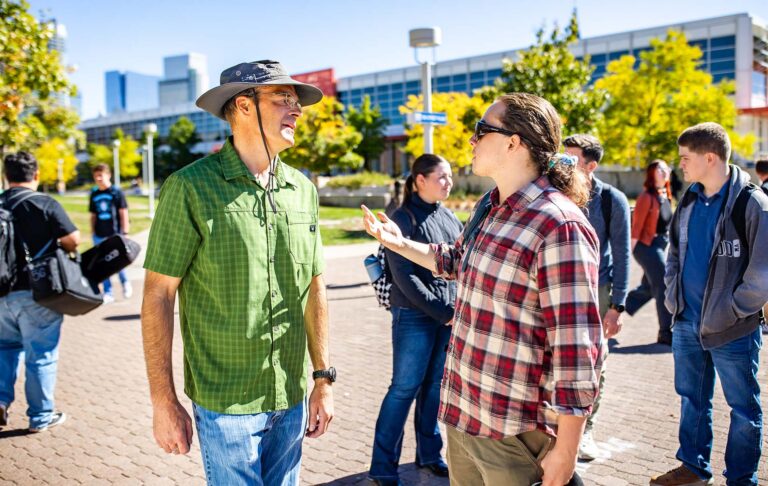
Sometimes the conversations continue long after the event ends.
“I’ve seen students keep talking after we’ve folded up the tent,” Preuhs said. “I’ve also had students come up to me in other settings to thank us for the opportunity and follow up on conversations we started at Ask a Professor.”
For Preuhs, those moments are proof that the series is doing exactly what it was designed to do: creating opportunities for students to engage with big ideas, learn from one another, and discovering that meaningful dialogue is still possible.
This fall's Ask a Professor events
All events take place from noon to 2 p.m. on campus in the area between Emmanuel Art Gallery and Auraria Library.
Monday, Sept. 21: Vote! It matters. (Really, it does!)
Monday, Sept. 28: AI… Awesome or the end of civilization?
Thursday, Oct. 8: Affordable housing… Kidding me?
Thursday, Oct. 15: Suppressing the press… how dictators get started. Wednesday, Oct. 28: Politics potpourri…elections, war, democracy, you name it!