New mural tells Denver’s westside story
The Mid-Brow Collective transforms MSU Denver's Kalamath Building, bringing neighborhood history to life in the Santa Fe Art District.
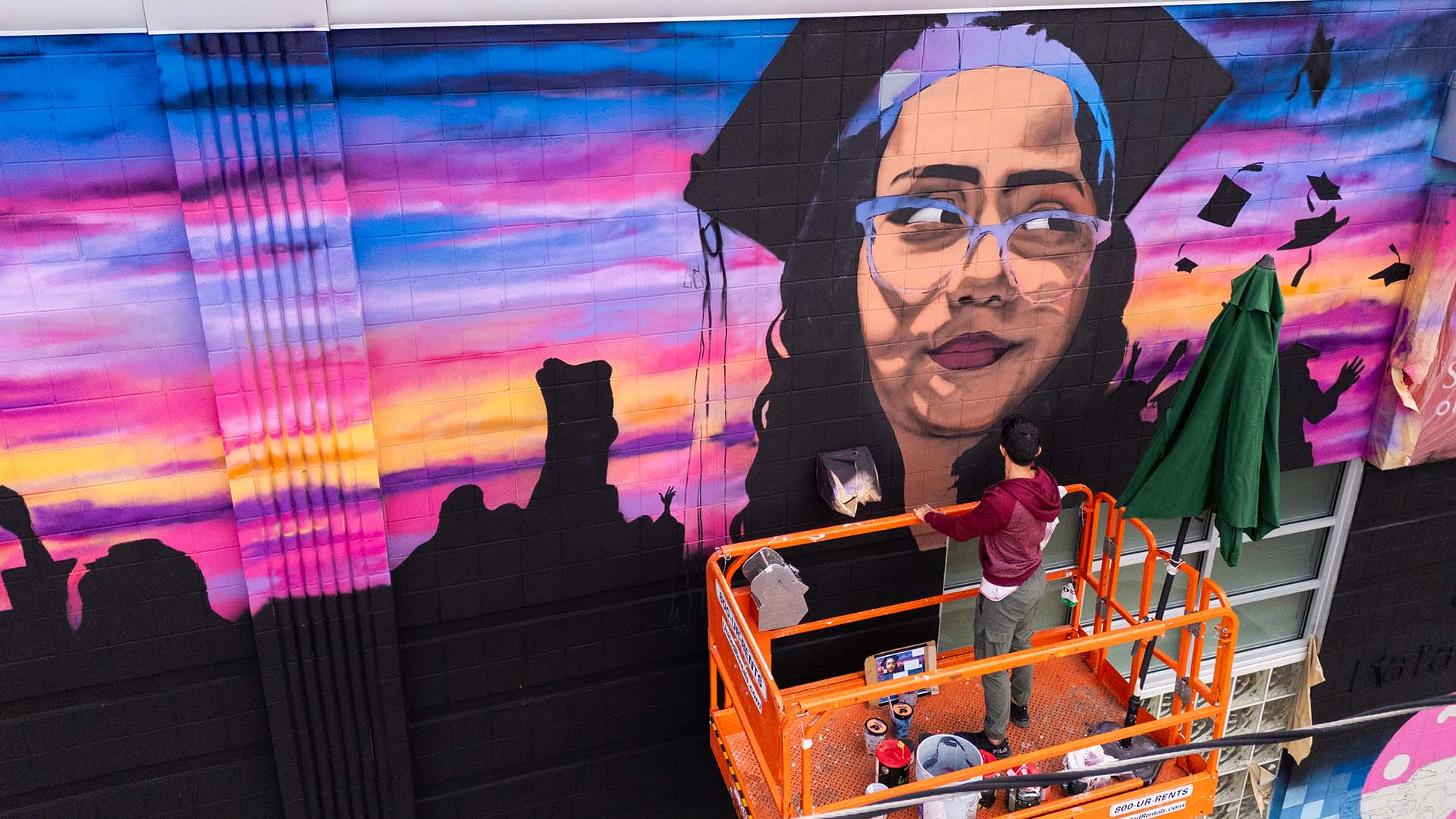
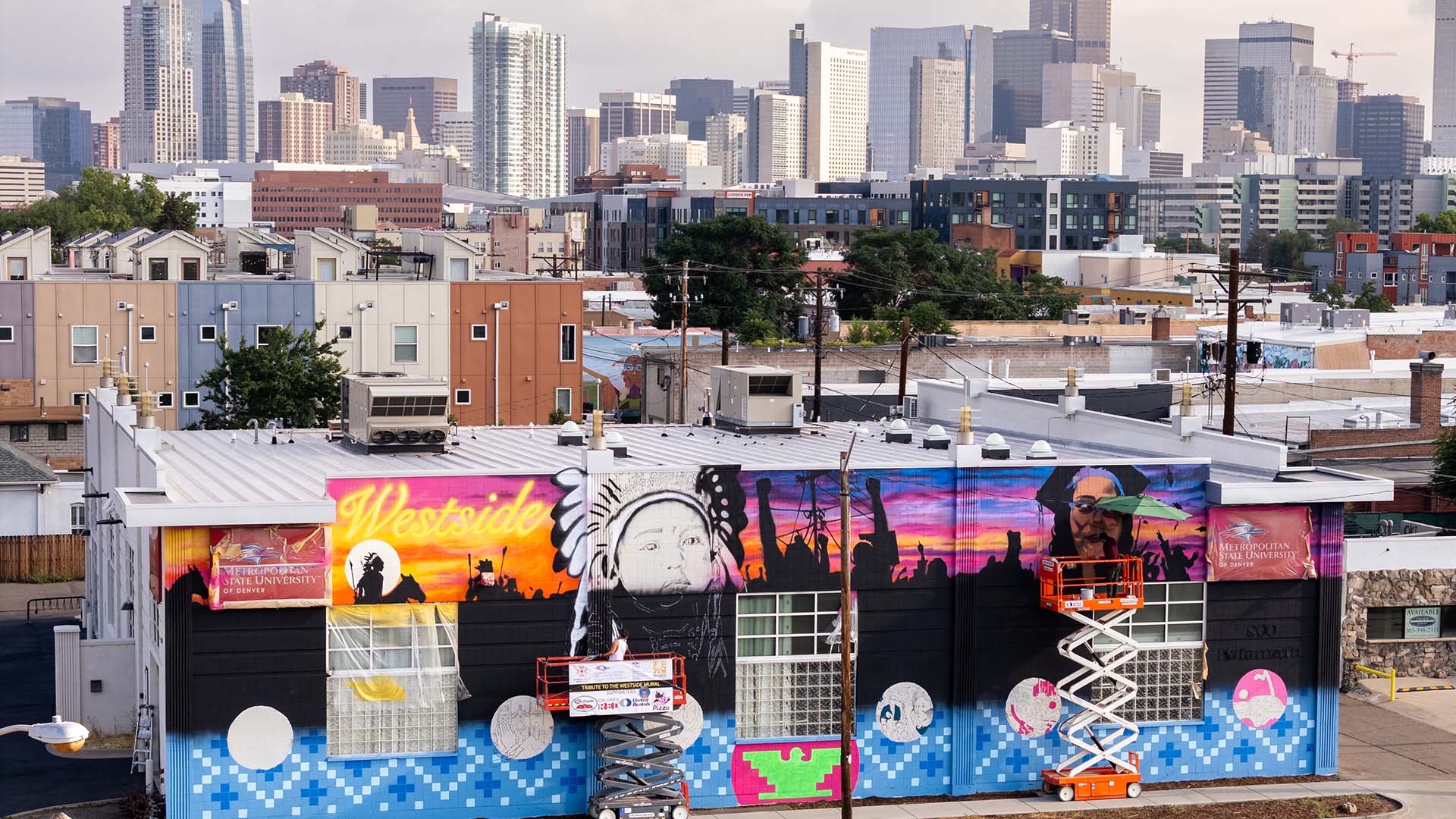
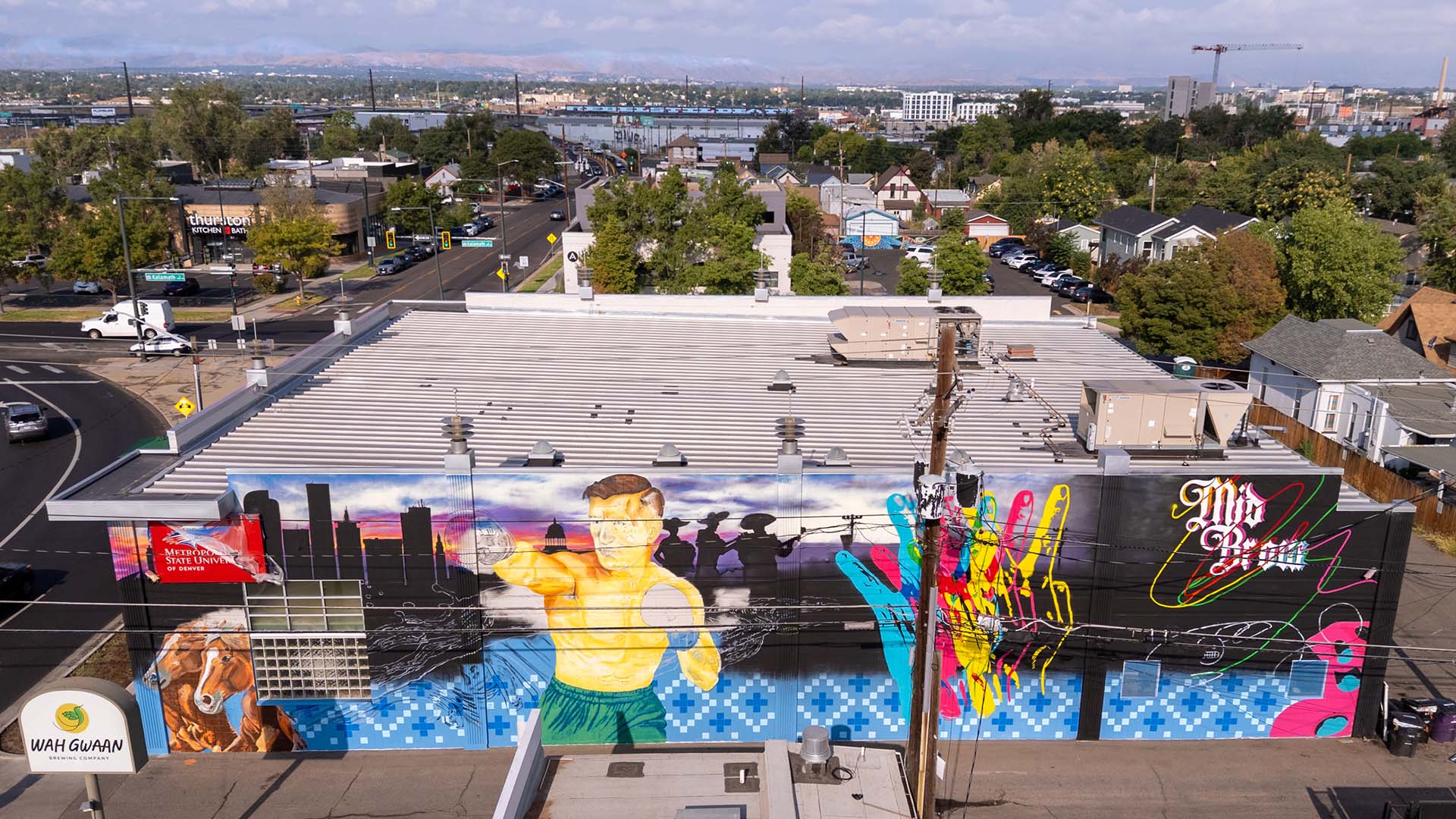
If you drive along Kalamath Street in Denver’s historic Santa Fe Art District, you’ll see buildings adorned with colorful murals. Metropolitan State University of Denver’s Kalamath Building, a community space for the University’s Department of Music, will soon be among them, displaying a new mural that reflects the community’s legacy.
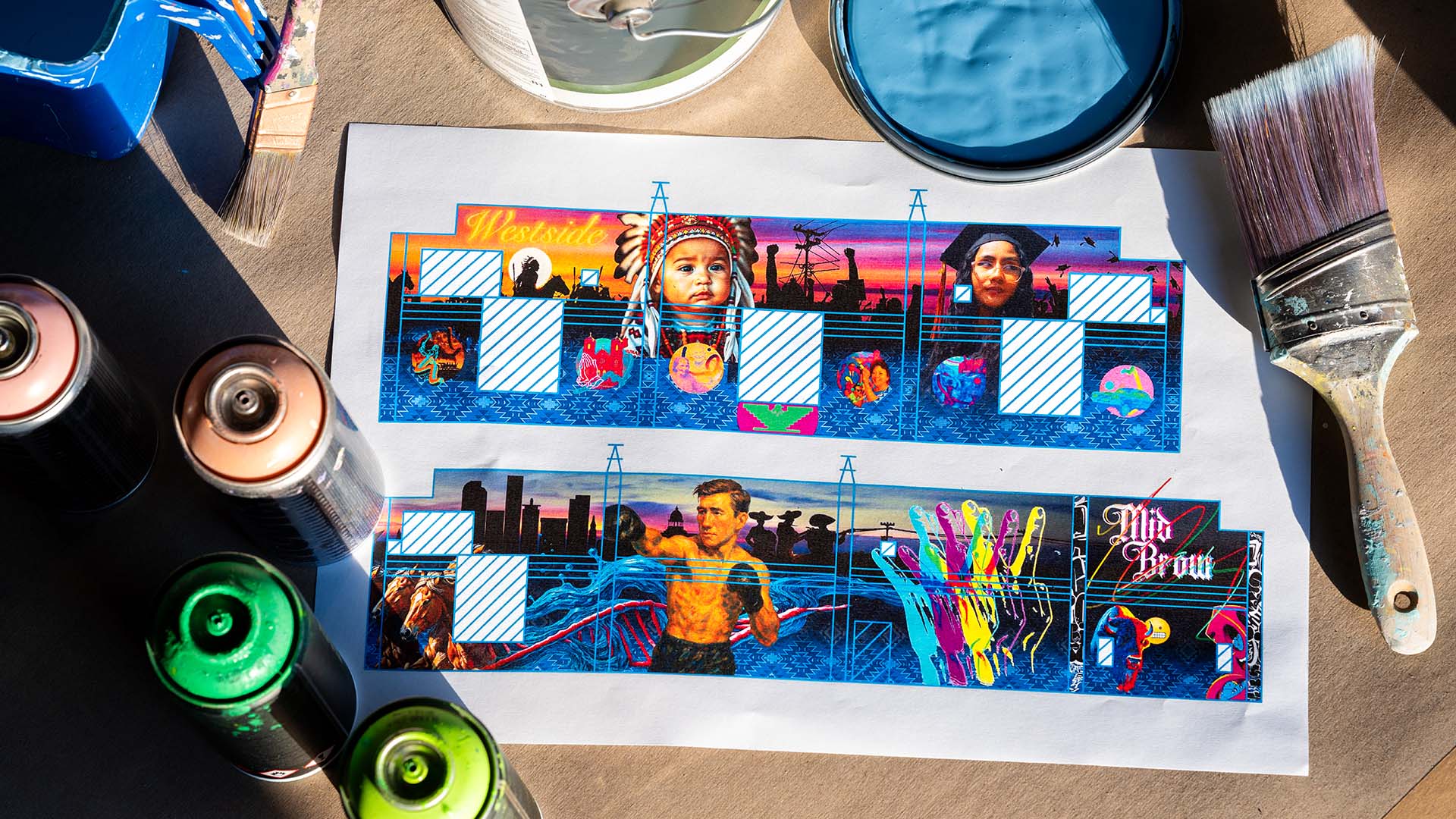
The mural, which is slated to be completed by the end of August, was commissioned through a competitive process as part of a broader effort from MSU Denver to highlight community stories in public spaces. The Latino Cultural Arts Center, Museo de las Americas and the University’s College of Letters, Arts and Sciences selected the Mid-Brow Collective to design the mural through a collaborative process that included community partners.
“The collaborators for this project wanted the stories and history of the community to be told in a way that was contemporary, powerful and permanent,” said John Masserini, DMA, dean of the College of Letters, Arts and Sciences. “The murals in the Santa Fe Art District and city of Denver are living, visual testaments to the lives, achievements, struggles and hopes of the people of this place.”
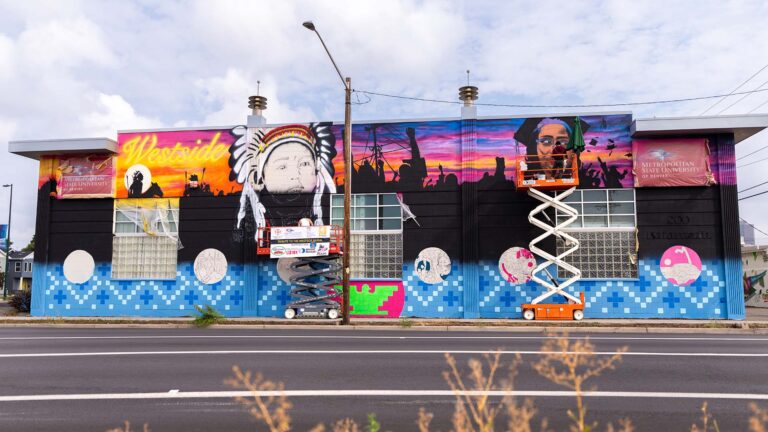
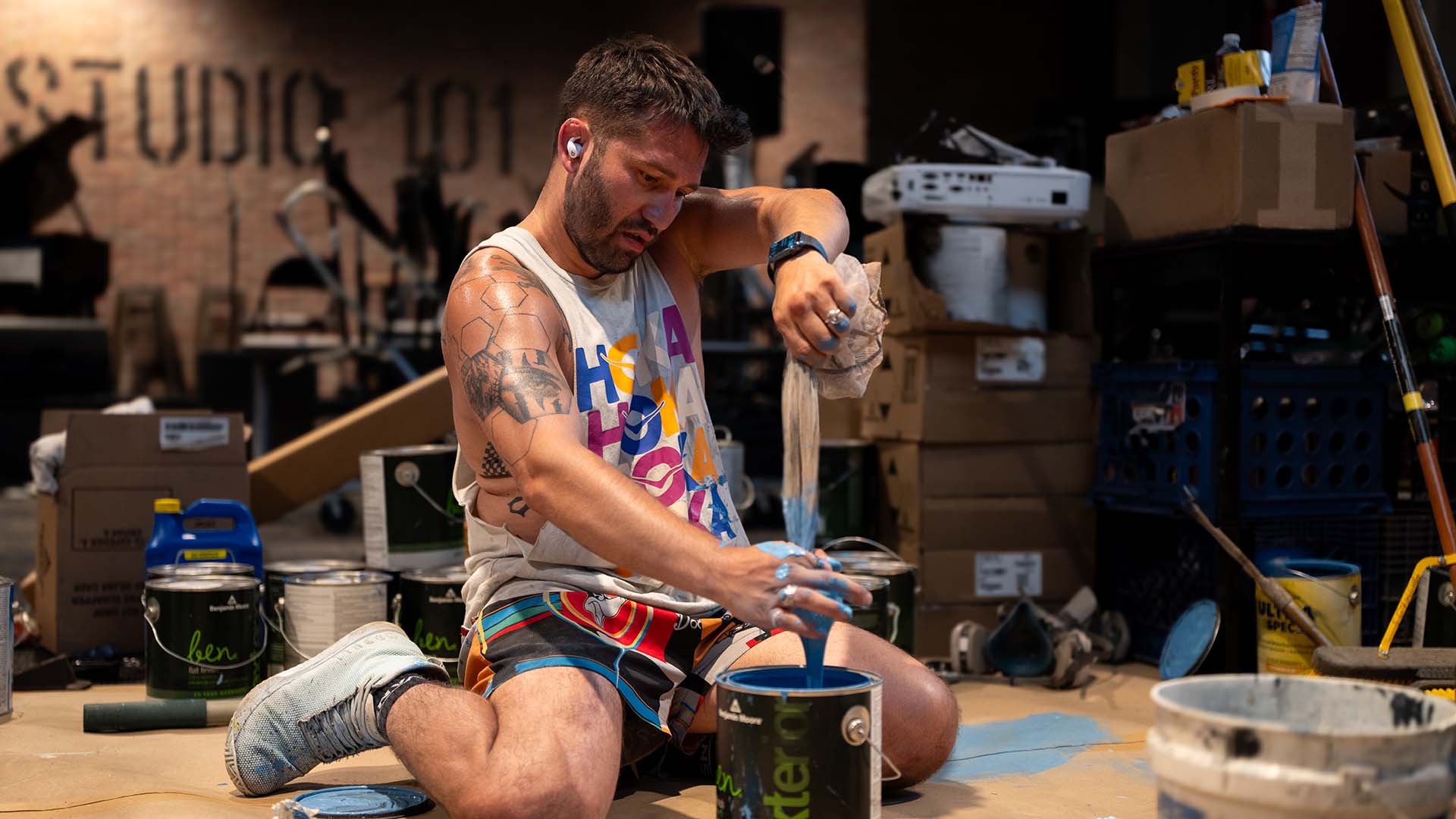
The collective — composed of retired MSU Denver Art Professor Carlos Frésquez and alumni Ramon Trujillo, Adrian Raya, Zach Armijo and Spencer Euday — is multigenerational, with deep ties to the Santa Fe Art District. For them, the project is a professional milestone and a personal celebration of community identity.
“Our collective came together with the goal of creating public art rooted in heritage and collaboration,” Trujillo said. “This mural is the beginning.”
RELATED: Newly purchased space gives young musicians a place to call home
The mural design pays homage to the cultural fabric of Denver’s West Side, telling stories of resilience, displacement and artistic presence. The final design was shaped by extensive community feedback. It incorporates symbols, layered meanings and “Easter eggs” that can be explored through a QR code-linked digital component. “We’re not painting music notes on a wall,” said Frésquez. “We’re reflecting the neighborhood.”
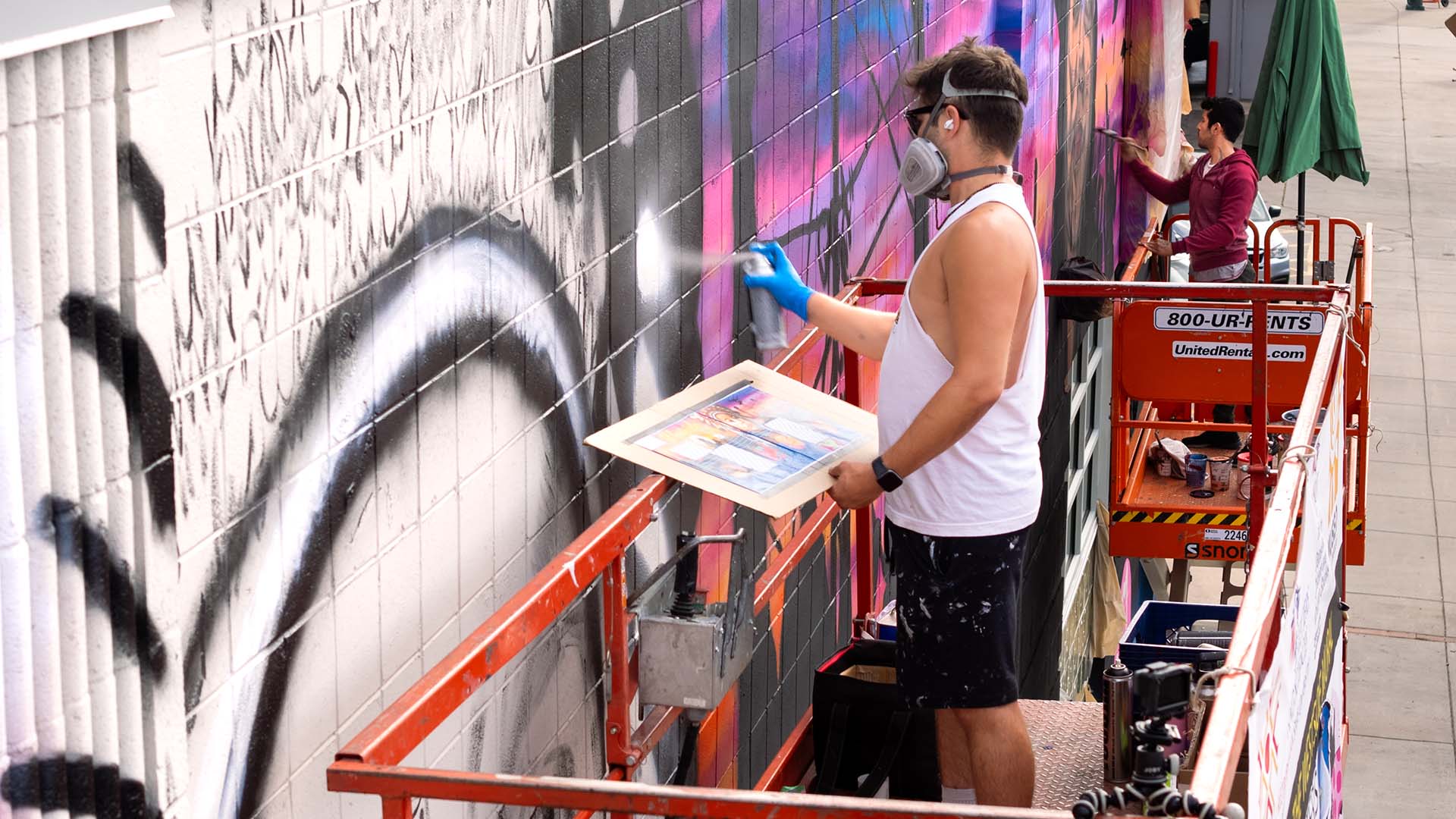
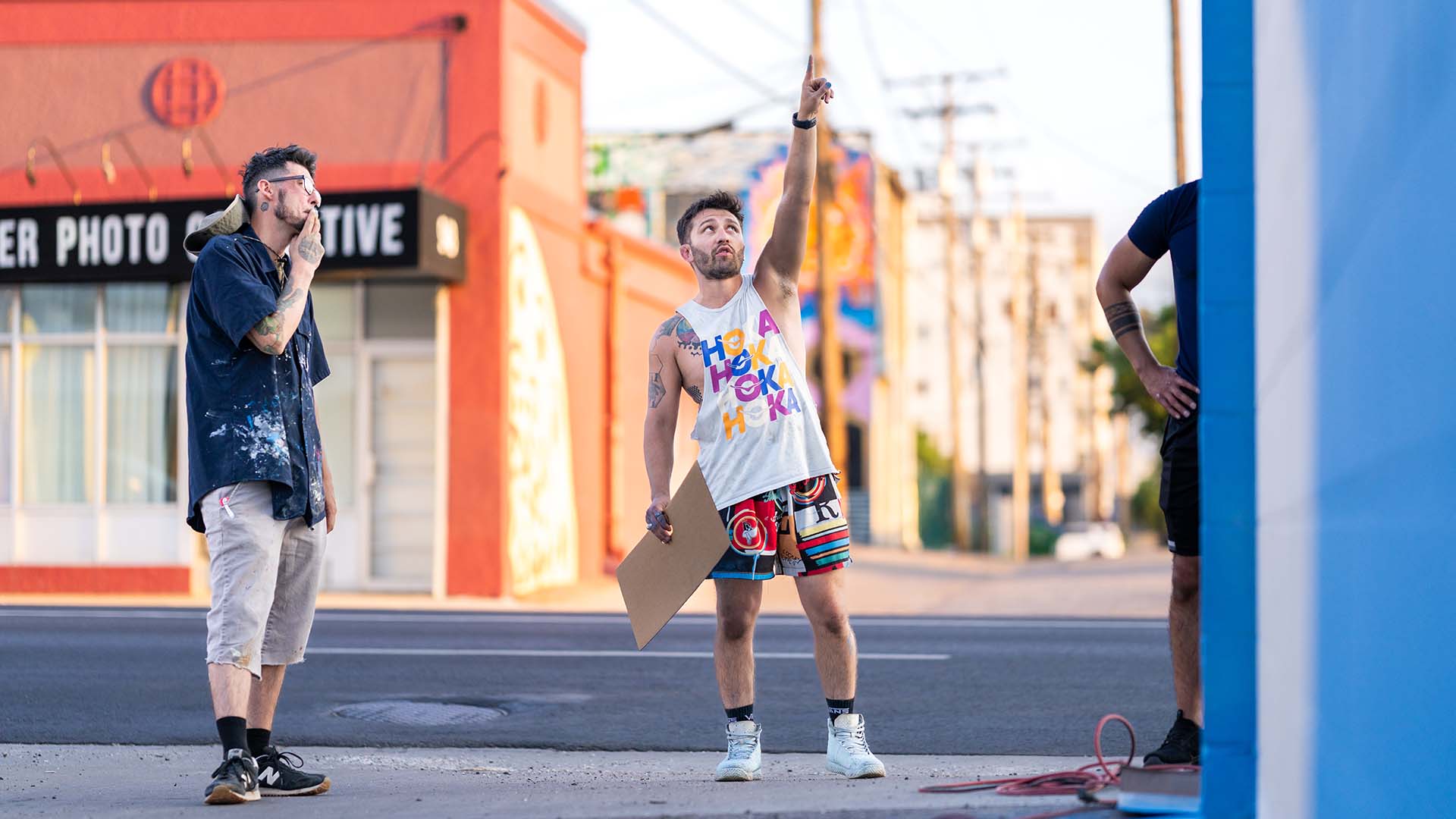
The project also provides opportunities for the next generation of artists. High school interns and MSU Denver students participated in the early painting stages, learning about the technical and activist aspects of public art. “We want students involved in every part of the process — not just painting but understanding how public art can be activism,” said Frésquez.
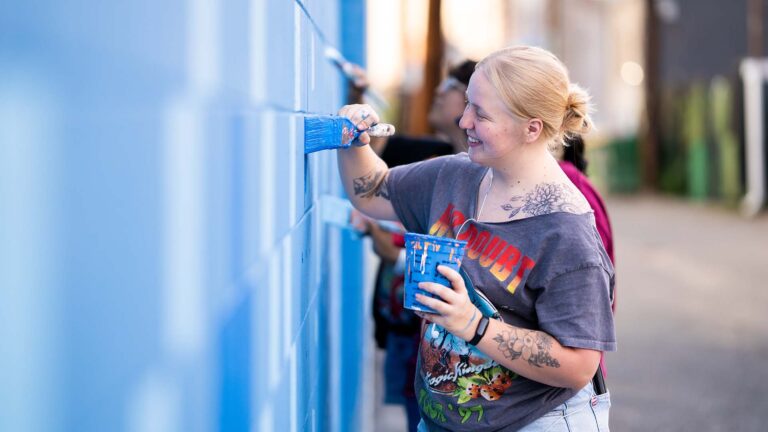
Among the student participants was recent graduate Lillian Malm, who earned her degree in Human Services and Counseling with a concentration in Trauma Studies and minored in Studio Art. Malm aspires to become an art therapist to help traumatized youths express themselves through art. “Art would kind of serve as that bridge to help them talk about what happened to them, how they feel about it, which I think is really beautiful,” she said.
Malm learned about the project in her Intermediate Painting class and said the opportunity was transformative. “It really felt like the chance of a lifetime,” she said. “It’s hard to get into some of these opportunities. So it’s really cool that they were opening it up to people with no experience.
“We were painting on the actual wall. I learned a ton. It was really cool, very special.”
The internship reflects MSU Denver’s commitment to experiential learning — giving students real-world experience through internships and jobs before they graduate. For students, the project became a chance to step into the world of public art.
Malm is now applying for graduate programs in art therapy but hopes to continue engaging in public art alongside her future career. “I really fell in love with it through this experience,” she said. “I’m hoping that this opens the door for me to be able to do more work like this because now I have experience on my résumé.”
For Trujillo, the project is about creating lasting impact. “I always say I want to leave a scar on this planet in the most positive of ways,” he said.
Frésquez echoed that sentiment, noting the mural’s role in preserving community memory. “You walk past Kalamath every day and don’t know what used to be here,” he said. “This art will help reclaim and retell those stories.”
Learn more about Music programs at MSU Denver.