Colorado’s first Indigenous poet laureate hopes to teach and hear untold stories
MSU Denver alumnus Crisosto Apache’s tenure begins as the state celebrates its 150th anniversary.
This story appears in the fall 2026 issue of MSU Denver Magazine.
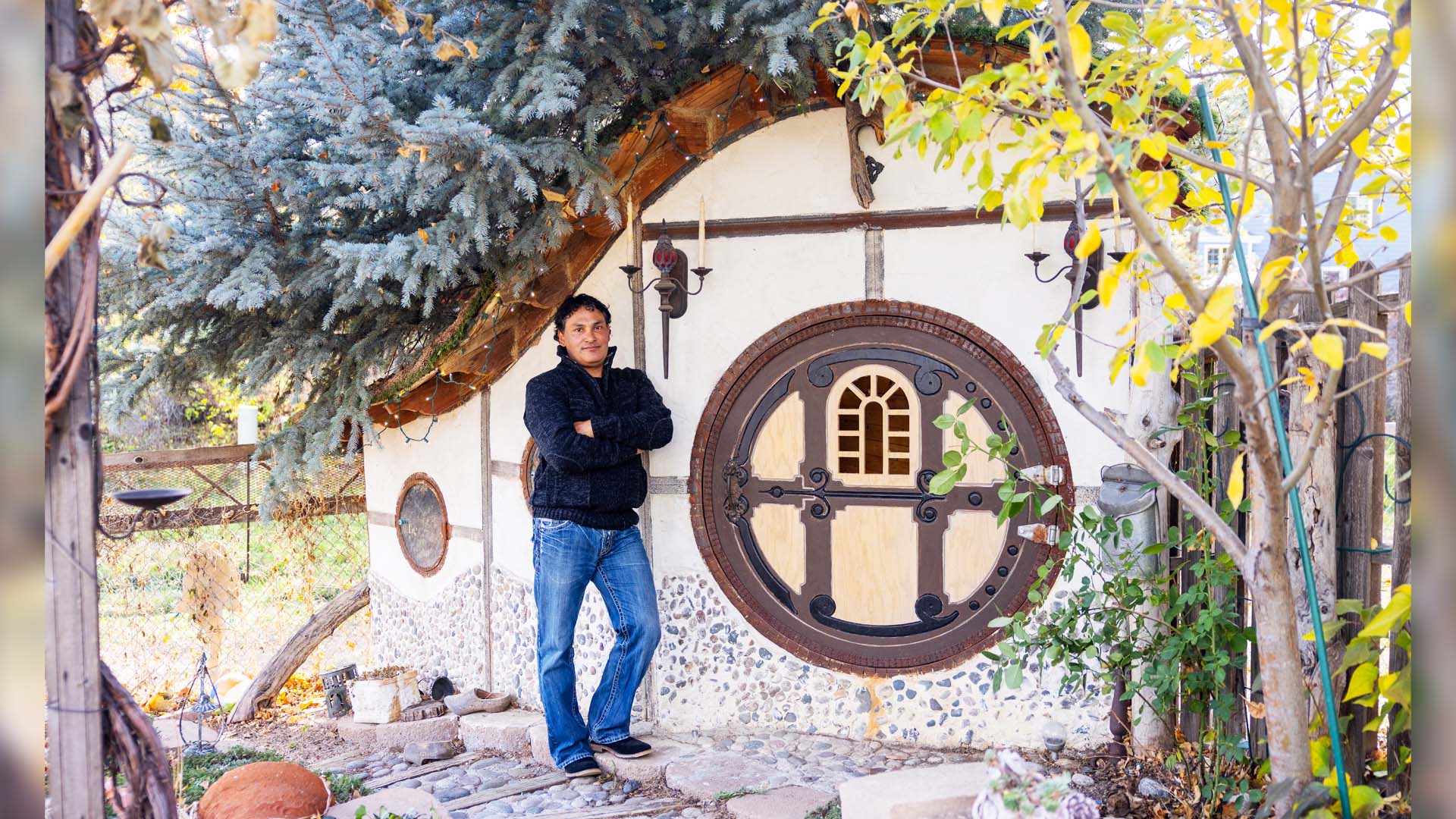
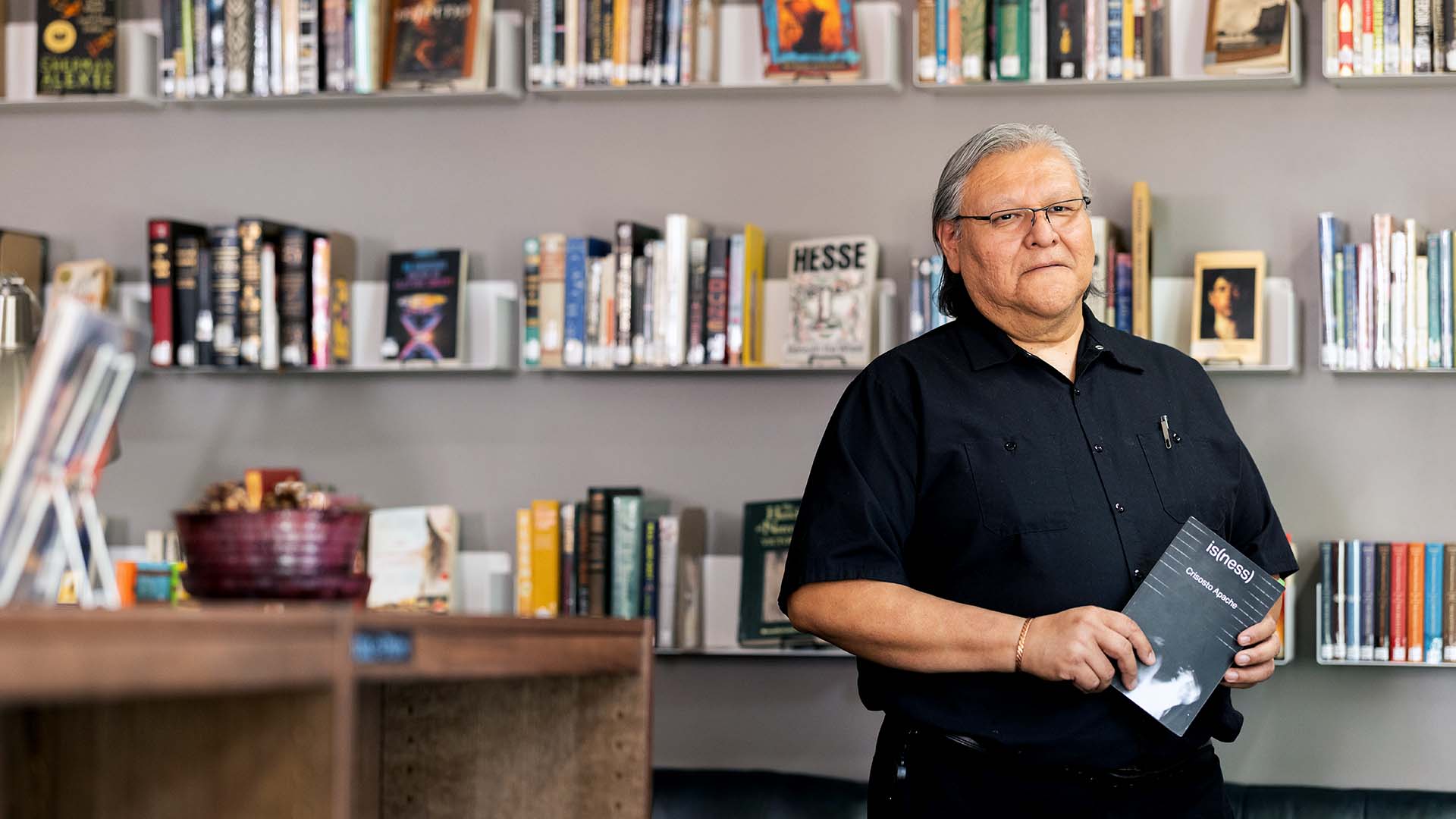
When the call came offering him widespread fame, a place in Colorado history and a chance to make his voice heard, Crisosto Apache didn’t answer the phone.
“I was sitting in my house grading papers, and I saw the call. I thought it was political, so I didn’t answer,” he said.
Even later, when he checked voicemail and heard a message from Gov. Jared Polis, telling him he’d been named Colorado’s Poet Laureate, “I didn’t believe it. A couple hours later I went back and listened to it again.”
No wonder it took a bit to sink in: Apache is the state’s 11th poet laureate. It was, to put it mildly, a shock. “I didn’t realize I was even nominated,” the Metropolitan State University of Denver alumnus said. He is the first Native American to serve in the role, but not the first MSU Denver graduate. That distinction belongs to Bobby LeFebre, who became Colorado Poet Laureate, and the first Latino named to the position, in 2018.
Now, after three months, Apache fully appreciates the magnitude of the recognition. “It means people are reading my work and know what I’m doing.”
“Colorado’s Poet Laureate is our statewide ambassador of the arts, inspiring and uplifting the next generation of artists and poets in our state,” Polis said in the January announcement of the honor. “Crisosto will be a strong advocate for the arts and art education, helping youth discover poetry, and bringing Coloradans together.”
Apache succeeds Andrea Gibson, who served from 2023 until their death from ovarian cancer in July 2025.
RELATED: ‘Northside’ story
He takes on the role at a milestone moment; Colorado commemorates its 150th anniversary of statehood this year, and the nation marks its 250th birthday.
As a Native American — he is Mescalero Apache, Chiricahua Apache and Diné — he is keenly aware of the unique position he is in: commissioned to celebrate Colorado’s statehood while acknowledging that came at terrible cost to Native people.
“It puts me in an interesting situation, definitely,” Apache said. He said he’s gotten pushback from some Native Americans, criticizing him on social media for accepting the post. He sees it as an opportunity. “I can use it as a teaching moment and address situations that face Indigenous people.
“I’m trying to perceive it from a poetic perspective and not make it so much political.”
In addition to observing all the trappings of a sesquicentennial, Apache said he’ll focus on working with young people across Colorado. “I want to teach poetry to as many young people as I can,” he said. Toward the end of his tenure, he hopes to publish an anthology “highlighting the young people and young voices.”
Along the way, he offers encouragement to aspiring poets and writers. “Times are changing, I can see that. But poetry is a creative outlet — and that’s not to say it can’t be a profession. There is an industry out there for creative writers. You can see that the internet and in many different communities,” he said.
Another goal, one he’s already started on, is visiting all 64 Colorado counties “to look at the different cities and towns and focus on the narrative of these places,” he said. “Each town, each community has a story behind it.” To help residents tap into those stories, he’s teaching workshops in the towns he visits.
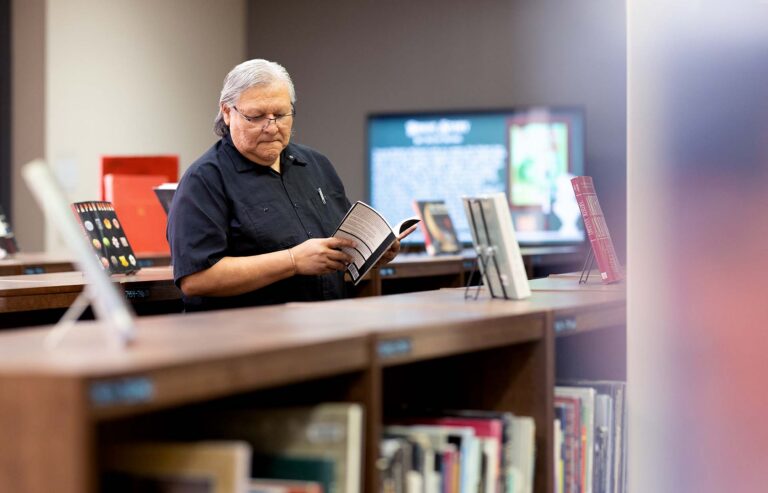
His own story began in New Mexico (he moved to Colorado for college) initially at Boulder’s Naropa University. He left there and searched for an affordable college that would focus on writing. His spouse, Todd, recommended MSU Denver.
At MSU Denver, he majored in English and minored in Native American Studies. He took two classes from retired longtime English Professor Sandra Doe, Ed.D., who remembered her famous former student as a “striking figure.”
“What I enjoy about his poetry is the patient but unflinching look at his own Native American culture in some of his poems, using words from his Mescalero Apache and Diné languages,” she said.
The multilingual poet has published three collections: “GENESIS,” “Ghostword” — a finalist for the Colorado Authors League award in poetry — and “Is(ness).” He also is a winner of the Betty Berzon Emerging Writer Award.
Apache expects to stay pretty busy during his tenure as poet laureate. He is writing; teaching at Rocky Mountain College of Art + Design; editing “The Offing” literary magazine; wrapping up an anthology project called “The Starry Field: A Gathering of New Two-Spirit and Indigiqueer Poetry,” that is scheduled for publication this fall; and traveling the state.
One thing he doesn’t plan to spend any time on: solving the mystery of who nominated him. “I think I’d rather just let that be a secret.”