Building bridges: Changing the way we understand and provide brain injury care
Incorporating experience and immersive training, MSU Denver students get empathy-based training and a firsthand look at the future of TBI treatment.
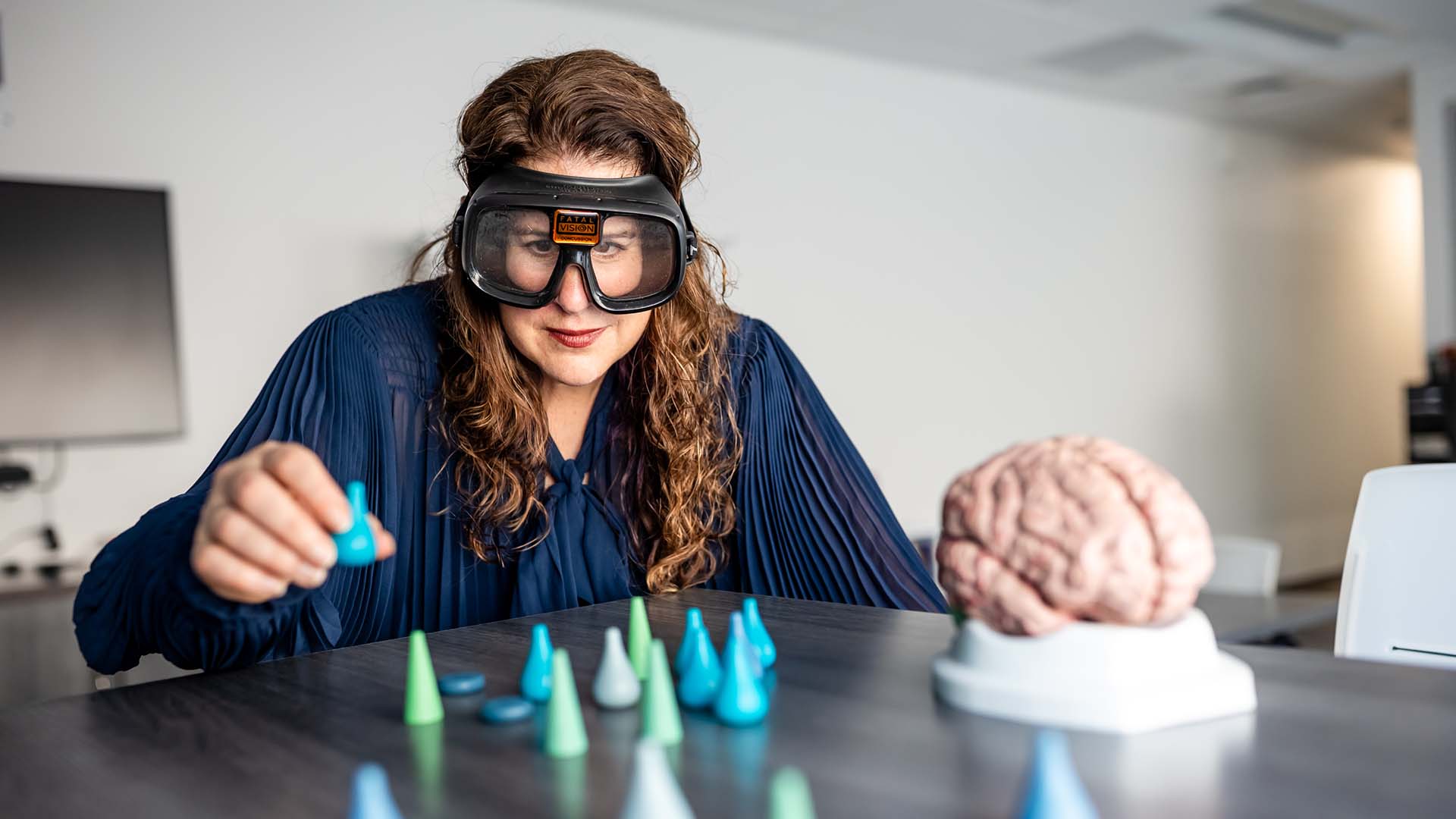
When Catrina Harrell, a student in Metropolitan State University of Denver’s Speech-Language Pathology program, began working with Associate Professor Kathy Hardin, Ph.D., the experience sparked an unexpected transformation — not just for her studies, but also to her sense of self.
“I’ve always been drawn to helping people communicate,” Harrell said. “But through this project, I realized I was also helping myself heal.”
Harrell joined Hardin’s CATBIRD Lab (Communication Advances in Traumatic Brain Injury Rehabilitation Delivery) as a graduate research assistant. Funded by a grant from the Colorado Department of Human Services’ MINDSOURCE Brain Injury Network, the program uses immersive simulation to help health care and justice professionals develop empathy for people living with traumatic brain injury (TBI).
TBIs are common. About 18.2 % of U.S. adults report having sustained a brain injury; in Colorado, more than 500,000 people are estimated to have experienced one.
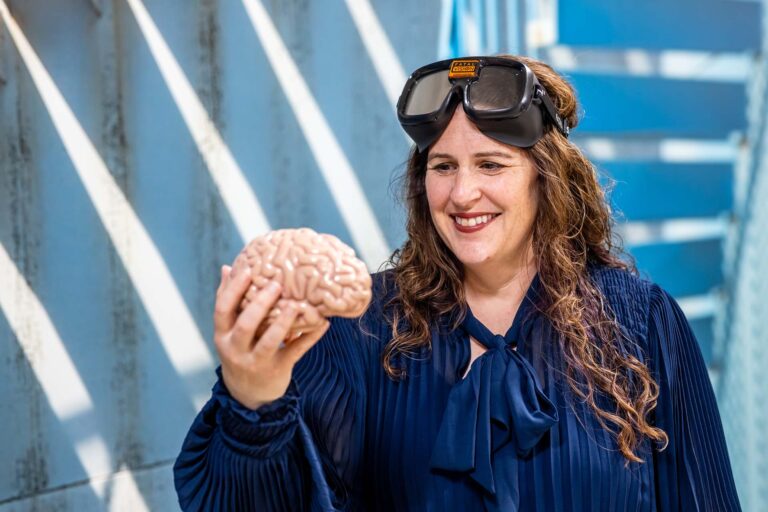
That’s where the work of people like Hardin and Harrell comes in. They use equipment such as concussion goggles and sound generators that create ringing or buzzing sounds to construct simulated environments. Participants complete everyday tasks — reading, texting, listening to lectures — while experiencing conditions that mimic the sensory and cognitive effects of a TBI.
Joe Hoover, an MSU Denver graduate research assistant, has sustained multiple concussions and lives with a mild TBI. He has seen the impact simulations can have.
“Noise, light, even conversations can feel like too much when you have a TBI,” he said. “When students take off the goggles after the simulation, you can see it click — the look of ‘Oh, wow, this is real.’”
The goal of creating those experiences, Hardin said, is to close a gap that too often defines patient care.
“Health care providers don’t automatically imagine the world from a patient’s perspective,” she said. “Empathy takes intentional effort and training.”
The Empathy Bridge
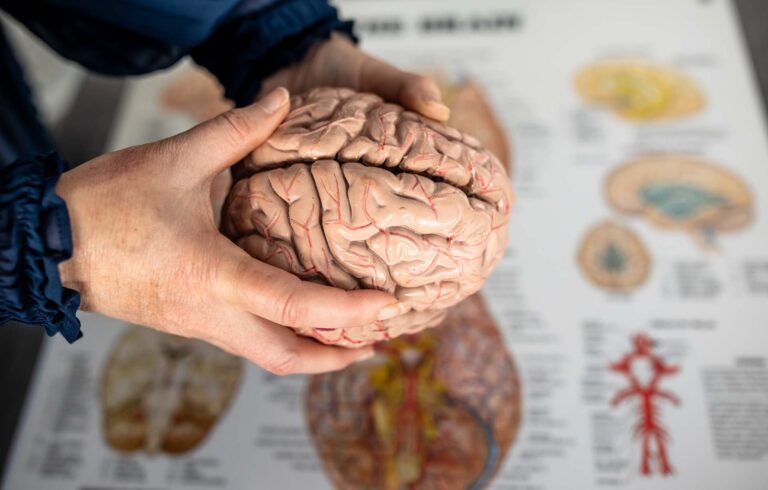
Hardin calls the framework developed from her research the TBI Empathy Bridge, a conceptual model that acknowledges that providers can never truly know what a patient experiences but can meet them halfway through reflection, humility and active listening.
It’s effective, too: A 2023 review of published research found that higher empathy among clinicians is associated with better patient experiences and clinical outcomes.
“This work is about improving care by improving understanding,” Hardin said.
Initially piloted with MSU Denver graduate students in the Department of Speech, Language, Hearing Sciences and undergraduates in Criminal Justice and Criminology, the simulation has expanded to include partners such as the Denver Office of the Municipal Public Defender and the Colorado Department of Education. The project’s success has led to additional funding, articles in multiple peer-reviewed publications and national conference presentations — all pointing to a simple but profound truth: Empathy can be taught.
RELATED: Speech-language clinic helps kids find their voice
Walking in someone else’s shoes
For Harrell, that principle became personal.
“When we’re trying to teach cognitive empathy, that’s like walking in somebody’s shoes,” she said. “You can read about it, but without lived experience, there’s still a disconnect.”
Harrell helped facilitate simulation sessions, and the experience led her down her own path of self-discovery. While working with a Canadian researcher on the University of Toronto’s ABI Toolkit, designed to help women experiencing intimate-partner violence, Harrell began recognizing herself in the very stories she was helping to document.
“I actually found out through working on the ABI Toolkit something about myself that I didn’t even realize,” she said. “I’d never been diagnosed with a brain injury, but as I was reading these women’s stories, it hit me: I’d lived it, too.”
Years earlier, Harrell had survived intimate partner violence while she was six months pregnant. “When it happened, I was rushed to the ER, but no one ever asked me about me,” she said. “The focus was on the baby. No one asked how long I was unconscious, and I never underwent a neurological assessment, which should’ve been protocol,” noting that lack of holistic treatment often leads to systemic underdiagnosis of TBIs and to cases like hers going under the radar.
The revelation was healing and motivating. “It was mind-changing,” Harrell said. “If I could help myself through this work, imagine how many other women have never been diagnosed or even asked those questions.”
Hardin said these insights underscore why student involvement is critical. Their own experiences help expand empathy training into justice settings and education systems, where misunderstanding brain injury can have devastating consequences.
According to the Brain Injury Association of Colorado, up to 60% of people in the legal system and more than half of unhoused people report a history of brain injury.
Becoming the change
For Harrell, a first-generation college student and single mom of four, the experience has ignited a passion that will extend far beyond graduation.
Her next stop is a prestigious learning opportunity at the Rocky Mountain Regional VA Medical Center, making her one of only two students in the nation selected for the placement. There, she hopes to apply what she’s learned to veterans experiencing TBI and related neurological conditions.
Hardin sees that kind of advocacy as the project’s ultimate goal.
“This started as a small $10,000 grant,” she said. “Now it’s grown into something statewide. But more importantly, it’s changing how students think, how providers listen and how survivors are seen.”
Save the date: MSU Denver’s College of Health and Human Sciences is sponsoring a Traumatic Brain Injury Conference March 6, 2026.