EMT training program opens new path to healthcare careers
MSU Denver, Denver Health partnership makes it easier to turn emergency medical training into college credit
Justin Harper knows a healthcare career doesn’t always follow a straight line.
Denver Health’s chief paramedic first enrolled at Metropolitan State University of Denver in 1993. But he didn’t finish his bachelor’s degree until 2019, after returning to school while balancing family life and growing professional responsibilities working as a paramedic at Denver Health.
Earning that degree “was beneficial for my career,” Harper said. With a degree, “you can really end up … moving upward and onward.”
Now, he’s helping expand a partnership that could give more students a starting point in healthcare — and college credit to carry into their next chapter.
Beginning in January, MSU Denver and Denver Health will expand their longstanding partnership to offer integrated Emergency Medical Technician training through the University, giving participants a more direct route to academic credit and further education while helping address Colorado’s emergency medical workforce needs.
Filling an urgent need
The expansion comes as emergency medical services face persistent staffing challenges. An April 2026 summary from the Emergency Medical Services Association of Colorado reports that 75% of agencies reported an unstable workforce in a survey spanning 10 of Colorado’s 11 EMS regions. Nationally, a 2025 study published in the Journal of Public Health Management and Practice found that annual turnover among EMS clinicians rose from 16% in 2018 to 23% in 2023, underscoring the need to train new providers and retain experienced personnel.
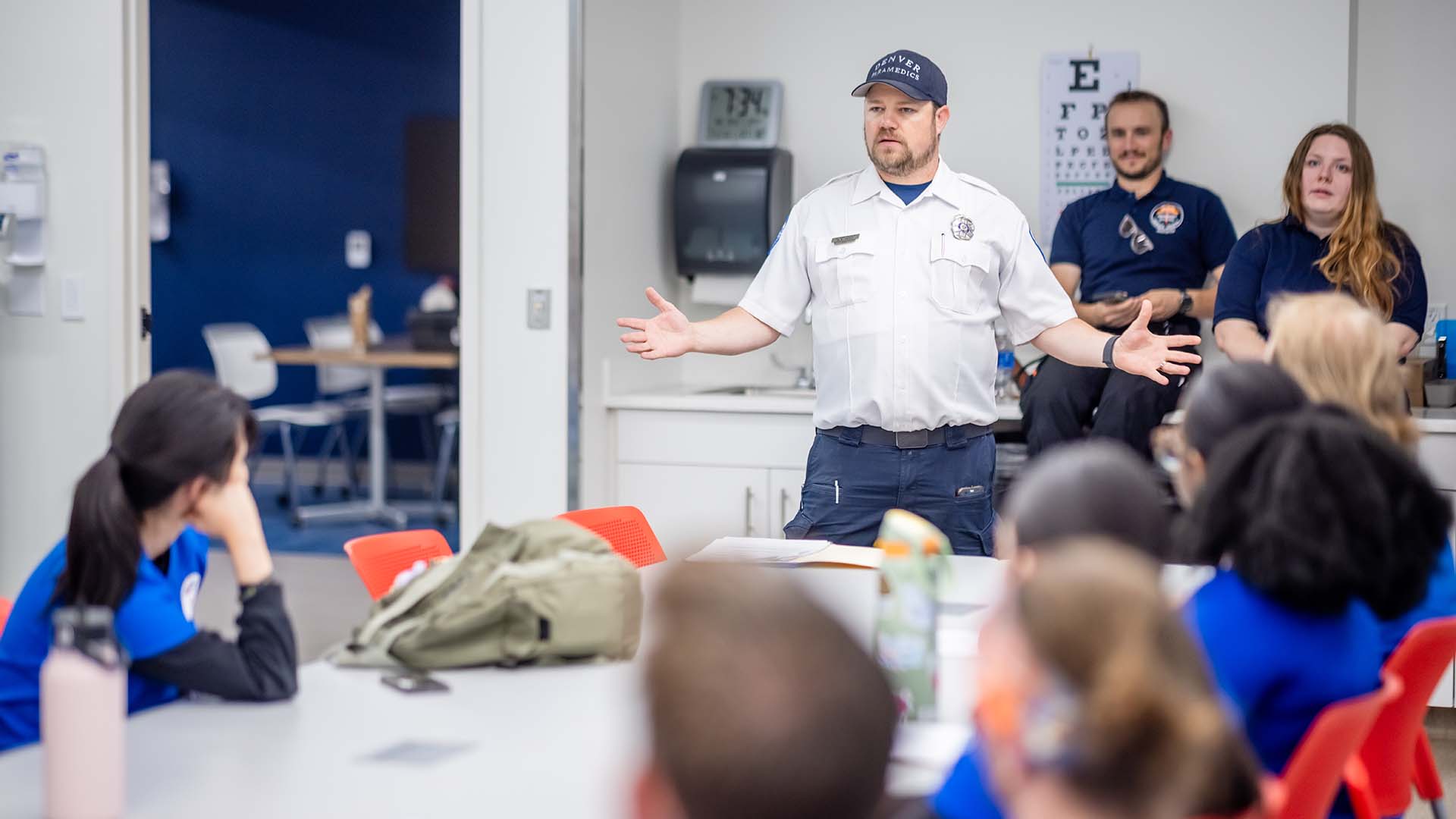
For Harper, who previously led education and training for Denver Health’s Paramedic Division, the opportunity extends beyond preparing people to work on ambulances.
“We’ve seen many, many of our students go on to nursing school, PA (physician assistant) school, and even go on to be physicians,” he said.
MSU Denver’s Office of Innovative and Lifelong Learning will administer the program during its first year before it moves to the University’s Department of Health Professions. Denver Health will continue providing instructors and clinical training, while the University will provide the academic framework and learning resources.
Real-world training
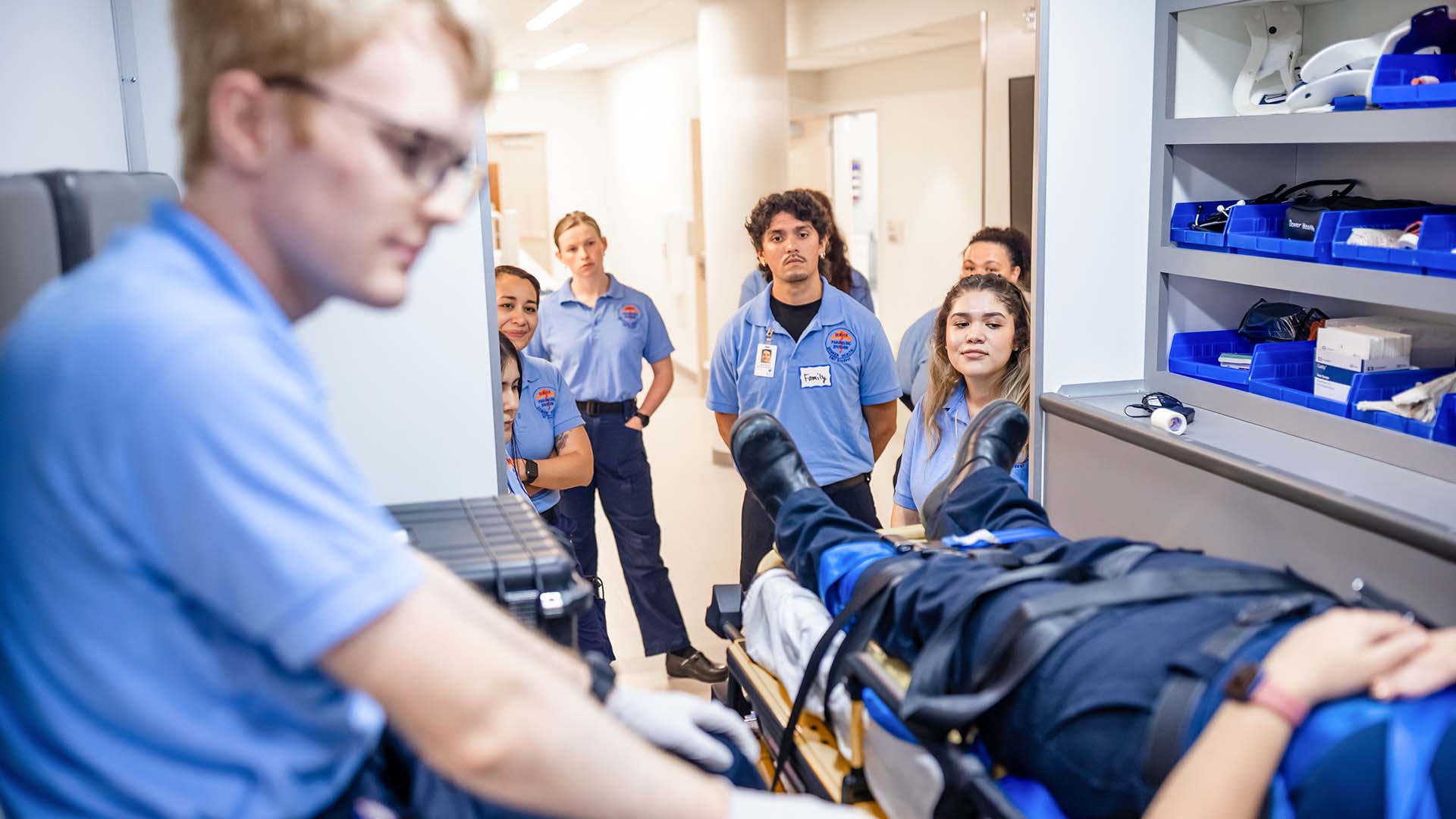
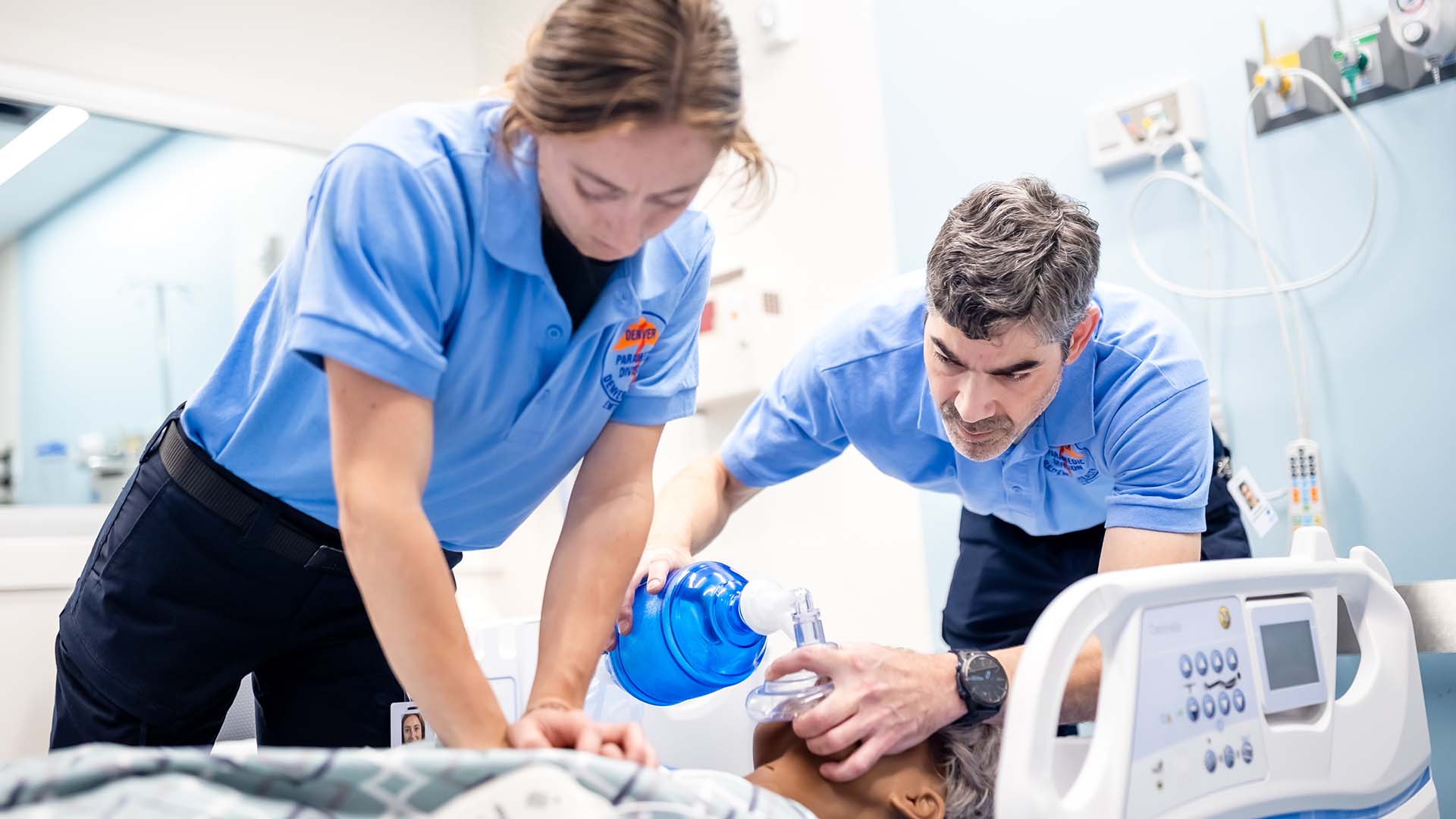
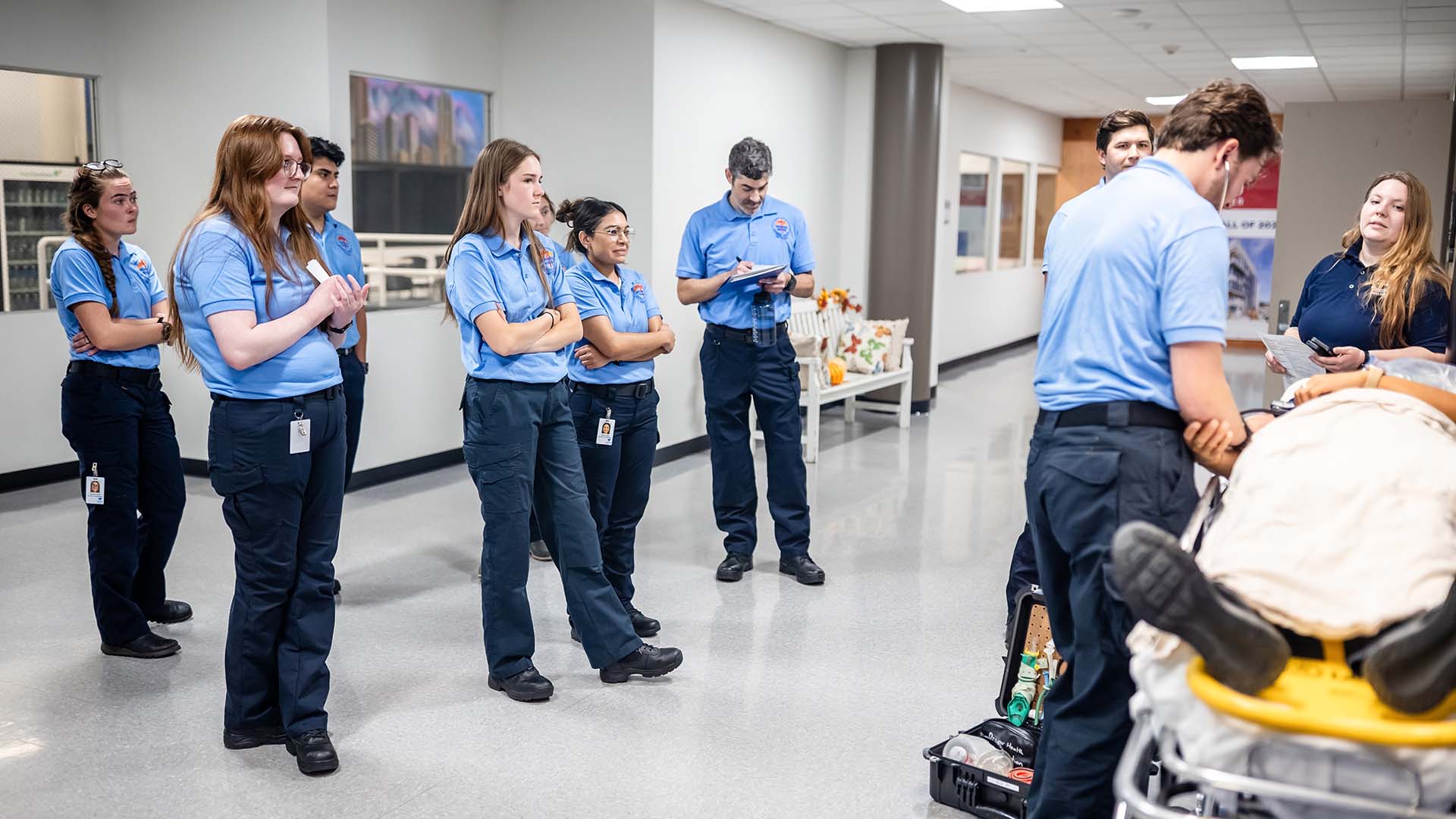
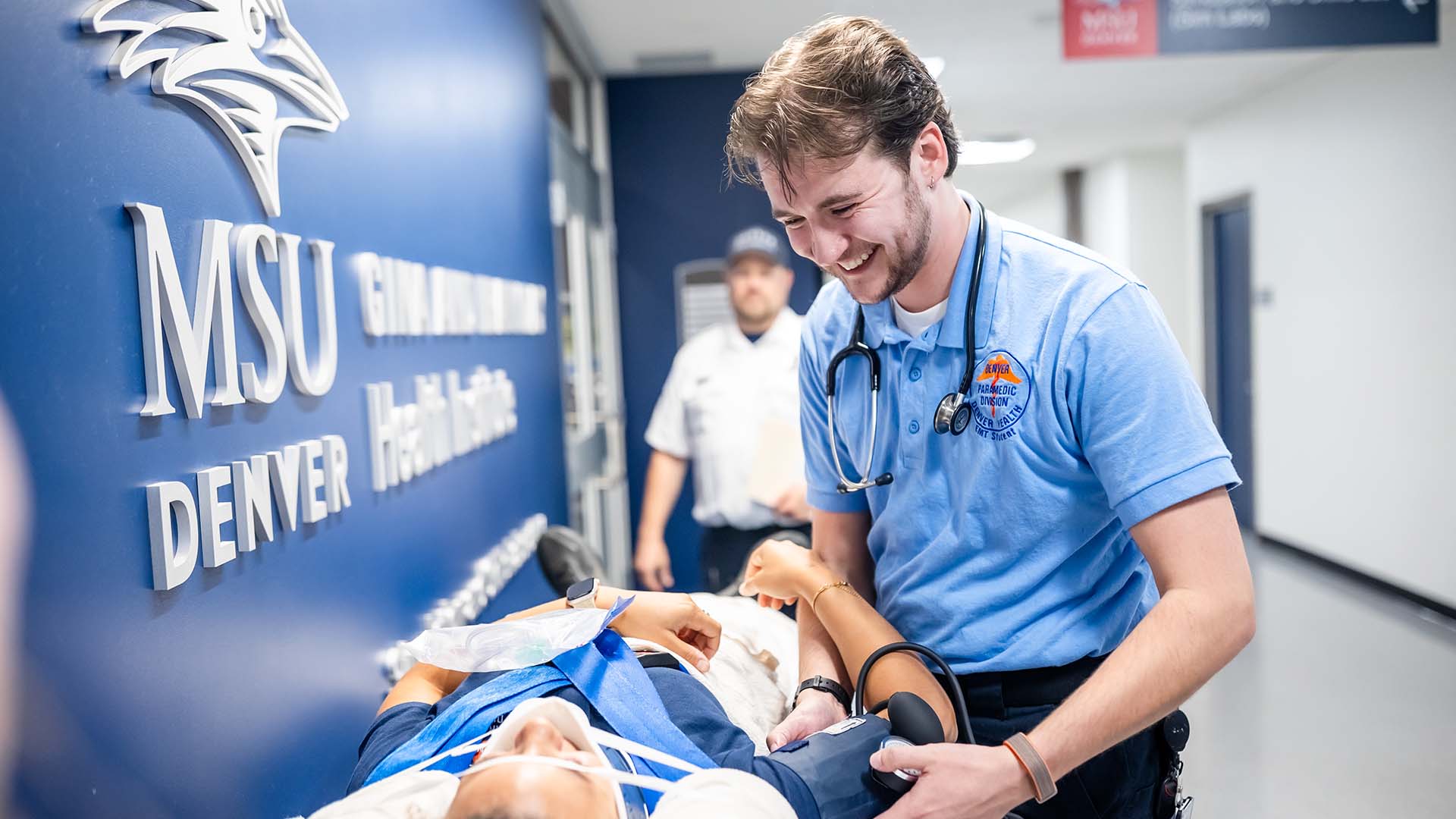
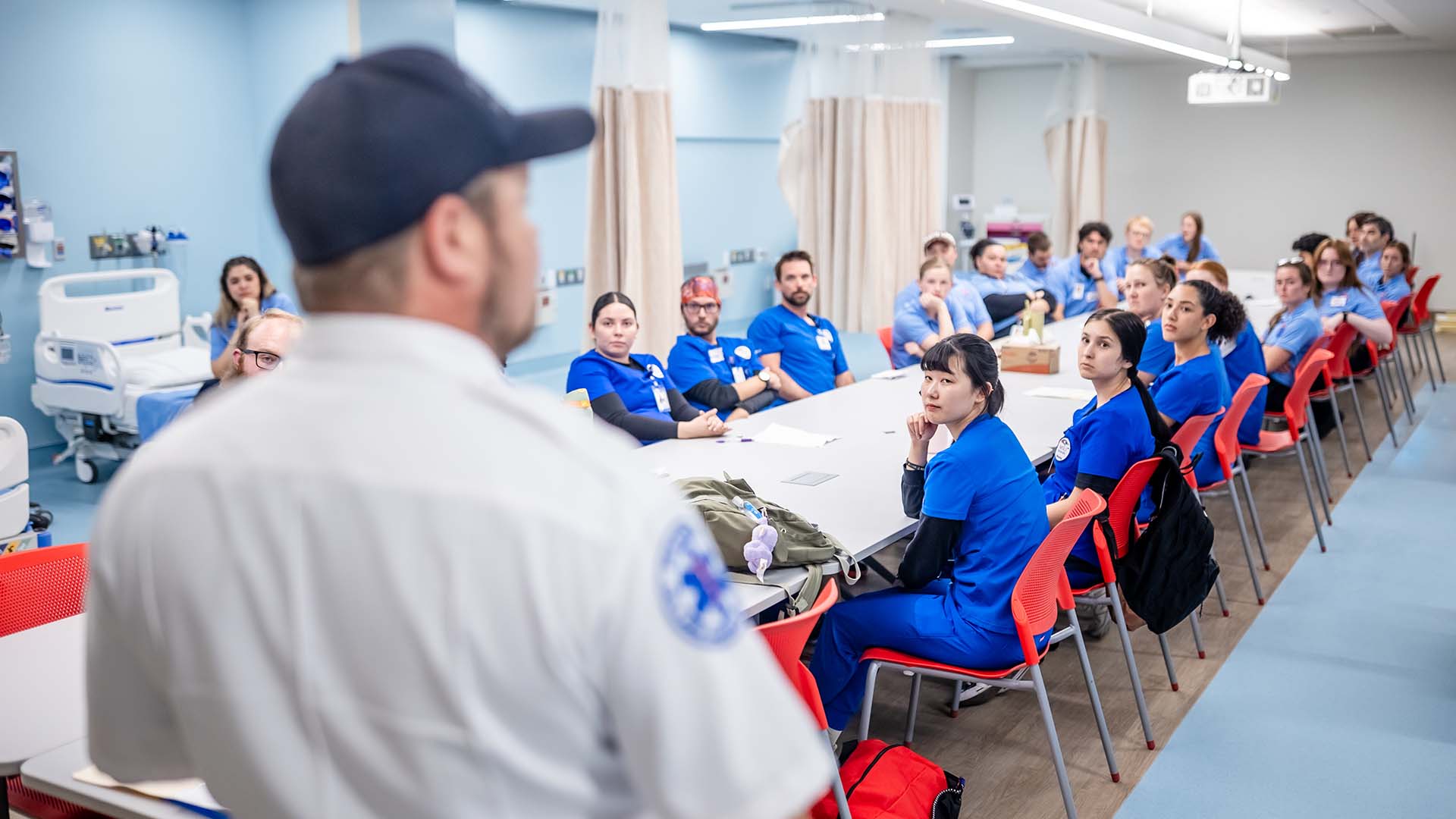
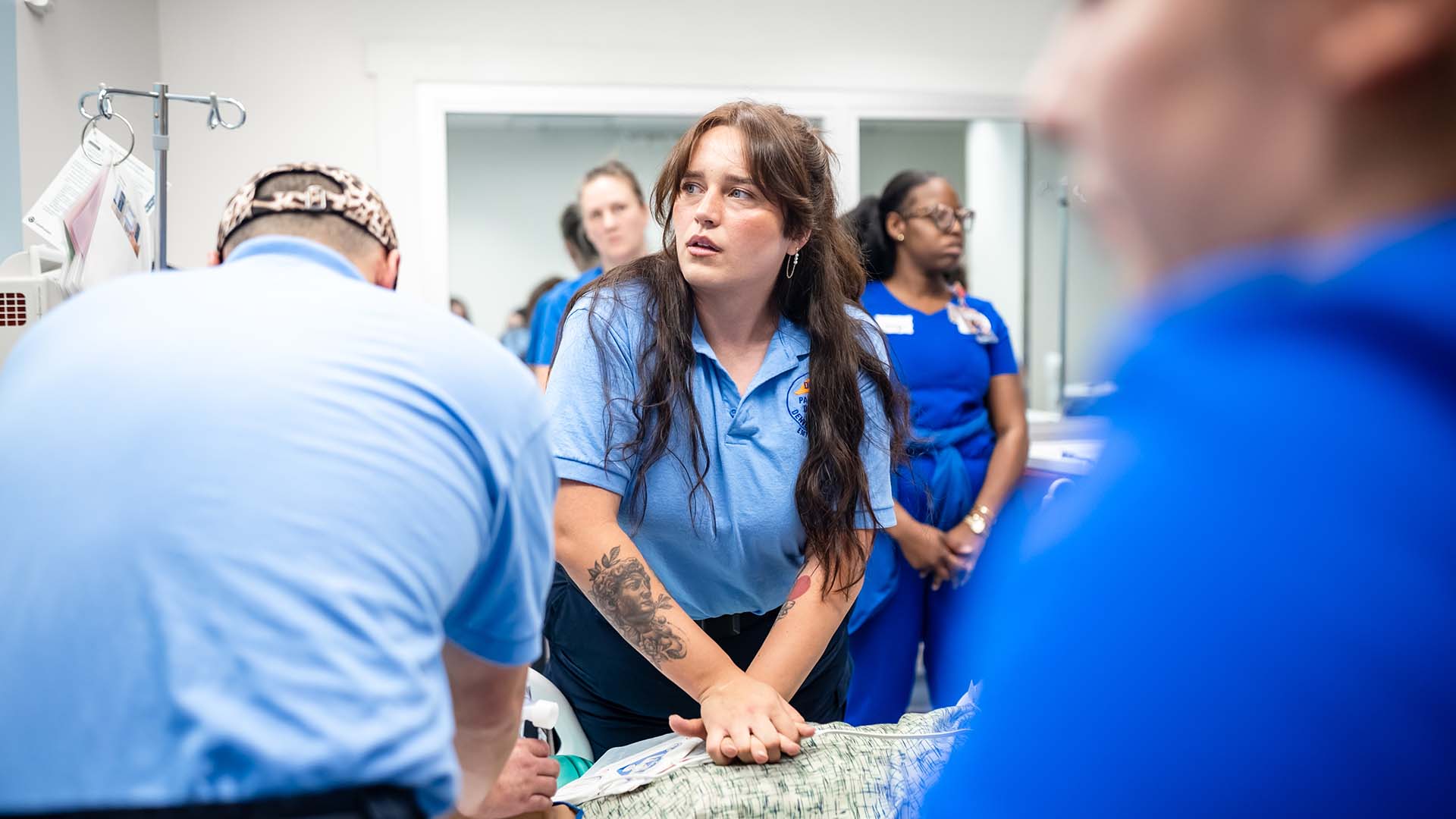
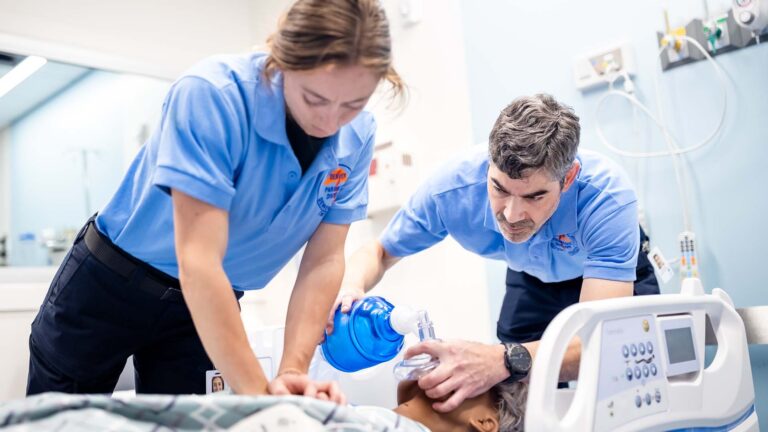
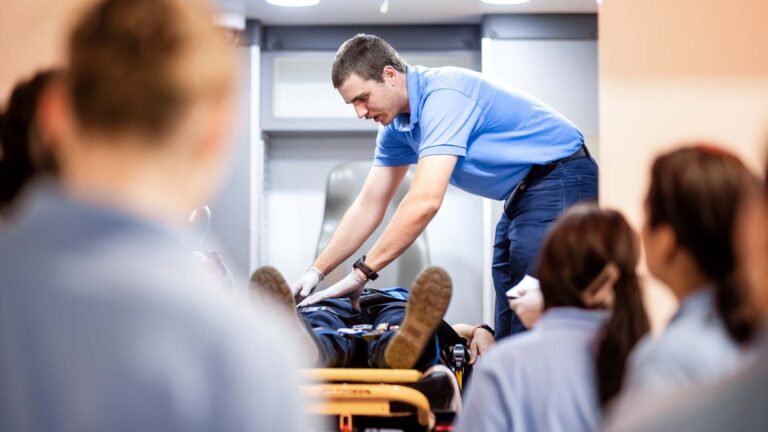
The 15-week course combines classroom instruction and hands-on skills with opportunities to learn aboard Denver Health ambulances and in its emergency department. Students practice assessing patients, taking vital signs, controlling bleeding and responding to cardiac emergencies. Completing the course makes them eligible to test for certification through the National Registry of Emergency Medical Technicians; certification is not automatic.
On campus, students also use MSU Denver’s Gina and Frank Day Health Institute Simulation and Skills Laboratory, including an ambulance simulator and a home health lab. Harper said learning in an environment connected to nursing education helps students understand how care moves from first responders to hospital teams.
Leslie Gallegos, an MSU Denver Criminal Justice alumna currently enrolled in EMT training while working as a legal assistant, said she’s optimistic about the opportunities the degree will provide. “Just being able to be an MSU Denver student and use the facilities when I just want to practice with my team, I think would help a lot, especially because we have such limited time to learn so many things,” she said.
“I’m excited to see how this is going to look for MSU and what that’s going to change in the program.”
The expanded opportunities are central to the partnership for Garrett Chism, an MSU Denver Health Professions faculty member and alumnus who began his own EMT training at age 16. Now, he works as a Denver Health paramedic with Denver’s Support Team Assisted Response (STAR) program, which puts behavioral health professionals alongside paramedics to respond to mental health crises.
Practicing in simulated and real-world environments is crucial to experience early on, as the work can be demanding. Chism pointed to stressful calls, irregular schedules and workforce turnover as challenges facing emergency medical services. But, he said, “the ability to see the immediate impact of patient care makes the profession deeply rewarding.”
RELATED: Sim labs pave the way for the future of health care
EMTs provide basic life-saving care and can work on ambulances or with fire and emergency departments. Paramedics must have additional training and are able to perform more advanced medical procedures. Both paramedics and EMTs must be licensed, but are usually not required to have college degrees.
However, many emergency medical professionals eventually want to go on to careers in administration or management, or become nurses, physician assistants or physicians. For those roles, degrees are required.
Careers that make a difference
Denver Health’s Paramedic Division is the 911 responder for the city and county of Denver, and Denver Health Medical Center is a Level 1 trauma center, meaning it is equipped to treat the most severely injured patients. Denver Health has offered EMT education for more than two decades, including classes held on MSU Denver’s campus. Previously, students seeking college credit for that training had to navigate requirements at individual institutions and degree programs. The expanded partnership formalizes the academic connection, with an opportunity to earn 12 credits.
For Chism, the partnership addresses two connected needs: preparing emergency responders and introducing more people to healthcare careers.
Harper also sees access as central to bringing more people into the field. He hopes the partnership reaches students who might not otherwise picture themselves in emergency medicine.
Gallegos is I’m excited to see how this is going to look for MSU and what that’s going to change in the program
“From my perspective, what makes a good EMT is somebody who has that drive to help other people, that baseline empathy,” he said.
The program’s goal is simple: to turn that instinct to help into the skills to act when life is on the line.
Application to the MSU Denver/Denver Health EMT training program opens Nov. 1.