Amid a loneliness epidemic, students find connection on campus
MSU Denver is taking steps to combat feelings of isolation and help students build community.

This story appears in the fall 2025 issue of MSU Denver Magazine.
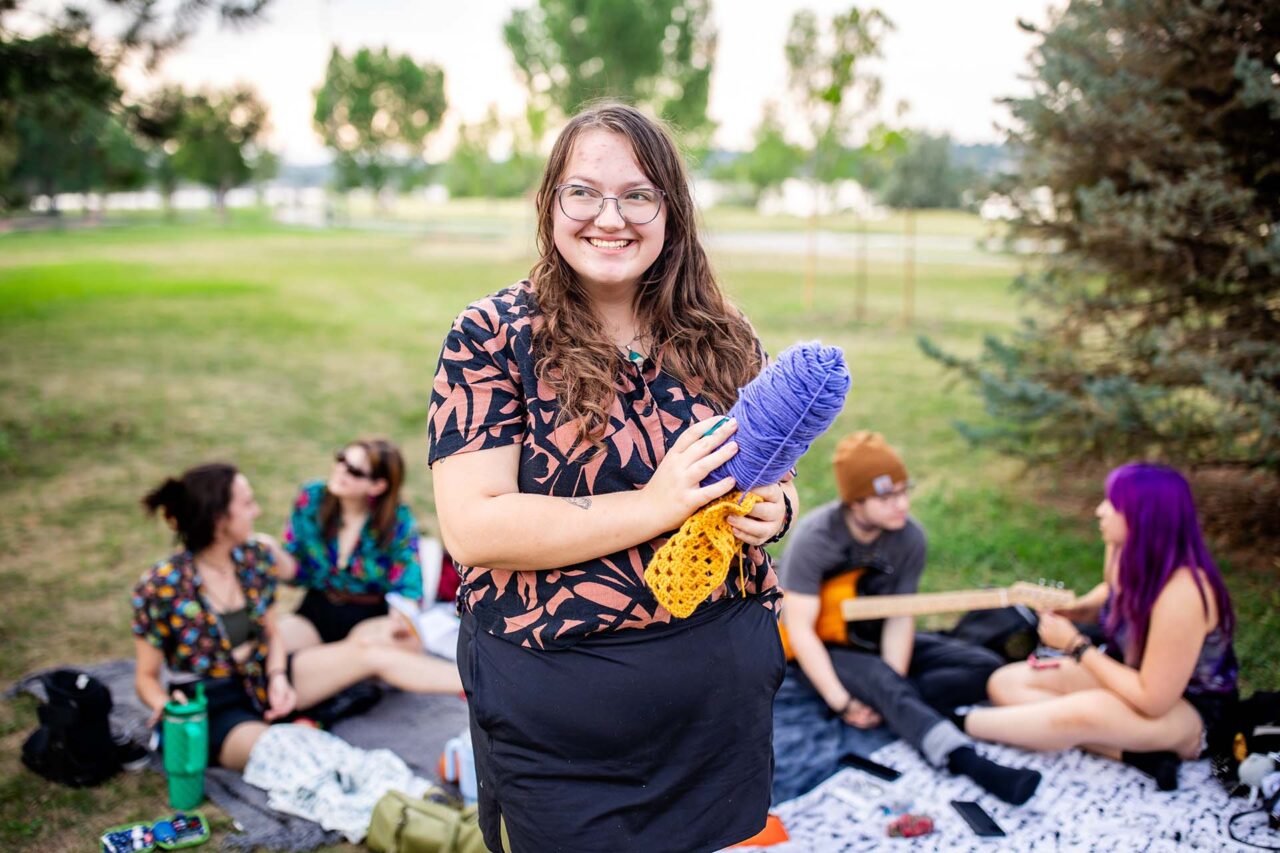
Every month, Ashley Blondo emails 50 or so friends, friends of friends and casual acquaintances, most of whom are fellow Metropolitan State University of Denver students, and invites them to gather at Sloan’s Lake Park to make art.
The art may involve painting or drawing; Blondo, who uses they/them pronouns, even foresees crocheting in the group’s future. But while creating is fun, even therapeutic, it’s the means to a greater objective: building community and fostering connection among fellow students. “Friends have shared that it has been really helpful making new friends,” Blondo said. “One person brought another friend who’s new to (MSU Denver), and now she’s meeting people.”
Meeting people is no problem for Blondo, who expects to graduate next spring with a Psychology degree. “I’m the person who connects people to other people,” they said. “I’m loud and talk a lot in class.”
But they get that it’s not that easy for everyone. “You have to put yourself out there,” Blondo said. “That comes naturally to me, but that’s not true for everyone.”
An epidemic of loneliness
More than ever, Americans are struggling to find meaningful connections. We may have Facebook friends and TikTok followers by the hundreds or thousands; we may be on a first-name basis — electronically speaking, at least — with multimillionaires, movie stars and marquee athletes. But too many of us feel we have no one in our corner, no one who will listen when we need to talk. Definitely no one who’ll take us to the airport or help us move.
What we have in this country, according to a 2023 proclamation by then-U.S. Surgeon General Vivek Murthy, M.D., is an epidemic of loneliness. No group knows that better, or experiences it more, than college-age adults.
Murthy’s proclamation was followed in 2024 by an American Psychiatric Association poll that found nearly one-third of adults had experienced loneliness at least once a week over the previous year, while 10% said they were lonely every day. That frequent, chronic loneliness was reported most in people ages 18-34.
Five years earlier, researchers at health-insurance giant Cigna Healthcare reported significantly higher rates of loneliness. Once again, young people suffered the most. Cigna found that more than seven in 10 people ages 18 to 22 said they sometimes or always feel alone, and 71% of them said no one understands them well.
An innovative approach
While public-health officials and psychologists research the why and what to do about it, college and university leaders don’t have the luxury of lengthy study — they’re too busy working hard to combat the problem every day. That’s certainly happening at MSU Denver, where the challenge may be greater because the University is a commuter school, said Randal Boldt, Psy.D., director of the MSU Denver Counseling Center. But with that challenge has come great innovation.
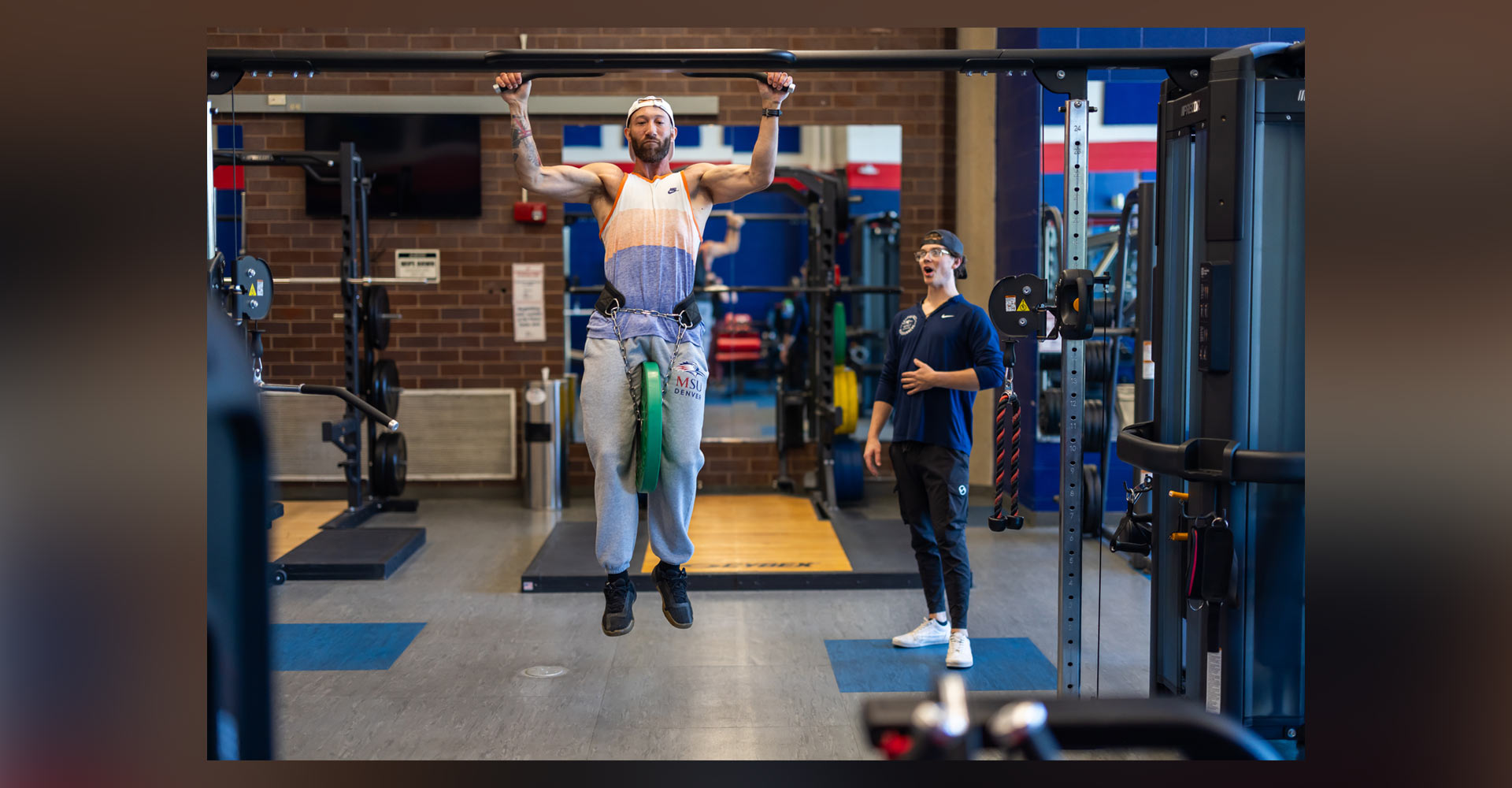
In the past year, the University has reallocated existing resources to create the Student Health and Well-being Department, which is charged with promoting not just student physical health but emotional well-being as well. It does that through counseling and wellness programs and by creating opportunities for recreation.
The University also has created the position of director of Recreation and Well-being. Richard Miccio, a licensed clinical social worker who assumed that role May 1, said it will integrate the work of multiple departments, including the Health Center at Auraria, the Counseling Center and Campus Recreation.
In another major step, MSU Denver has expanded the traditional fall Welcome Week to Welcome Month. The goal is to reach every student, regardless of the time of day or day of the week they’re on campus, said Stephen Cucchiara, executive director of Student Life and Belonging, who spearheaded the change. “We’re trying not to overwhelm students with everything everywhere all at once,” he said.
Now, the first week will be devoted to welcoming everyone onto campus. “The second week,” Cucchiara said, “we want students to feel, ‘OK, I’ve met a couple of other students’; now, let’s go a little further and help you find your community.”
The third and fourth weeks are about wellness and showing students pathways to get the support they need, including peer mentors.

The blame game
Whenever the subject of loneliness and young people comes up, fingers typically point at this generation’s tendencies to walk around staring into phones and to trade physical interaction for online communities. “Our phones, and being sucked into these vortices of scrolling, don’t help with relationship-building,” said Boldt, of the Counseling Center. “I think that’s a part of what’s going on.”
Social media doesn’t get all the blame, however. Young adults started feeling lonelier all the way back in 1976, a year in which phones still had dials on them and a few dozen mathematicians and engineers were on the verge of figuring out how computers could talk to one another. Twenty-five years later, the book “Bowling Alone” detailed Americans’ plummeting participation in social groups such as the PTA, church, clubs, political parties or bowling leagues.
RELATED: Why doomscrolling hooks us — and how to break free
Over the past four years, researchers with the Harvard Graduate School of Education’s Making Caring Common project have been researching the loneliness problem. In 2023, a Gallup poll of college students found 39% reported they had felt lonely the previous day. And a Gallup poll this year found young men are more likely to experience ongoing loneliness than their female counterparts.
So what else is going on? Boldt sees our deep political divide as another culprit. “I think that adds to a sense of fear and a lack of feeling safe with one another,” Boldt said. “That makes building community more of a challenge.”
Blondo agrees. For a class research project last fall after the election, the MSU Denver Psychology student asked adults what causes them stress. “Almost everyone said uncertainty about the future or what’s going on in the world,” they said.
All this matters because the benefits of social connection are much more than just someone to have a beer with on Friday night. A library’s worth of studies show having strong relationships and a good sense of community makes us healthier, helps us live longer and can even keep our brains in better working order.
On the flip side of that coin, those who experience loneliness and social isolation see an increased risk of dreaded health outcomes, including heart disease and stroke.
Connection, community, purpose
One solution that many public-health experts agree on is that connecting to something, particularly something greater than an individual’s immediate wants, helps provide a sense not only of community but of purpose.
In a talk at Harvard’s Kennedy School of Government, psychologist Richard Weissbourd, who has studied loneliness and possible solutions to it, spoke about what we’ve lost as the number of Americans attending church has plunged. In the process, he said, we’ve lost “a place where adults engage kids, stand for moral values, engage kids in big moral questions, where there’s a fusion of a moral life and a spiritual life.”
As The New York Times reported, Weissbourd said he was not advocating that people become religious. Instead, he said, he was suggesting it’s important to have “a sense that you have obligations to your ancestors and to your descendants.”
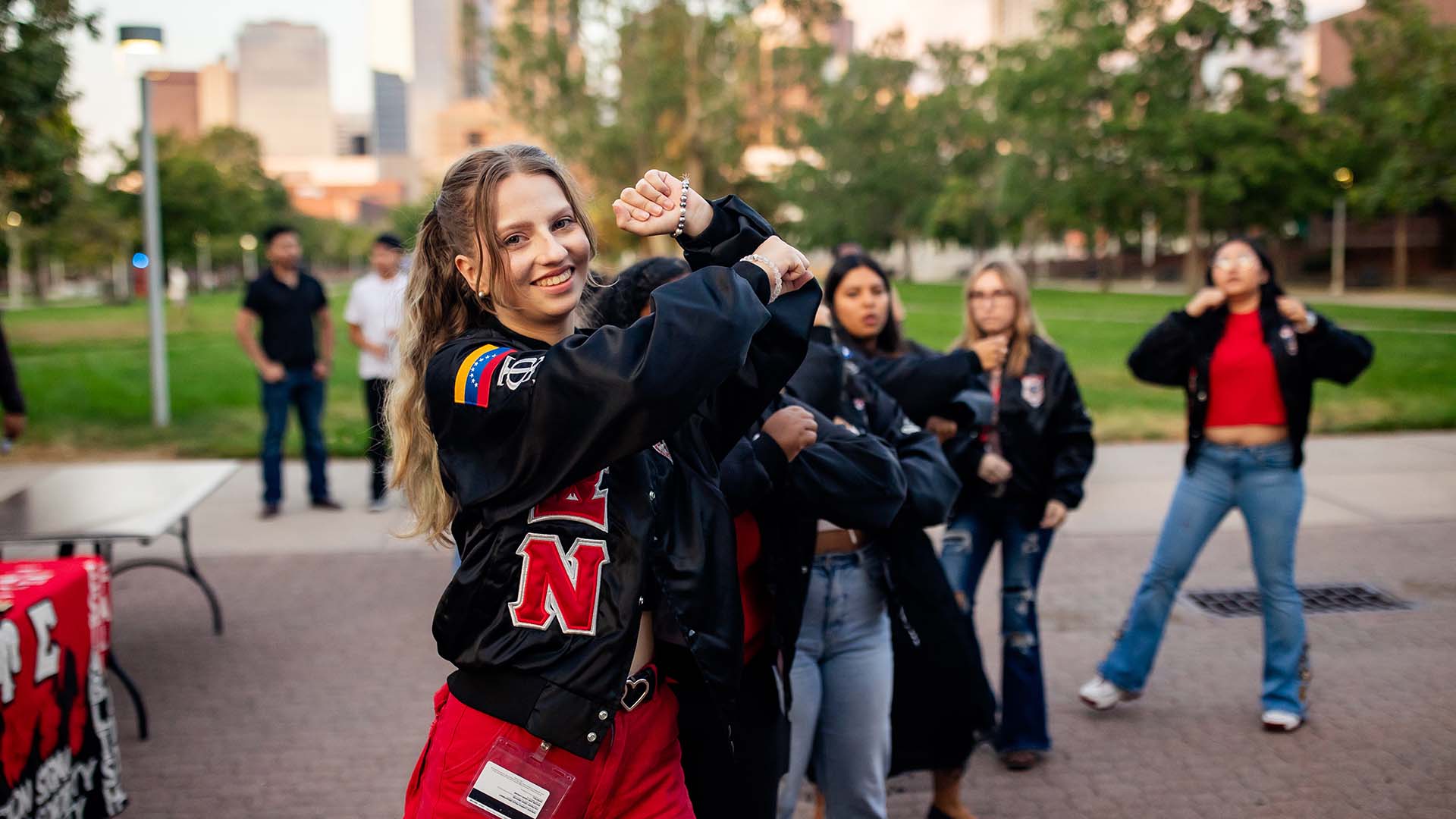
If joining a group of people with similar interests or backgrounds and shared goals is a solution, MSU Denver is doing its part and then some.
For University students not fortunate enough to be on Ashley Blondo’s email list, Cucchiara, of Student Engagement and Well-being, said there are plenty of opportunities to find connection. “We have to be very creative and innovative,” he said, “and we are.”
“We offer a huge variety of student organizations,” he said, including the usual student government and student media, fraternities and sororities, “but also we recognize the demographics of our students and offer support for programs that focus on students of many different identities.”
For all its struggles as a commuter school, Blondo said, MSU Denver does have an advantage. “I think something we have at MSU Denver is the varied ages,” Blondo said, pointing out that as they spoke, they were sitting on the patio of a friend who is more than a decade older than they are. “I love that about MSU Denver. We are literally all learning from each other.”
That’s how it works best, Boldt said. “Together as Roadrunners, we can rise as a community.”