‘Eye-opening’ learning experiences lead to real-world impact
From supporting organ transplant patients to helping communities prepare for natural disasters, MSU Denver students gain hands-on experience while making a difference.
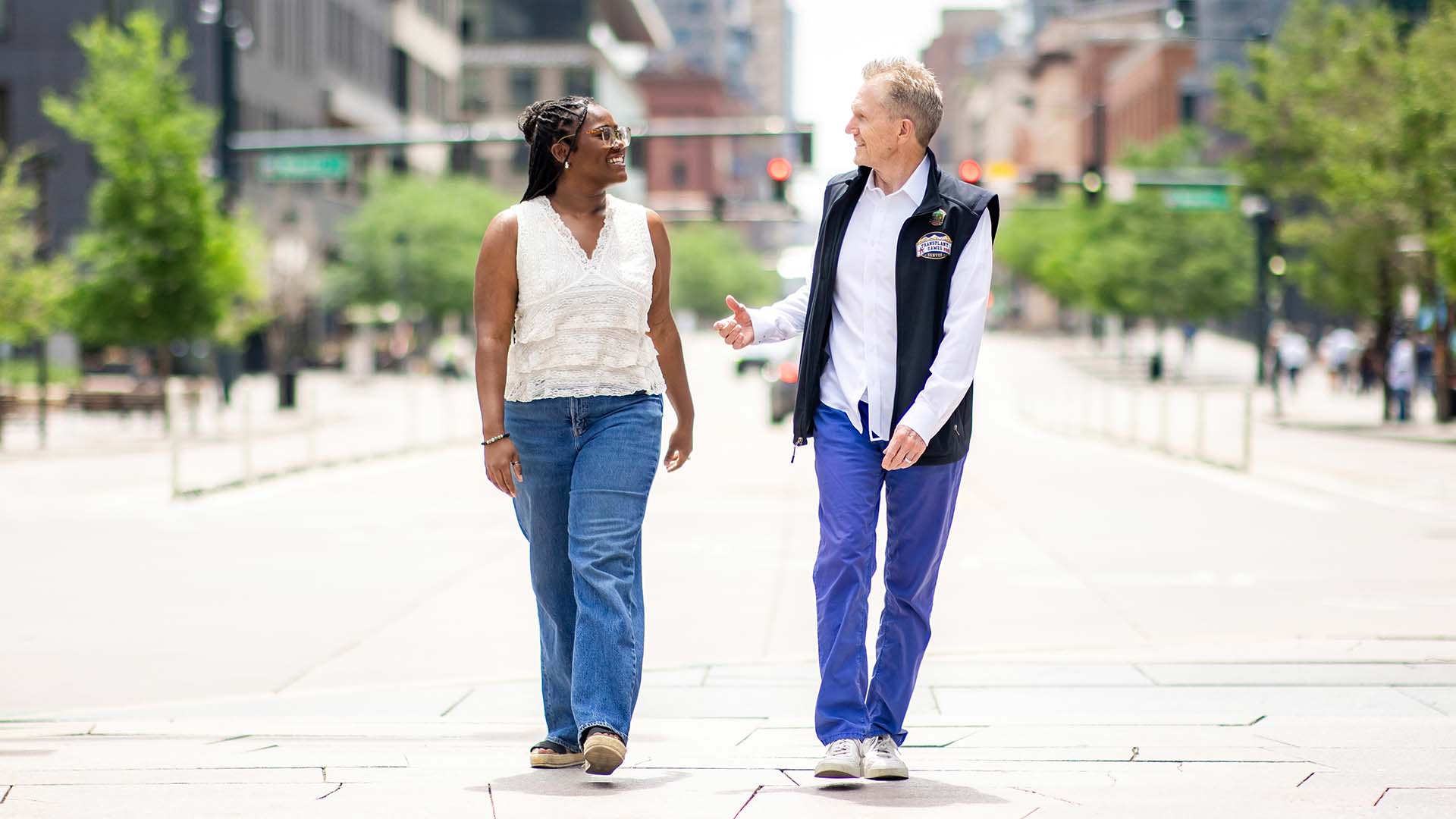
When Miah Edwards signed up for a Fundamentals of Public Relations class, the Public Relations major wasn’t expecting to learn about organ transplants. Or become leader of the Metropolitan State University of Denver chapter of Student Organ Donation Advocates (SODA). Or be a key consultant in putting together an outreach campaign for a major event — the Transplant Games of America.
But all that did happen. And last month, Edwards saw more than a year of effort and invaluable experience pay off when hundreds of organ donation recipients and their families gathered on the Auraria Campus for Denver’s Transplant Games.
It all happened because Deanna Hirsch, assistant professor of Public Relations and associate chair of Journalism and Media Production invited Mark McIntosh of Transplant Life Foundation to visit her public relations class during the spring 2025 semester and share his Transplant Games vision.
The result was the kind of partnership between students, faculty and community members that is the goal of Community Engaged Learning at MSU Denver.
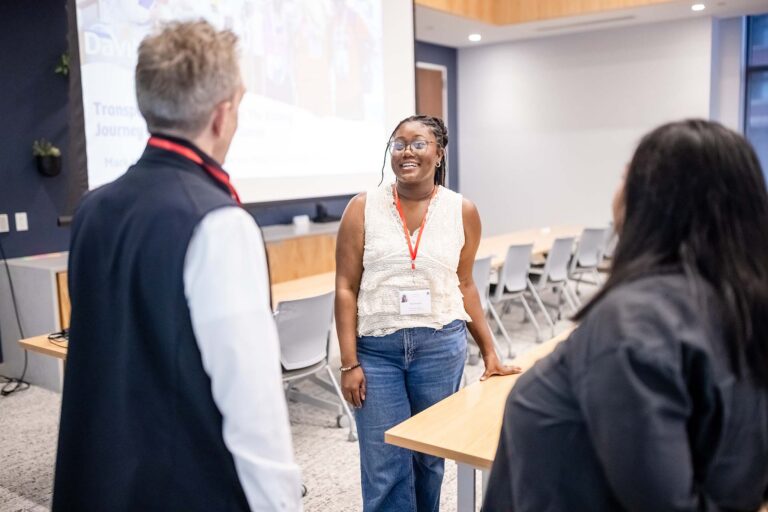
Community Engaged Learning is an approach in which faculty partner with community-based organizations, civic institutions and businesses to create “meaningful, real-world learning experiences that benefit both students and the communities they serve,” said Nora Bashir, program manager for Community Engaged Learning at MSU Denver.
More than a decade of focus on Community Engaged Learning, a program supported by the Classroom to Career Hub and dozens of faculty members across the University, has resulted in more than 22,000 students participating in CEL as of spring 2023. Those students represent nearly every academic discipline across the University.
Through partnerships between community organizations and faculty, with the C2 Hub’s support, CEL plays a major role in the University’s effort to achieve its 2030 strategic plan goals of 100% of students engaging in experiential learning and 100% of students engaging in career planning and learning
Recent CEL collaborations include:
- Christina Foust, Ph.D., professor of Communication Studies, provided students an opportunity to work with the Auraria Sustainable Campus Program and host Dialogue & Civic Engagement Week, which reached students across eight departments.
- Psychology students in classes taught by Professor Randi Smith, Ph.D., practiced clinical skills in a community mental health setting.
- In classes led by Marketing Professor Sally Baalbaki-Yassine, students worked with Denver Health and the March of Dimes on brand management and multicultural marketing.
- Earth and Atmospheric Sciences students of Sara Jackson Shumate, Ph.D., worked with the Federal Emergency Management Agency, the Environmental Protection Agency and Indigenous Resource Management on flood and fire mitigation and environmental justice.
CEL experiences don’t just prepare students for careers, Bashir said. They help students stay in college. University data found that from fall 2023 to fall 2024, students who participated in Community Engaged Learning were 4.6% more likely to continue their studies the following semester.
Because CEL projects often ask students to work together as a team, they feel greater responsibility to fellow students, Bashir said. That often extends to their community partners.
RELATED: Workforce readiness, industry engagement and student support to come under one roof
Hirsch’s Public Relations students felt that responsibility. “The students who worked on this project gained all the typical career readiness benefits: portfolio pieces, internship connections, presentation practice and professional networking,” Hirsch said.
“But more importantly, they were able to cocreate something bigger and hopefully more meaningful together, a true community of changemakers.”
After McIntosh’s initial visit, the class began functioning as a public relations agency working on his behalf, devising an outreach plan for the transplant games that included social media, messaging strategies and events, Edwards said.
“We met with Mark periodically, and he shared with us events that were happening, and we would talk about their messaging,” she said.
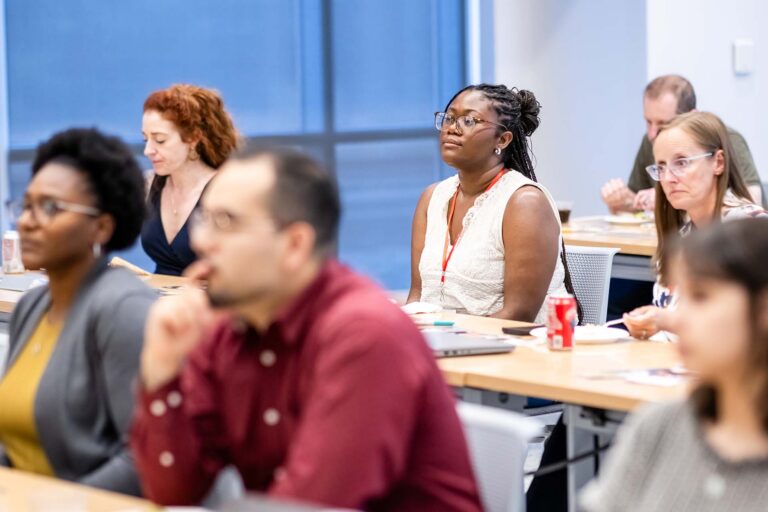
Edwards said the students recommended positive messages about avoiding kidney disease and about the transplant games.
The benefits were mutual, McIntosh said. “The students have been invaluable,” particularly in developing messages “that resonate with older teens and younger adults like them.”
Although younger adults rarely need organ transplants, McIntosh said engaging young members of the community is essential. “We need older teens and younger adults to become educated about the dangers of high blood pressure, diabetes and excessive weight,” and how those conditions can lead to kidney disease, said McIntosh, who is a recipient of a kidney donation.
Edwards, who continued to work on the project after she completed the Public Relations class, said the experience was truly valuable. “I felt like it opened a lot of (students’) eyes.”
That’s just one of the payoffs of Community Engaged Learning, Bashir said. “CEL is not just a teaching strategy. It is a vital component of our educational mission at MSU Denver.”