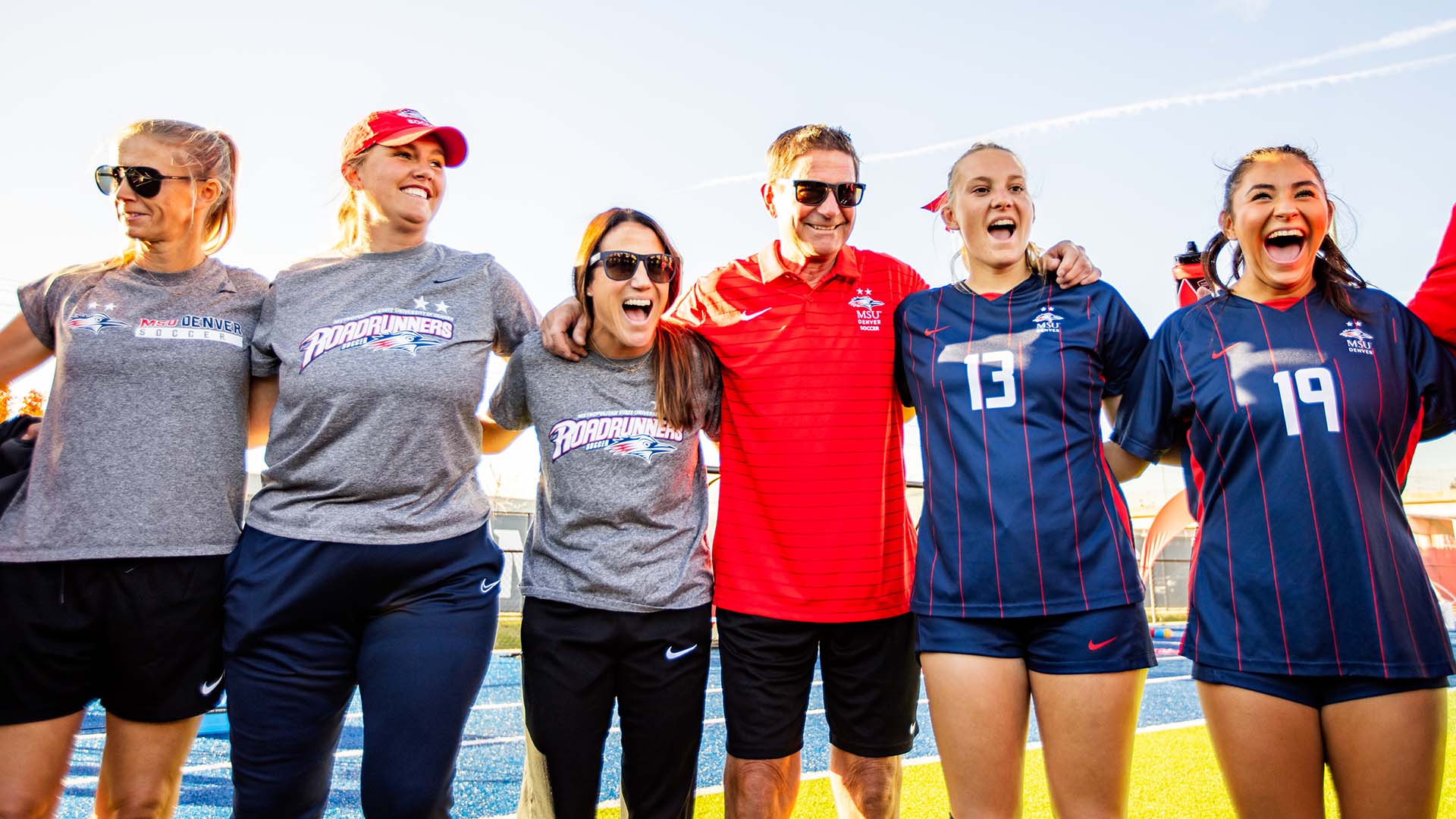
Sports is a $1 trillion business. More students want in on the action
As the global sports industry booms, enrollment in MSU Denver’s Sport Management program has more than doubled.
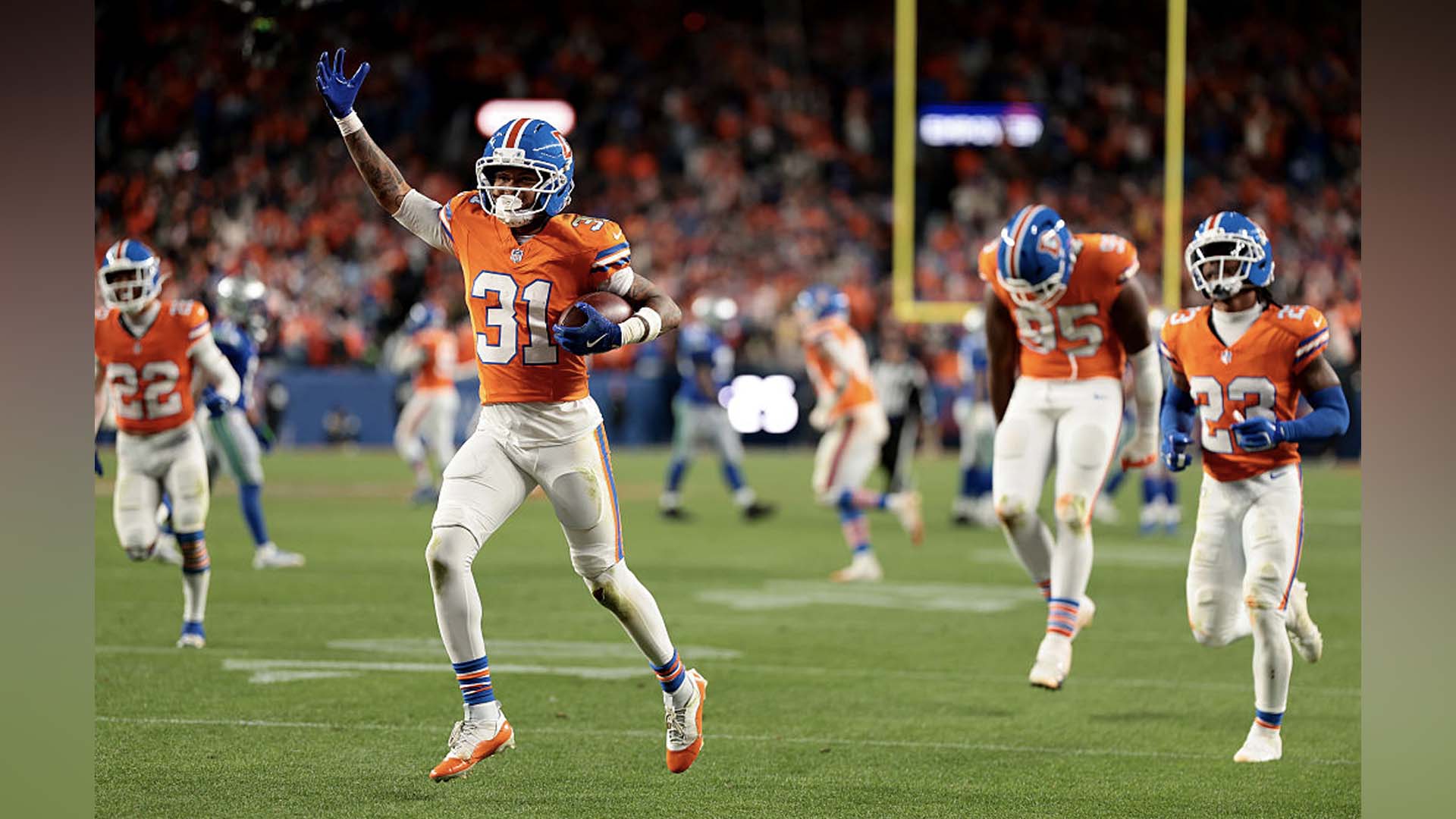
With new stadiums sprouting across the country, throughout the world, and, soon, in Denver, and with women’s sports reaching unprecedented audiences, the business of sports is booming.
A new generation of talented students has noticed. Some of those students are college athletes; others just have a passion for sports. All of them see opportunity in what has become a trillion-dollar business. And many of them see Metropolitan State University of Denver’s Sport Management program as the place to turn opportunity into careers.
“We are growing by leaps and bounds,” said Jay Martyn, Ph.D., assistant professor of Sport Management. In the past six years, enrollment in the major, which is part of the Department of Exercise and Sport Sciences, has more than doubled, from 90 in 2020 to 220 this semester, Martyn said.
It’s no wonder the field is popular. When fans pile into Empower Field to cheer on the Broncos or Ball Arena to marvel at The Joker, they’re doing more than just having fun. They’re helping fuel one of the most lucrative, and fastest-growing, industries on the planet.
In January, the New York Times reported that, worldwide, the global sports industry is expected to grow from $2.3 trillion in 2025 to $3.7 trillion in 2030. In 2025, the Global Institute of Sport estimated that the U.S. contribution to that astronomical number was about $1 trillion. And that is only going to grow.
“Things are growing,” Martyn said. Owners, including Broncos owners, are planning new stadiums, while Denver’s new professional women’s soccer team, the Summit, is developing a stadium of its own. Teams are also branching out into sports-related ventures, such as restaurants. “Sports is not entirely recession-proof, but to an extent it is because everyone always wants to be entertained,” he said.

For Mia Accomazzo, it is less about numbers than passion.
Accomazzo, who grew up in the Phoenix area, has been into sports as long as she can remember, as an athlete playing volleyball and a fan ── she fielded her first fantasy football team at 8 years old. But when she learned a friend’s father worked for the Arizona Diamondbacks, that was a revelation. “I was like, ‘oh gosh, I didn’t know you could actually work in sports.’”
When the time came to choose a college, “I looked for a school with a Sport Management major. MSU Denver ended up being a perfect fit. It’s right downtown, so it’s close to Ball Arena, Empower Field,” she said. “And the volleyball team is great.”
Accomazzo would know. She’s a member of that team, and helped them win a national championship last year. Accomazzo earned her bachelor’s degree in Sport Management last year. But with two years of athletic eligibility left, she’s back to earn a Master of Business Administration. Somehow, she also found time to complete an internship with the Colorado Avalanche last year, and is interning with the Colorado Rapids this year.
Sport Management graduates shouldn’t expect Bo Nix-level salaries, Martyn said. “For the first four or five years, salaries will stay around $40,000 to $50,000. But once you hit management level, you can make some pretty good money.” In the meantime, Martyn said, there’s the bonus of working in an arena or on a baseball field “rather than sitting in a cubicle all day.”
RELATED: Students give sustainability in sports a real workout
Right now, as an intern with the Denver Nuggets, Max Schrad isn’t making any money. His front-office job involves securing credentials for Nuggets scouts who want to attend college or other professional games.
Unlike Accomazzo, he didn’t seek out a college that offered Sport Management as a major. In fact, he didn’t seek out college at all. “My dad convinced me to go to college,” he said. Once at MSU Denver, he followed his interests. “I just have a passion for sports. I always played soccer; now I play golf. It was a passion, so I figured why not work in it?”
In addition to his Nuggets internship, he works organizing youth soccer tournaments in his hometown of Broomfield. And he doesn’t mind not getting paid by the Nuggets – getting in the door of an NBA team is reward enough for now. “It’s a sacrifice I’m willing to make because hopefully I’ll be able to take it further.”
“I love the operations side of things. And since I got this internship, and started looking at things ── the general manager of the Nuggets, he started as an intern. I don’t think that’s a bad end goal for me.”