Why college students can’t get enough of Psychology
MSU Denver's most popular major for seven straight years draws students with hands-on research, faculty mentorship and diverse career options.
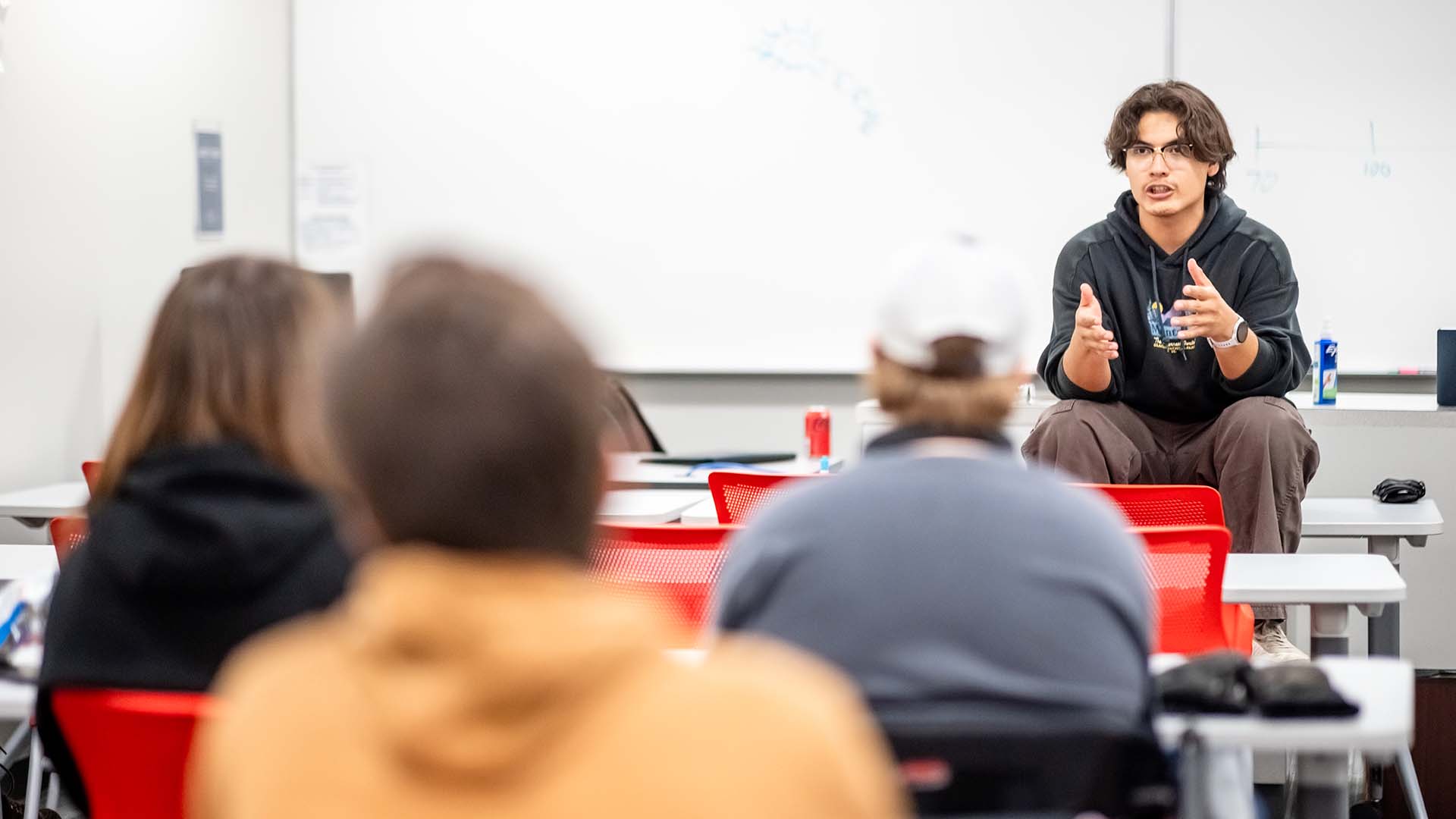
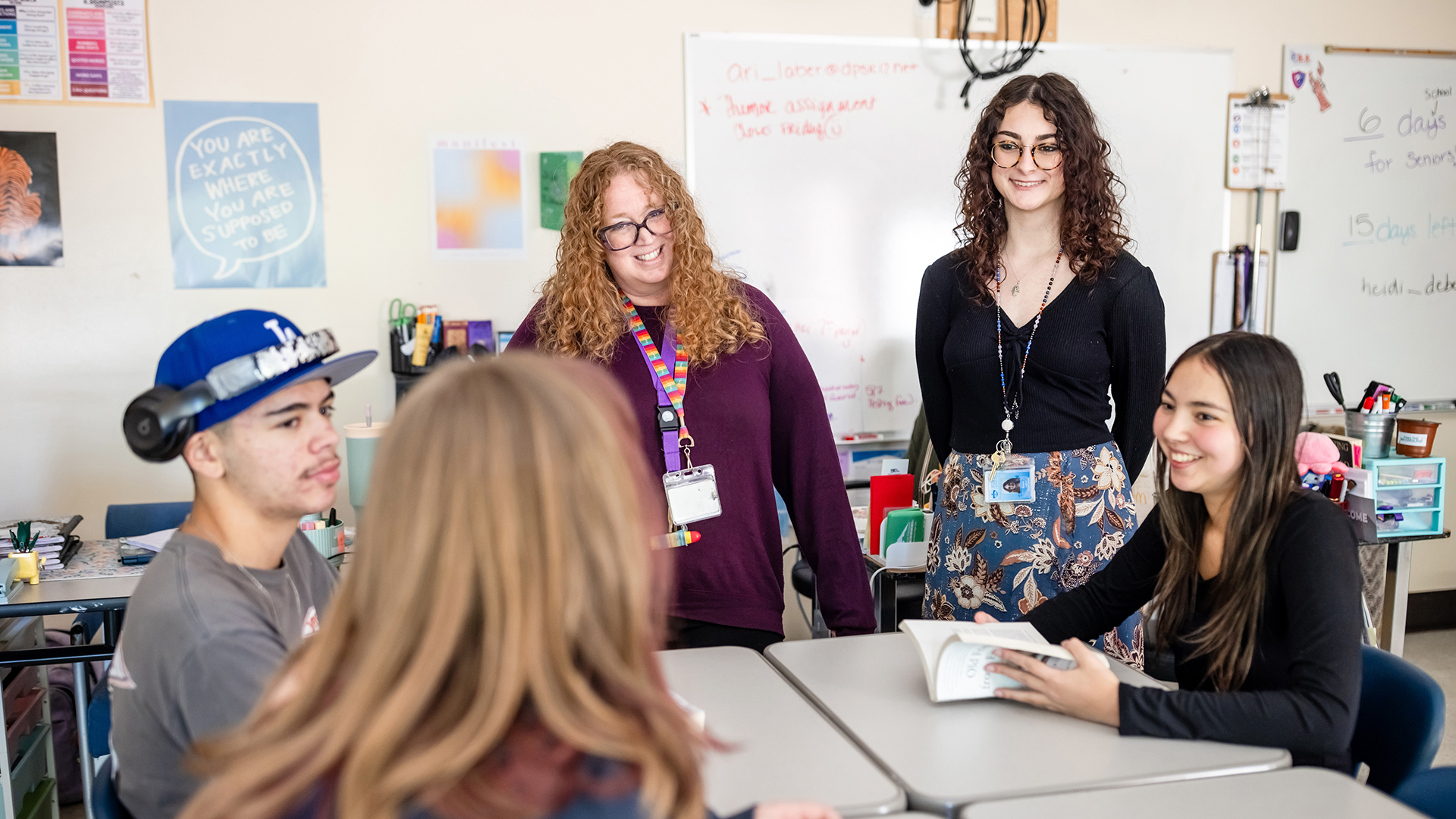
When Cole Thomson drew a near-perfect neuron on the class whiteboard, students in Learning Assistant Benji Del Barco’s Introduction to Psychology study session were shocked to discover an artist in their midst. They shouldn’t have been.
Psychology attracts students with diverse interests, backgrounds and talents. And lots of them.
For the seventh straight year, Psychology was the most popular major at Metropolitan State University of Denver in 2025-26, with nearly 1,500 students pursuing a degree in the field — almost double the number enrolled in the second-most popular major, Aviation and Aerospace Science.
When they graduate, those students may help fill a need that is large and growing, both nationwide and in Colorado.
The U.S. Bureau of Labor Statistics projects that , behavioral and mental health counseling will be one of the fastest growing careers over the next 10 years, adding nearly 100,000 jobs by 2035. An estimated 5,000 of those jobs are expected to be in Colorado, which makes the field one of the fastest growing in the state.
Possibly fueling that growth is the fact that more and more people are seeking mental health treatment. A 2024 Kaiser Family Foundation study reported that, between 2019 and 2022, the number of Americans receiving mental health treatment increased from 10% to 13%. Leading the way were young people ages 18 to 26. The increase among that age group was 45%.
That’s good news for students like Daniel Niewiarowicz. He originally majored in Computer Sciences, “but I took three gap years to play hockey, and during that time, the mental health side of sports became really interesting to me.”
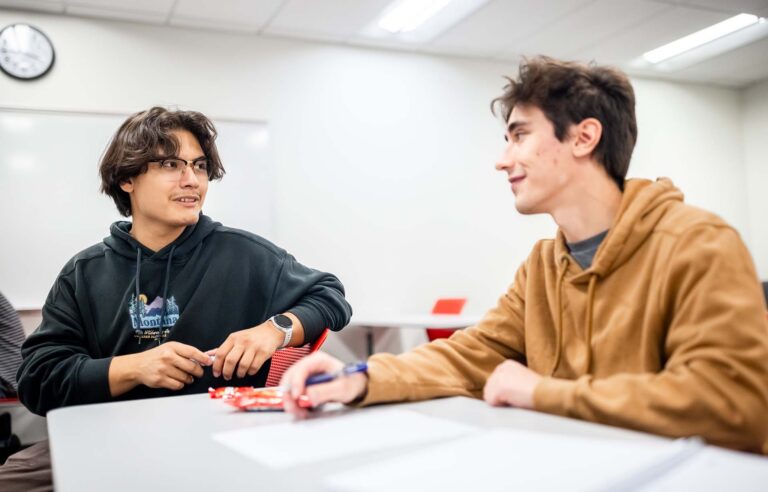
Now, Niewiarowicz is pursuing dual degrees in Psychology and Human Development & Family Studies, with a Clinical Counseling concentration. “I’m totally set on Psychology,” he said. That’s not surprising since he is president of the department’s Research Club, both a learning and a research assistant, and the profession runs in his family. “My grandfather was a psychologist,” he said.
Last summer, Niewiarowicz visited Barcelona to co-present findings of a study on AI and parenting advice.
Psychology’s broad appeal is no mystery to Lisa Badanes, Ph.D. “As a discipline it has universal relevance,” the professor and chair of the Department of Psychological Sciences said. “We’re social creatures, and it’s an interesting topic for almost everybody. We like to talk about ourselves.”
Students found plenty to talk about when Lisa Hagan, Ph.D., went over everything from the decision to become a parent to whether it’s a good idea to co-sleep with an infant in her Parenting Across the Lifespan class. They jumped into the discussion, sharing their own experiences as children, caregivers and, in some cases, parents, informed the discussion and held the interest of most of the 30 or so students. Nearly all of those students, Hagan said, are Psychology majors.
RELATED: Mental health care is in high demand but harder than ever to access
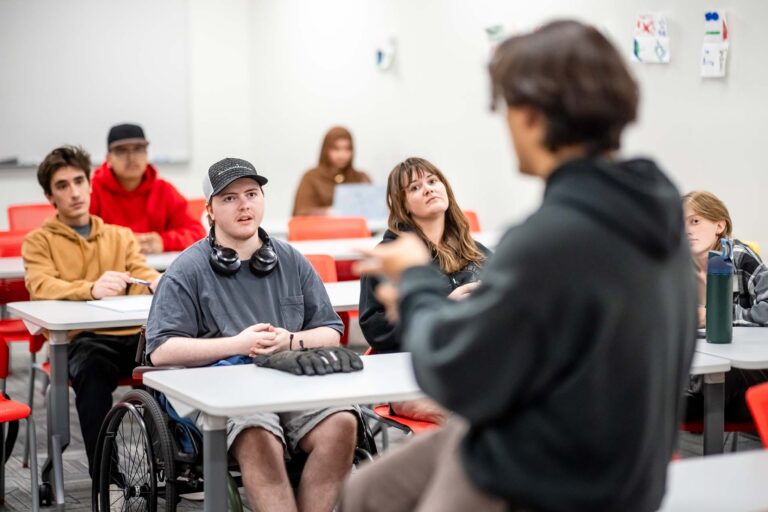
In Del Barco’s study session, several students said they were taking Psychology courses or majoring in the field because of personal experiences.
“I’ve gone to therapy much of my life,” said Anthony Winn, a Psychology major with a concentration in Clinical Counseling who uses a wheelchair. His goal is to research “how disability and trauma affect people psychologically.”
Another student, who asked not to be identified, said she had “a strong recovery background,” and that therapy “helped me evolve and grow. And now I want to give back.”
Of course, Psychology curriculum is not all about personal experiences. There’s plenty of science involved, too, as students in Del Barco’s study session struggling to recall the difference between autonomic and somatic nervous systems can confirm.
“We are a STEM curriculum,” Badanes said, referring to Science, Technology, Engineering and Mathematics. “We teach our students how to make predictions, how to critically analyze data and use it. Those STEM skills are valued by a lot of different employers.”
The range of employers and careers available to Psychology majors is wide and varied.
According to the U.S. Bureau of Labor Statistics, the top career fields for those with a bachelor’s degree in Psychology, as of 2023, were, in order:
- Management
- Social services
- Educational instruction and library occupations
- Healthcare practitioners
- Business and finance
For those who stay in the Psychology field and earn master’s degrees, demand is high and growing.
Notable graduates of MSU Denver’s Psychology Department include Loring Crepeau, Ph.D., a Navy Medical Service Corps research psychologist; Bryce Pasko, M.D., a transfusion medicine specialist at Children’s Hospital Colorado; Gregory Seibert, Ph.D., a licensed family therapist; Nathan Mondragon, Ph.D., an industrial psychologist; and many more.
Del Barco has his career planned out, and those plans don’t include pursuing other fields. He plans to earn a Ph.D. in clinical research and become a professor. In the meantime, he’s leading Tuesday and Thursday study sessions for Introduction to Psychology. And, like Niewiarowicz, Del Barco also is working on dual degrees and has participated in research projects, an opportunity undergraduates at many universities don’t get.
That kind of opportunity, and the exemplary faculty, are reasons so many aspiring psychologists choose MSU Denver, Badanes said.
Del Barco chose MSU Denver because it was affordable and close enough for him to live at home with his parents while studying. What he discovered his first year convinced him the University was a much bigger value than he imagined.
“I had no idea the Psychology Department would be this good,” he said. “It’s a real blessing.”