Future-proof: Pilots will still soar in an AI-assisted world
Airlines are embracing technology to improve efficiency, but human judgment will always be needed in the cockpit.
Editor’s note: Throughout the 2025–26 academic year, RED’s Future-proof series will focus on the critical role public universities play in preparing students for the jobs of tomorrow.
Almost from the moment cars and airplanes were invented, science-fiction writers, movie makers and plenty of the rest of us started dreaming about a time when those vehicles could pilot themselves.
But now, artificial intelligence has moved from fantasy to reality and is being used in a variety of industries, including aviation. Airlines are increasingly investing in AI, in the hope the technology will help them become more efficient and competitive.
AI systems already help pilots manage fatigue, optimize routes and predict maintenance issues. But, according to Chad Kendall, associate professor of Aviation and Aerospace Science at Metropolitan State University of Denver, human pilots will always be in the cockpit of commercial airlines.
To explore how pilots are adapting to changes wrought by AI and what skills the next generation of aviators will need, RED spoke with Chad Kendall, Aviation and Aerospace Science associate professor, about the future of flight in an AI-assisted world.
You’ve described airline piloting as a “future-proof” career. What makes it a reliable career path even in the age of AI?
Aviation fundamentally relies on human judgment. When unexpected situations arise, someone must make decisions and be accountable for them. AI can assist by providing information, identifying threats and reducing risks, but ultimate responsibility always stays with humans.
Today, AI is entering aviation as a support tool, not a replacement for pilots.
The industry approaches this carefully, with layered oversight and strict regulatory certification standards. Airline piloting remains “future-proof” because the field is defined by accountability, passenger trust and the need to manage rare, complex, high-consequence scenarios.
The likely future is not pilotless passenger aircraft, but highly trained pilots managing increasingly sophisticated systems, a role that evolves alongside technology rather than being replaced by it.
Public policy reflects this reality as well. In early 2026, Congress passed an aviation safety bill requiring at least two qualified pilots on the flight deck of all U.S. commercial airline flights, reinforcing the enduring need for human oversight even as technology continues to advance.
RELATED: PHOTOS: Students explore flying futures and meet a pilot hero of the past
How is AI currently being used in aviation to support, rather than replace, pilots?
Right now, AI is mostly applied behind the scenes in operational areas, not directly in the cockpit. Airlines use AI to improve efficiency in crew scheduling, maintenance planning and analyzing performance data. These systems help airlines operate more smoothly but are not replacing pilots.
Could you give examples of how AI is helping in areas such as maintenance, fatigue or air traffic management?
AI is already making a measurable difference. For aircraft maintenance, companies are supporting AI in predictive-maintenance modeling and data analysis to spot potential problems before they become serious, reducing aircraft downtime, preventing delays and keeping aircraft flying safely and efficiently.
In crew scheduling, AI models predict crew fatigue by analyzing schedules, rest days and other stress factors, enabling safer, more efficient shift planning. AI also supports fuel and weather planning by analyzing massive datasets in real time to reduce fuel consumption and anticipate weather impacts.
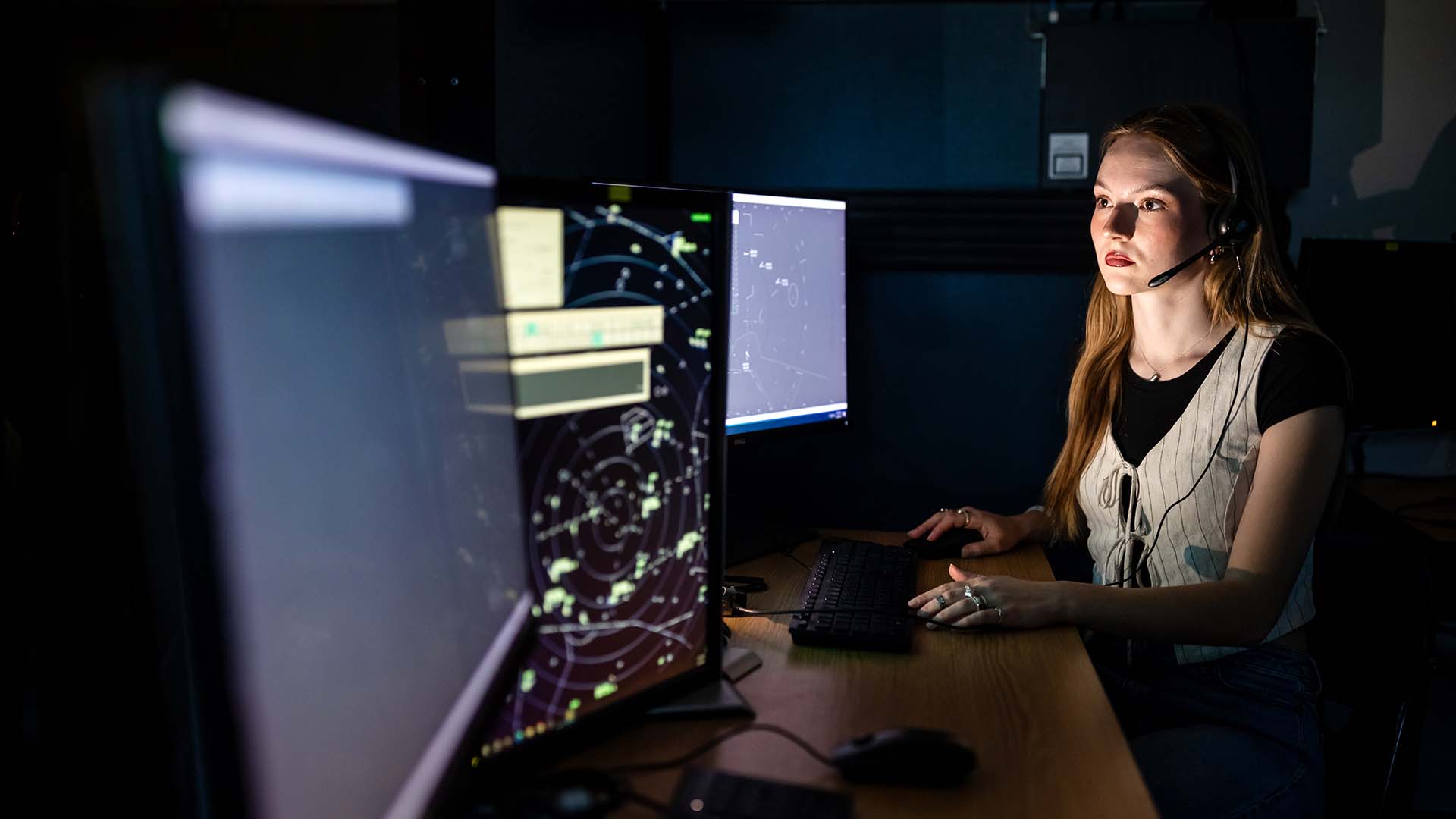
In air traffic management, AI is beginning to help manage traffic flow and reduce congestion in busy airspaces. These systems assist human controllers by suggesting proactive re-routings and identifying potential conflicts or collision risks earlier than traditional methods. Over time, AI tools will expand, but they’ll continue to serve as decision-support systems, keeping humans in control.
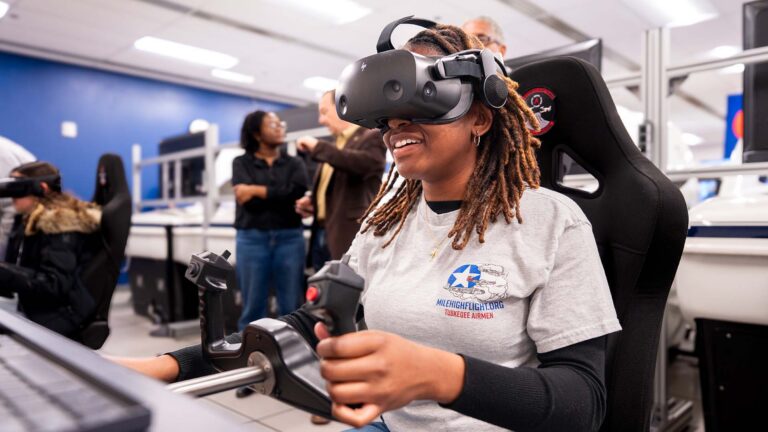
What skills are most important to help students and future pilots thrive in an AI-assisted environment?
Pilots still need strong decision-making, communication skills and deep knowledge of aircraft systems. As AI becomes more involved, they’ll also need to understand how to collaborate with it and interpret its recommendations.
Critical thinking is essential. AI can provide suggestions, but it cannot verify whether a task has been completed to an acceptable standard. Pilots must be able to adapt, verify and ultimately take responsibility for outcomes.
How do you see the role of AI in aviation evolving over the next 10 to 15 years?
AI will gradually move beyond business operations and become more integrated in the cockpit and air traffic control. It will help manage workload, monitor systems and provide real-time recommendations to pilots and controllers. It will also play a major role in unmanned aircraft systems, where automation is already highly effective.
Even as AI becomes more capable, humans remain central. Policies like the two-pilot requirement for U.S. flights reinforce that the final decisions and responsibility must stay with trained professionals. AI will enhance safety and efficiency, but it will not replace the human role.