Why college athletes win at work
Employers love the work ethic and time-management skills honed through sports.
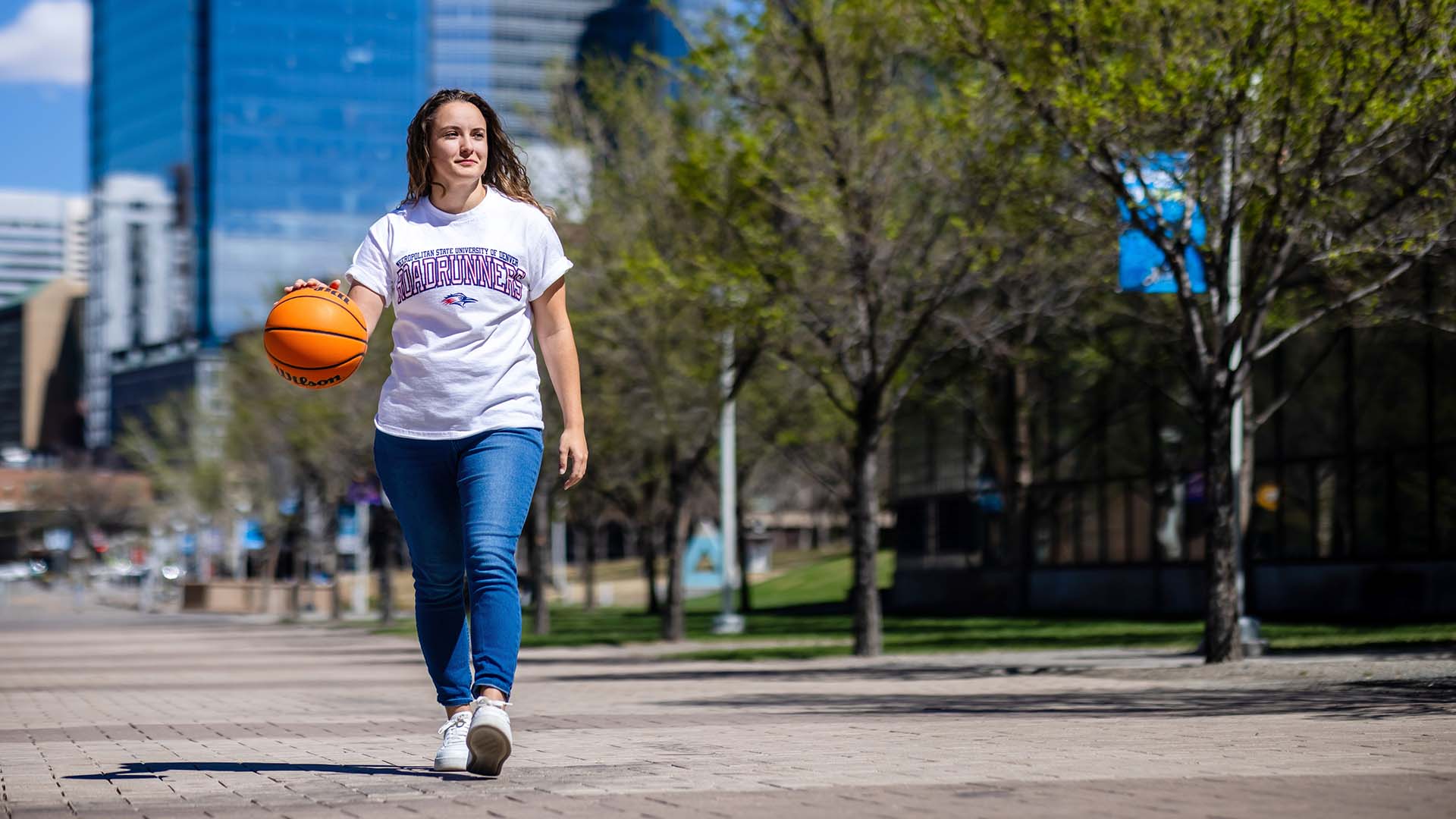
Only a tiny percentage of student-athletes go on to compete at a professional level.
But for many, the winning streak continues well past graduation. That’s because competing as a college athlete builds skills that can be a major help in a variety of workplaces. And employers have noticed.
Tanya Haave, former Women’s Basketball coach at Metropolitan State University of Denver, has spent a career instilling in her student-athletes the personal qualities — strong work ethic, mental toughness, resilience, receptiveness to constructive criticism — that employers crave.
“More often than not, the attributes that student‑athletes develop over their four college years translate exceptionally well into their professional lives,” she said. “If this weren’t the case, employers wouldn’t place such a strong emphasis on hiring them.”
Few players better demonstrate the value of college sports than alumna Bri Bailey, a former MSU Denver Women’s Basketball player who graduated in 2022 with a degree in Health Care Management.
“I always highlight my athletics experience on my resume, and it has come up in nearly every interview I’ve had,” she said. “Employers recognize the work ethic and time management required to balance academics and athletics and know that those qualities translate well into the workplace.”
Bailey’s experience at MSU Denver — from walk-on practice player to full scholarship starter — was often a tough slog. She recalls “many moments of getting knocked down, standing back up, tears, smiles, self-doubt and working toward a goal that sometimes felt far away.”
Those hard knocks paid off. These days, Bailey is blazing a trail at Fastly, a software company, where three promotions in just over two years have made her one of the youngest commercial account executives.
“All those college experiences helped shape my professional career in tech sales,” she said. “This is a very demanding, predominantly male industry, which requires the same competitive mindset that I developed through athletics.”
Another benefit of being a student-athlete — it can produce career-related payoffs even before graduation.
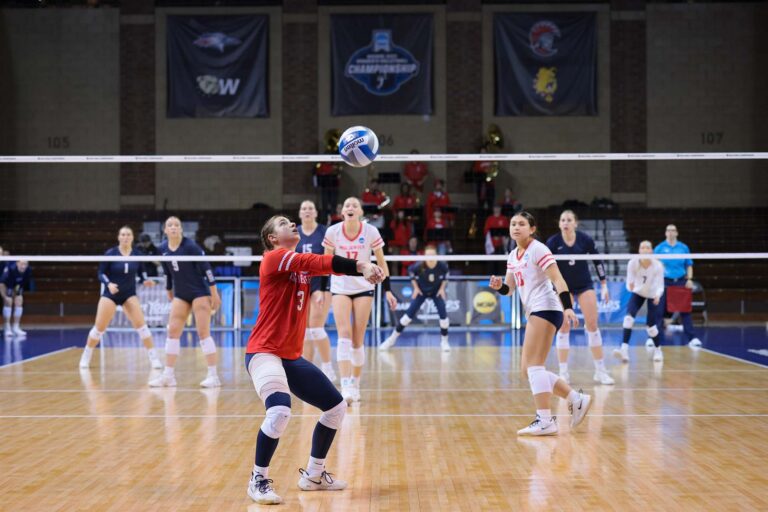
Mia Accomazzo, who is majoring in Sport Management and is a member of MSU Denver’s 2025 NCAA DII Women’s Volleyball National Champion team, recently secured her first working experience in professional sports: a prestigious ticket sales internship with the Colorado Avalanche hockey team. Unsurprisingly, her life in college sports came up during the interview.
“They asked about my ability to time-manage school and athletics — whether it was difficult and how I managed to do it,” she said. “It’s important to these major organizations to hire people who can do multiple things at once, and my busy sports-study schedule was probably a factor in securing the role.”
RELATED: PHOTOS: MSU Denver Volleyball celebrates first-ever national championship
College sports can be hard: a continual cycle of training, practices, travel, injuries, huge emotional highs and lows — with a coach barking orders at you all the while. Compare that experience to a student whose downtime involves relaxing and hanging out, and it’s practically two different realities.
But Bailey considers the ups and downs she weathered, and the resilience she developed, to be the strongest legacy from her college days.
“Sports teaches you how to handle rejection, overcome setbacks and stay committed to long-term goals, even when progress feels slow,” she said. “That ability to get back up and keep pushing forward remains incredibly valuable, long after you leave college sports behind.”
While most employers are well aware of the link between college athletics and successful careers, many student-athletes aren’t.
“When they arrive as freshmen, many student‑athletes don’t yet realize the long‑term value that athletics might have for them once their playing careers are over,” Haave explained.
Fortunately, though, as the winningest coach in the history of MSU Denver’s Women’s Basketball program and a legendary player in her own right, Haave knows a thing or two about positive reinforcement.
“Throughout their time with the basketball team, we strongly reinforce to our players that the lessons they’re currently learning — discipline, resilience, teamwork and leadership — will benefit them for the rest of their lives,” she said.
A few years after graduation, Bailey has gained a fuller appreciation of how the discipline and competitive spirit she honed at college has helped shape her current success and mindset. One memory in particular stands out.
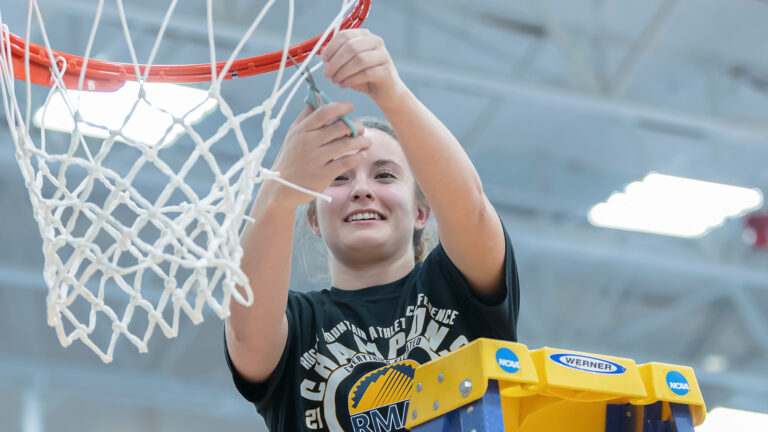
At the beginning of the 2021-22 basketball season, Bailey turned up to the first team practice of the year with 20 pairs of scissors, which she placed in the lockers of all her teammates and coaches, along with a note that said, “These are the scissors we’ll use to cut down the nets this season.”
The team went on to win the RMAC Conference Championship that year. And Bailey and her fellow players used those scissors to cut down the net. “Looking back, I just had a simple belief in what we could accomplish together,” Bailey recalled. “And that overwhelming sense of purpose and discipline are a big reason why I am where I am today.”