Questions about the environment? Bili may have answers
Computer scientist launches Sustainability Hub and new AI chatbot for improved ecological decision-making.
I have a simple-sounding question for Bili, the artificial intelligence-powered chatbot at the heart of the Sustainability Hub: “How will climate change affect Colorado over the next 25 years?” Bili pauses for a few seconds to consider my query, then cites some authoritative research about expected increases in temperatures, decreased snowpack and greater wildfire risk.
The answer marks a major milestone. Bili is an in-progress component of the Sustainability Hub, a newly launched website and database that provides one-stop shopping for Coloradans seeking access to publicly available economic, ecological and social data tied to responsible environmental stewardship.
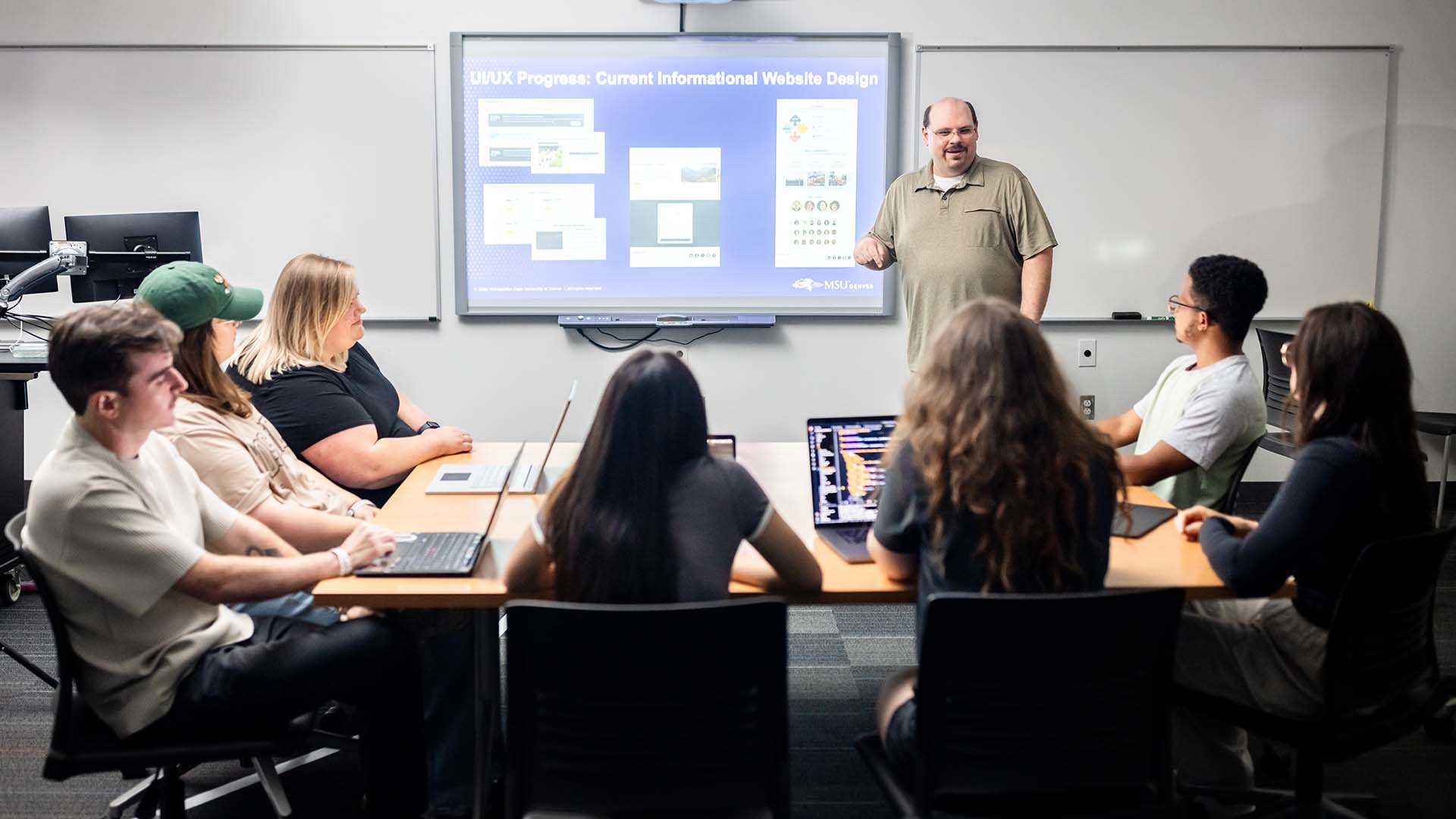
Daniel Pittman, Ph.D., assistant professor of Computer Sciences at Metropolitan State University of Denver, has overseen development of the Sustainability Hub, which invites users to submit queries to Bili. Under his supervision, MSU Denver Computer Sciences students have done much of the software development for the project under a three-year $1.2 million National Science Foundation grant.
Although Bili (the moniker is derived from “sustainability”) operated as advertised for me, it’s still a work in progress, Pittman said. That’s partly because the possibilities of what a chatbot might be able to do have dramatically expanded since the project began in 2023.
“It’s not only what we’ve envisioned the chatbot doing that has evolved, it’s the capabilities of large language models, the capability of AIs,” Pittman said. “It’s an exponential world, it feels like. Every day you look at the news and there’s some crazy thing people are doing with this software. So, we’ve been expanding our open-source library that we created Bili for.”
RELATED: Sustainability Hub takes root at MSU Denver
Pittman sees this challenge as a teachable moment for the team.
“The students have been working with me on over the last several weeks to understand the power of AI to be a companion in writing software,” he said. “I’ve been showing them how to use AI to help write code in a guided way, not just turning it loose and having it do whatever it wants. We’re not only providing AI to the community, we’re also using AI to help us create it.”
The chatbot will support the primary purpose of the Sustainability Hub, to be useful for people who want to learn more about natural resources and the environment, Pittman said. “The software we’re building for the Sustainability Hub can facilitate research in those areas. We’ve been adding additional capability and refining our thought process to be able to answer the user’s question efficiently.”
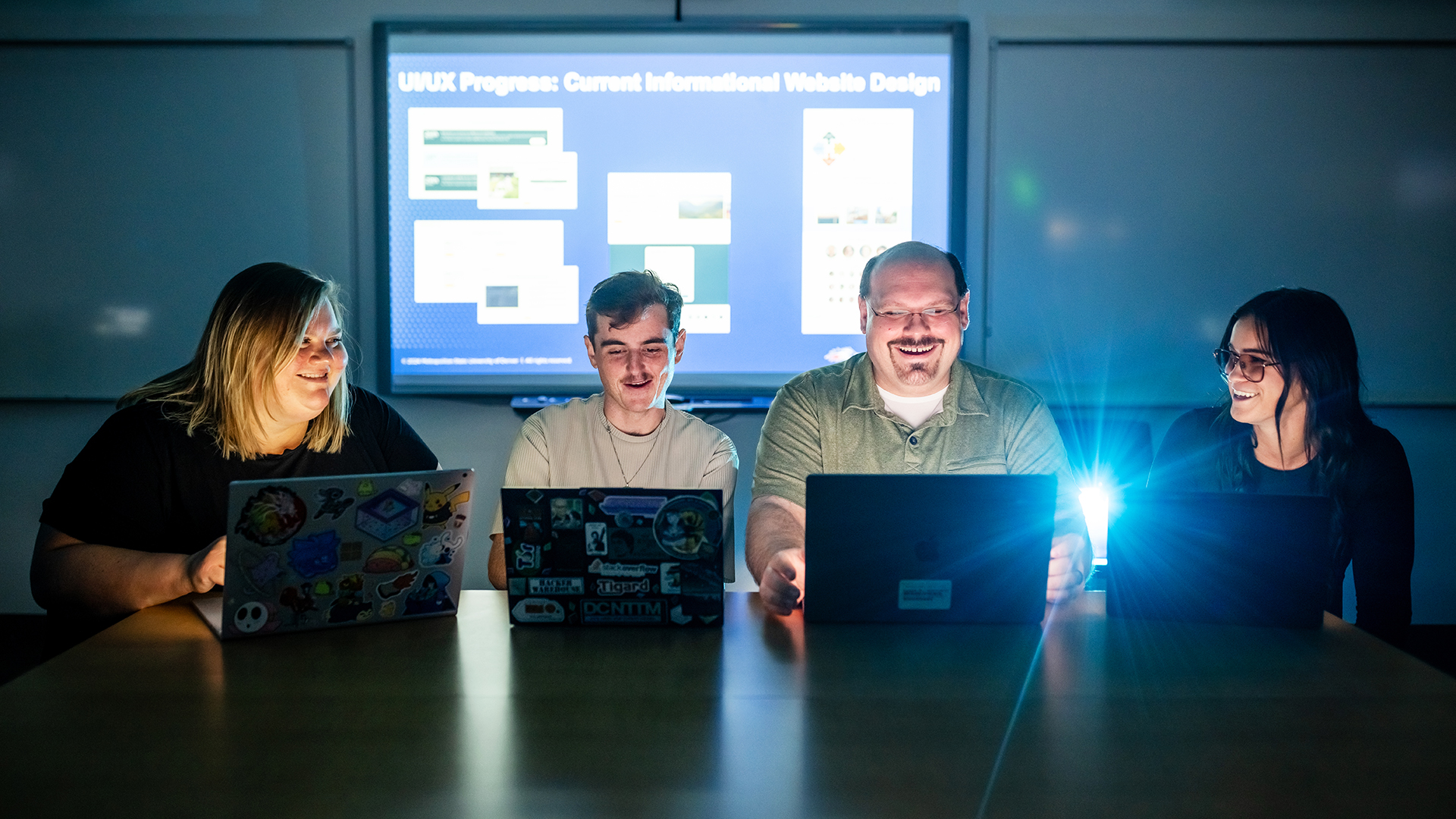
Alyssa Williams, the Sustainability Hub’s project manager at MSU Denver, has seen the tool evolve since its inception. “We’ve really been able to focus on specific deliverables, which has been really cool, the chatbot being one of them,” she said. “Another one is this feature we’re calling Sustainability Spotlights to be able to highlight different aspects of sustainability. The first one that we’re going to be hopefully rolling out close to the beta launch is around water scarcity in Colorado.”
MSU Denver Computer Sciences students who have taken part in developing the Sustainability Hub have seen tangible benefits from helping develop a real-world application. Jacqueline Hernandez, who graduated in December 2024, said her experience helped her quickly land a job as a software engineer for Tire Rack, a leading mail-order tire retailer.
“In my interviews, being able to talk about my experience with AI was definitely something that made me stand apart from other competitors that were applying for the job, because a lot of people don’t get that experience, especially right after graduation or during their CS experience,” she said.
Hernandez said her role leading the Sustainability Hub’s user interface/user experience team amid shifting goals imparted useful skills that she puts to use in her job. “I encounter in almost all of my projects changing requirements or updates to requirements — we wanted to do this, but actually now we need to do that,” she said. “We definitely had a lot of experience with that in the Sustainability Hub because it was evolving, and we were still trying to find the final direction. That prepared me for some of those same experiences working at Tire Rack.”
Meeting and surmounting the challenges as student software developers also instilled a belief in her own capabilities, she said.
“The Sustainability Hub introduced me to some of the processes that are common in the industry but also provided confidence in that experience that, yeah, I can be successful and also be a leader and be successful in that, too,” Hernandez said. “So, I think just confidence in that empowerment was probably the biggest takeaway.”