Q&A: Artemis II prepares for launch
As humans return to lunar orbit, the mission reflects how much has changed, and what hasn’t.
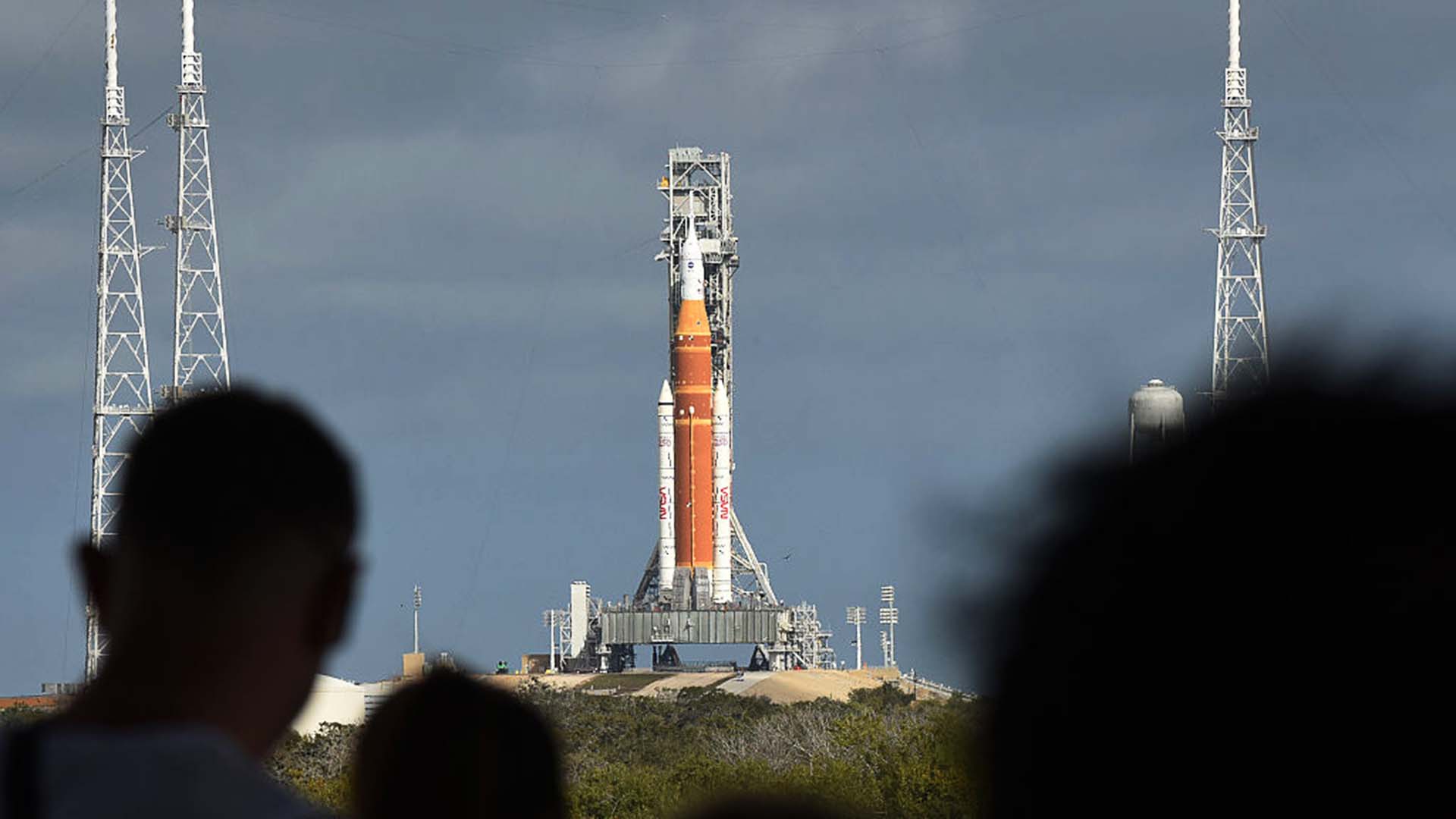
Nearly 55 years after Apollo 8 carried humans around the moon for the first time, NASA is poised to send astronauts beyond Earth orbit again. Artemis II promises a new era of exploration and a glimpse at the future of human spaceflight.
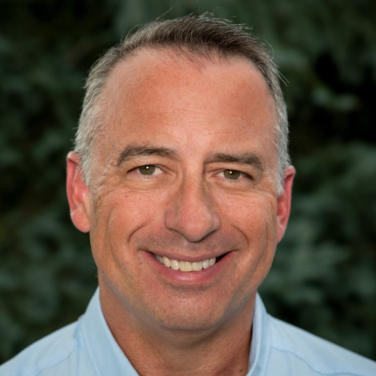
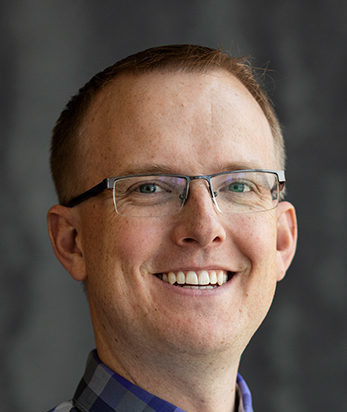
To understand what Artemis II represents for the industry and the next generation of aerospace professionals, RED spoke with Magens Orman, MSU Denver alumna and Aviation and Aerospace Science affiliate professor, and Jeff Forrest, chair of the Aviation and Aerospace Science Department.
What is the overall goal of the Artemis program, and how does Artemis II fit into that mission?
Orman: Artemis is the follow-on program to Apollo, with the goal of sending Americans back to the moon and establishing a permanent presence there. Artemis II is designed to demonstrate our ability to travel to the moon and back with a crew of four. The next mission, Artemis III, will involve a lunar landing. From there, NASA’s long-term goal is to establish a crewed lunar base where we continue developing our space capabilities and learning more about the universe.
Forrest: From an educational perspective, the mission connects directly to what students are learning at MSU Denver. Our Aerospace Systems and Mission Design B.S. trains students in mission planning, systems integration and operational knowledge, preparing them for work on spacecraft, orbital systems and commercial space enterprises.
After the successful uncrewed Artemis I mission, why is Artemis II such a critical next step?
Orman: This mission is essentially a shakedown cruise for human spaceflight. It’s been almost 50 years since we sent people to the moon, and technology has changed dramatically since then. Space is an exceedingly unforgiving environment: It’s cold, it’s filled with radiation, and it’s a vacuum. With human lives on the line, it would be irresponsible to assume that new materials, electronics, structures and software will work perfectly on the first try. Artemis II allows us to prove that technology before putting astronauts in an even more challenging situation on the lunar surface.
Forrest: It also provides a blueprint for the evolution of the modern aerospace workforce. Students see how complex systems like the Orion spacecraft, launch vehicles, life-support systems, navigation, communications and ground operations work together. They can see how real-time decisions, teamwork and safety are just as important as technical knowledge.
RELATED: Q&A: The Artemis space program
How does sending astronauts into orbit change the significance of the mission compared with Artemis I?
Orman: The risks change significantly when you add human life, but so do the gains. Uncrewed systems are important to verify before putting a person in the loop, but they’re harder to emotionally connect with. Flying real, flesh-and-blood humans, people that kids, students and everyday adults share hopes and dreams with makes a mission like this much more significant. This is an opportunity for humanity to come together and root for four people venturing into the unknown in a way we haven’t done in a very long time.
The Artemis program is often described as a steppingstone to Mars. Why is a crewed lunar flyby essential to that long-term plan?
Orman: The Artemis program represents a major step toward spreading human life beyond Earth. We understand some of the big challenges — lower gravity, producing our own air, finding water — but there are countless small challenges we don’t fully understand yet. Mars is far too distant for trial and error. The moon is the right place to learn how to live away from Earth and discover the things we don’t even know that we don’t know yet.
How does a mission like Artemis II shape the skills students need to succeed in today’s aerospace industry?
Forrest: The ASMD major is built around exactly the challenges that the Artemis program and other programs face. Students model current and future space missions in our computer labs, sometimes working with live, nonmilitary space assets. The program prepares students to think holistically about missions, from architecture and sustainability to operations and scalability, aligning their education with the rapidly expanding commercial and exploration-driven space industry.
For the general public watching this mission unfold, why does Artemis II matter right now?
Orman: We’re at a very precarious time in space exploration and in global politics. China has established a successful space station producing excellent science, while the U.S. and Russia are preparing to decommission the International Space Station with no planned replacement. There’s unrest and instability globally, and there are strong parallels to 1968, when Apollo 8 flew around the moon. Artemis II isn’t a solution to the world’s problems, but it’s an opportunity to unite people in a way NASA hasn’t been able to do in a very long time.